

 English
 русский
 Español
What Is a Screwdriver and What Does It Do?
A screwdriver is a hand tool or power tool attachment designed to drive screws into or out of a material by rotating the fastener around its axis. It transmits torque from the user's hand — or a motor — to the screw head through a shaped tip that engages with the recess on the fastener. Unlike hammers or wrenches, a screwdriver's function is precision rotational force: it converts your applied effort into controlled fastening or removal without damaging the surrounding material.
Beyond simply driving screws, screwdrivers are used for opening battery compartments, prying panel clips, scoring soft materials, and manipulating small components in electronics or appliances. The tool is one of the most universally owned in households and professional settings alike — an estimated 90% of homes in the US own at least one screwdriver, making it among the most common tools in existence.
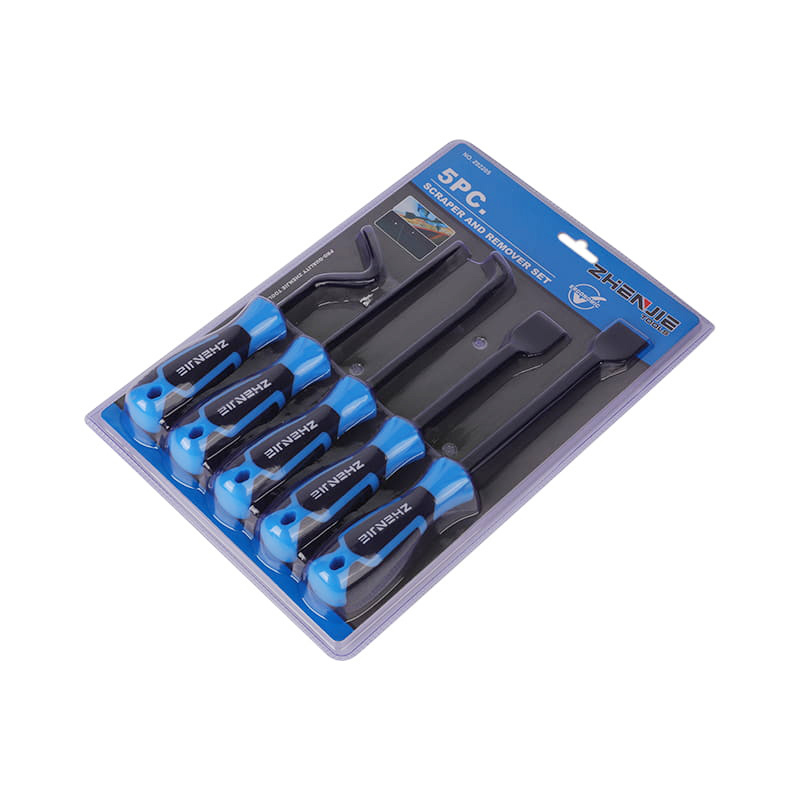
Screwdriver Types and Their Uses
Matching the screwdriver tip to the screw recess is critical. Using the wrong type strips the head, damages the tool, and can cause injury. The main types in everyday and professional use are:
Flathead (Slotted)
The oldest and simplest design — a flat, wedge-shaped blade that fits a single linear slot in the screw head. Flathead screwdrivers are still widely used in electrical work (terminal screws), legacy furniture hardware, and general prying tasks. Their limitation is cam-out tendency: when torque exceeds the tip's grip, the blade slips sideways out of the slot, often gouging the workpiece.
Phillips (Cross-Head)
Designed specifically to cam out at a defined torque threshold, which protected early power-line assembly from over-tightening. Phillips screws and drivers are identified by size numbers PH0 through PH4, with PH2 being the most common across consumer electronics, cabinetry, and automotive trim. The intentional cam-out design that made Phillips useful in manufacturing is also its main frustration for manual work — it limits maximum torque before slipping.
Pozidriv (PZ)
A successor to the Phillips cross-head, the Pozidriv adds four additional smaller slots at 45° to the main cross, giving the driver much better grip and virtually eliminating cam-out. It is standard across European furniture flat-packs, construction screws (particularly drywall and timber), and general hardware. PZ2 is the workhorse size for most woodworking and construction tasks.
Torx (Star / Six-Lobe)
Torx screwdrivers engage a six-pointed star recess, allowing very high torque transfer without any cam-out. Originally developed by Camcar Textron in 1967, Torx is now dominant in automotive assembly, consumer electronics (notably Apple products using Pentalobe, a five-lobe variant), hard drives, and bicycle components. Torx sizes run T1 through T100; T10, T15, T20, and T25 cover the vast majority of common fasteners.
Hex / Allen (Internal Hex)
An L-shaped bar or screwdriver blade with a hexagonal cross-section that fits socket-head cap screws and set screws. Hex drivers are the standard for furniture assembly, bicycle drivetrain components, and machinery adjustment. Metric sizes (2 mm–10 mm) and imperial sizes (5/64"–3/8") are both in common use, making a full set essential for any workshop.
Robertson (Square)
Invented in Canada in 1908, the Robertson square-drive offers excellent cam-out resistance and is self-centering on the bit. It is the default screw drive in Canadian construction and is increasingly found in premium decking screws and structural lumber fasteners worldwide. Sizes 0 (orange), 1 (green), 2 (red), and 3 (black) cover most applications, with R2 being the most-used.
| Drive Type | Cam-Out Risk | Primary Application | Common Sizes |
|---|---|---|---|
| Flathead | High | Electrical terminals, legacy hardware | 2 mm – 10 mm blade |
| Phillips | High (by design) | Electronics, cabinetry, automotive trim | PH0 – PH3 |
| Pozidriv | Very Low | Construction, flat-pack furniture | PZ1 – PZ3 |
| Torx | None | Automotive, electronics, bicycles | T10 – T25 (most common) |
| Hex / Allen | None | Furniture, machinery, bicycles | 2 mm – 10 mm |
| Robertson | Very Low | Decking, construction lumber | R1 – R3 |
Specialty Screwdriver Bits and Less Common Drive Types
Beyond the standard drives, a wide range of specialty screwdriver bits exist — many designed specifically to deter tampering, while others serve niche manufacturing processes.
Security / Tamper-Resistant Bits
- Torx Security (TR): A standard Torx recess with a central pin post, requiring a hollow-center bit. Found on public washroom fixtures, transit seating, and consumer electronics.
- Tri-Wing: Three asymmetric curved wings; used extensively in Nintendo handheld consoles and some Apple hardware.
- Pentalobe: Apple's proprietary five-lobe drive, used on iPhone external screws, MacBook Air/Pro bottom panels, and AirPods cases.
- Spanner (Snake Eyes): Two small pins set opposite each other in the screw head; common on elevator panels, public utility enclosures, and some gun components.
- One-Way: Designed to tighten but not loosen; used in theft-deterrent license plate screws and some public hardware installations.
Precision and Electronics Bits
Precision screwdriver sets used in watchmaking, eyeglass repair, and PCB assembly typically include JIS (Japanese Industrial Standard) cross-head bits — visually similar to Phillips but with a slightly different angle geometry. Using a Phillips bit in a JIS screw is a common cause of cam-out damage in Japanese-made motorcycles and cameras. Precision sets also include flat, hex, and Torx bits scaled down to M0.8–M2.5 fastener ranges.
Impact-Rated and Power Bits
Standard screwdriver bits are made for hand torque. Impact-rated bits — identifiable by their black oxide finish and torsion zone (a reduced-diameter section near the shank) — are engineered to absorb the hammer blows of an impact driver without fracturing. Using non-impact bits in an impact driver causes premature bit failure and potential tip fragmentation, a safety hazard in production environments.
Magnetic Tip Screwdrivers: Why They Matter and How to Choose a Set
A magnetic screwdriver tip holds the screw to the tip without adhesive or manual balancing, which is critical when working in tight spaces, overhead, or with small fasteners that would otherwise drop. Magnetic tips reduce dropped-screw incidents by an estimated 70–80% in production assembly environments, directly improving throughput and reducing the risk of loose hardware in finished assemblies.
When selecting a screwdriver set with magnetic tips, evaluate these factors:
- Magnet strength: A quality tip should hold a steel screw horizontally (perpendicular to the shaft) without it falling — roughly 50–100 g of holding force for most applications.
- Tip material: S2 steel and CRV (chrome-vanadium) are the standard materials for durable, magnetically receptive tips; avoid tips made from unhardened carbon steel, which wear rapidly.
- Retention method: Some sets use magnetized handles, others rely on rare-earth magnets embedded near the tip. Embedded magnets near the tip provide stronger, more consistent screw retention.
- Caution near sensitive electronics: Magnetic tips can corrupt magnetic storage media and damage sensitive sensors. Keep magnetized tools away from hard drives, magnetic stripe cards, and pacemakers.
How to Magnetize a Screwdriver
Any steel screwdriver can be temporarily or semi-permanently magnetized using one of three methods:
Method 1: Rare-Earth Magnet Stroking
Hold a strong neodymium magnet at the handle end of the screwdriver and stroke firmly from handle to tip in a single direction. Repeat 20–30 times without reversing direction. This aligns the magnetic domains in the steel, inducing a lasting magnetic field. Stroking in alternating directions cancels the magnetism and should be avoided. The resulting magnetism is semi-permanent and will fade gradually over months or years, or quickly if the screwdriver is dropped or subjected to heat above the steel's Curie temperature (~770°C for iron alloys).
Method 2: Magnetizer/Demagnetizer Tool
Small plastic magnetizer/demagnetizer blocks are available for under $10 and are the fastest method for workshop use. Insert the screwdriver tip into the magnetize slot and pull straight out — one pass is sufficient. Insert into the demagnetize slot and repeat to remove magnetism when working near sensitive components. These tools use opposing permanent magnet arrangements to align or cancel domain orientation on demand.
Method 3: DC Coil (Bench Magnetizer)
Professional workshops use bench-top electromagnetic coils that create a strong, uniform magnetic field. Passing the screwdriver through the energized coil produces a stronger and more consistent magnetization than hand stroking, suitable for tools that need reliable magnetic retention across an entire production shift. Coil magnetizers also demagnetize reliably by using a gradually diminishing AC field.
Choosing the Right Screwdriver for the Job
The most practical screwdriver selection framework is matching three variables: drive type, tip size, and handle torque capacity. An undersized Phillips tip in a large PH3 screw produces the same damage as an oversize one — both rock inside the recess and strip it. Always test fit before applying torque.
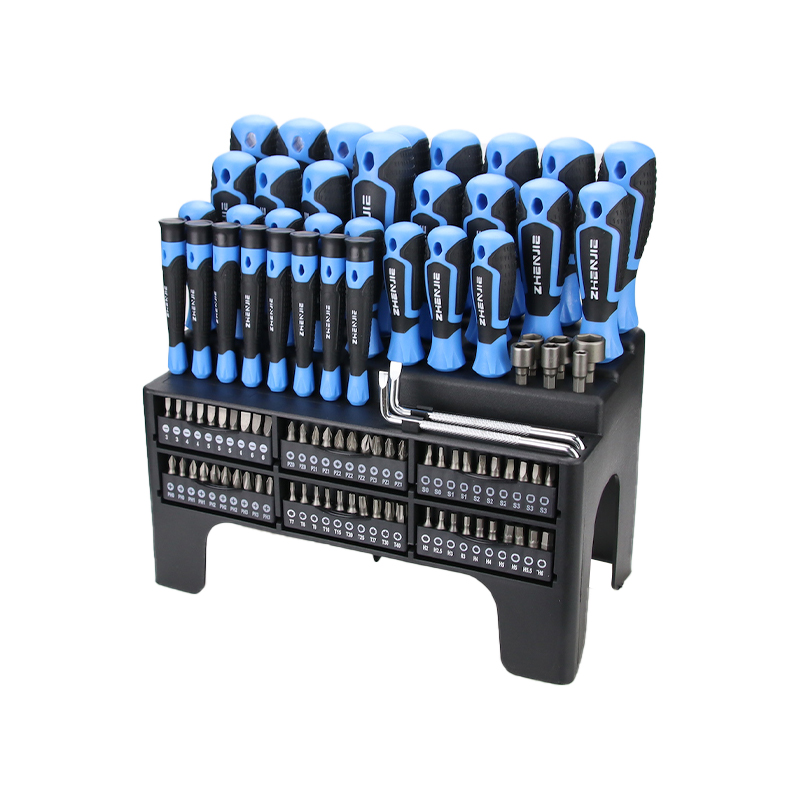
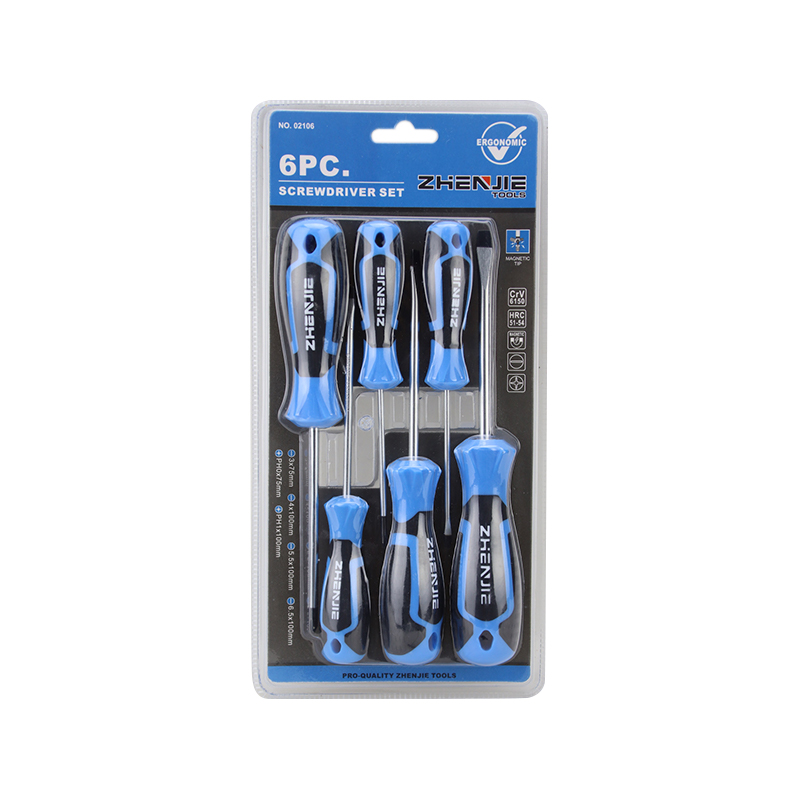
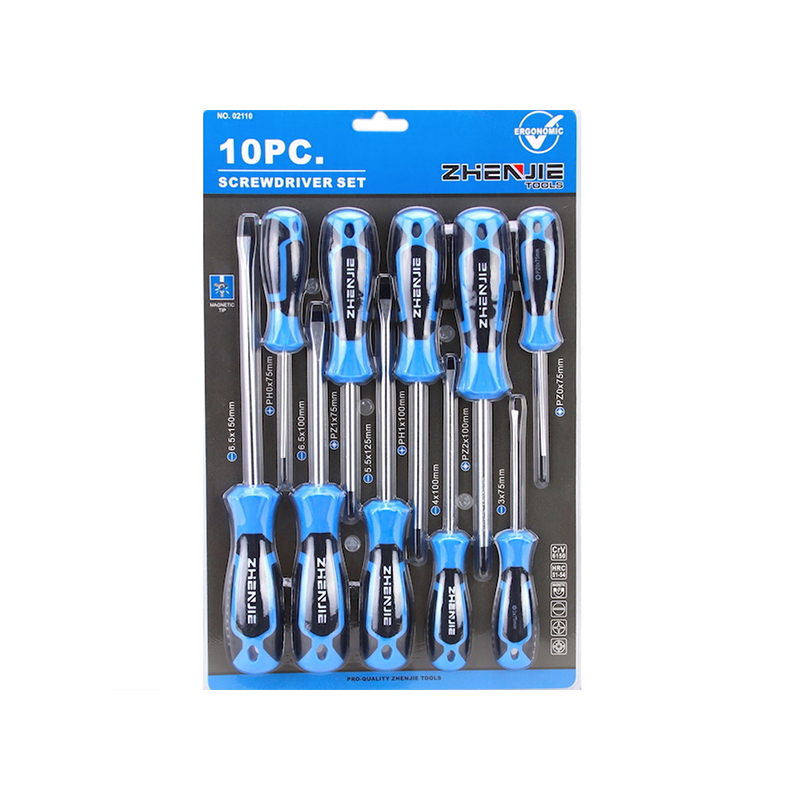
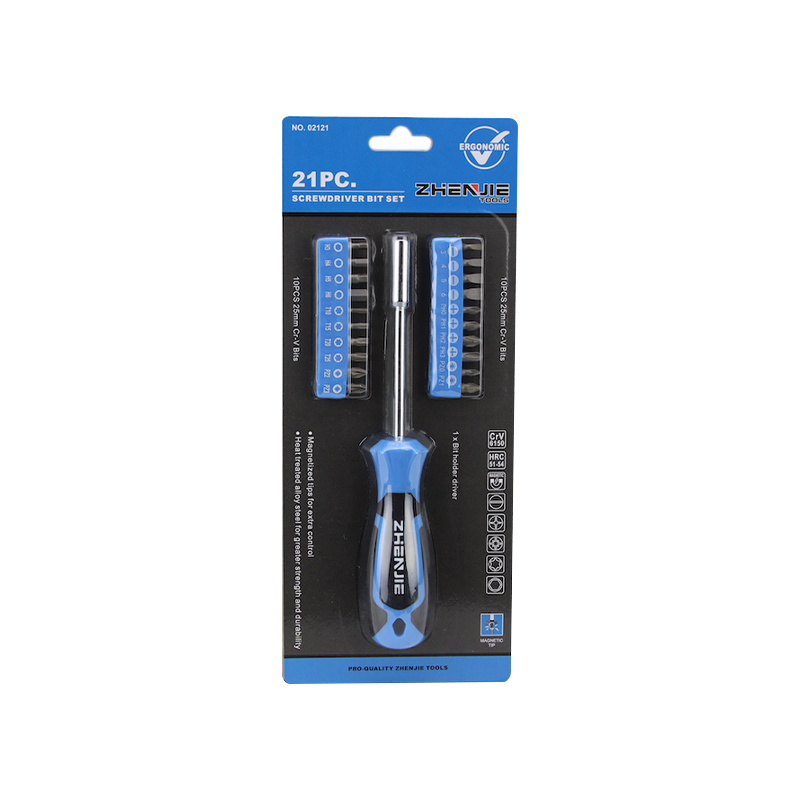
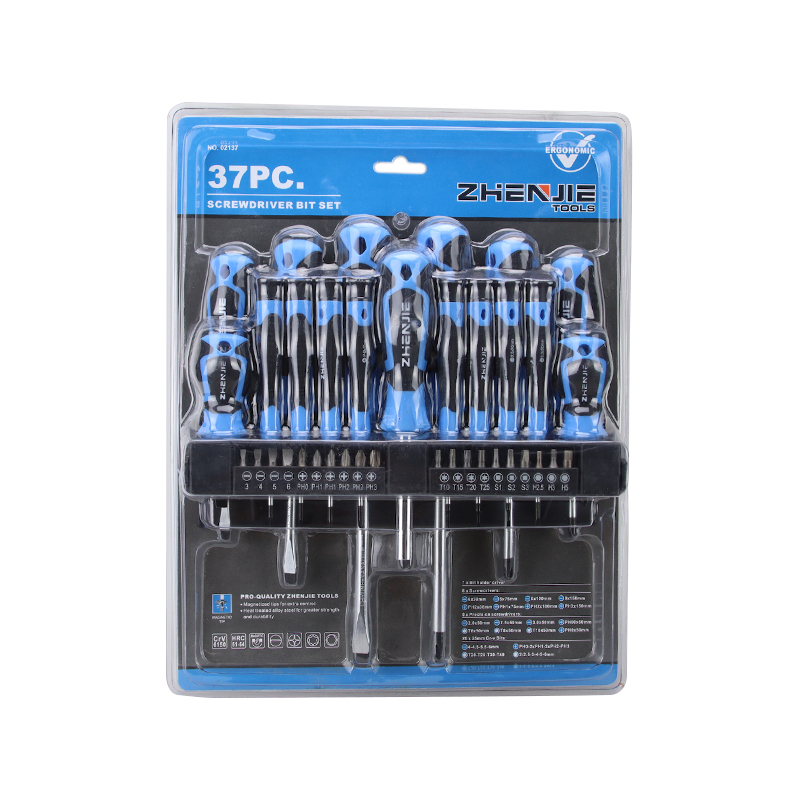
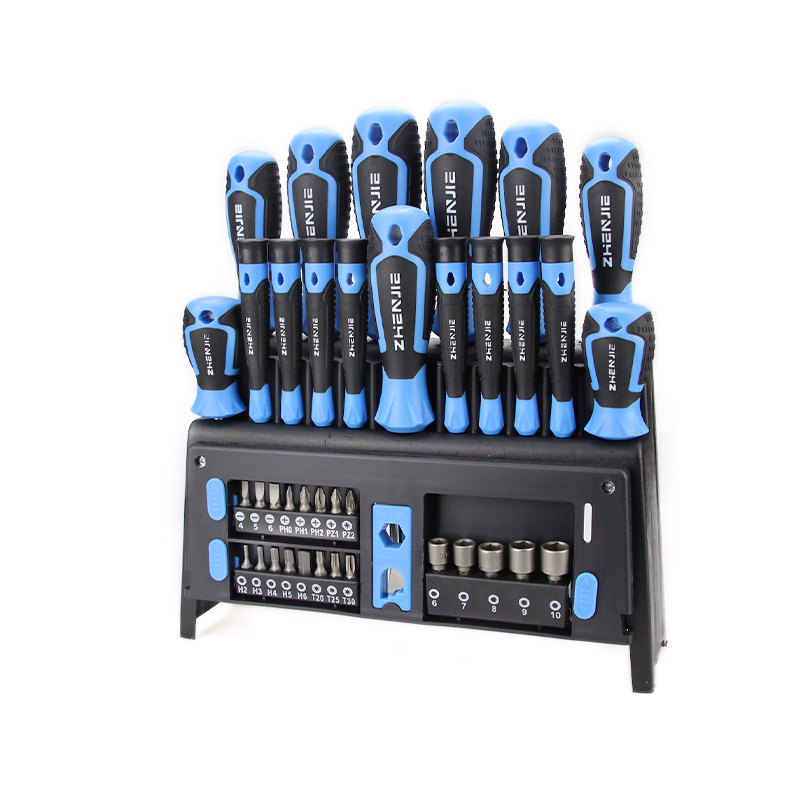
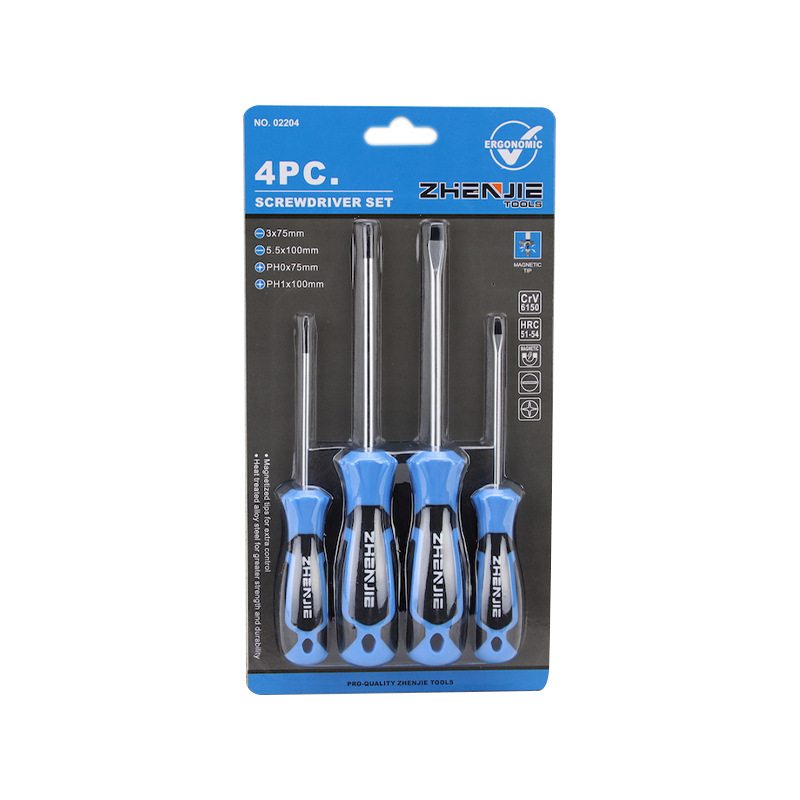
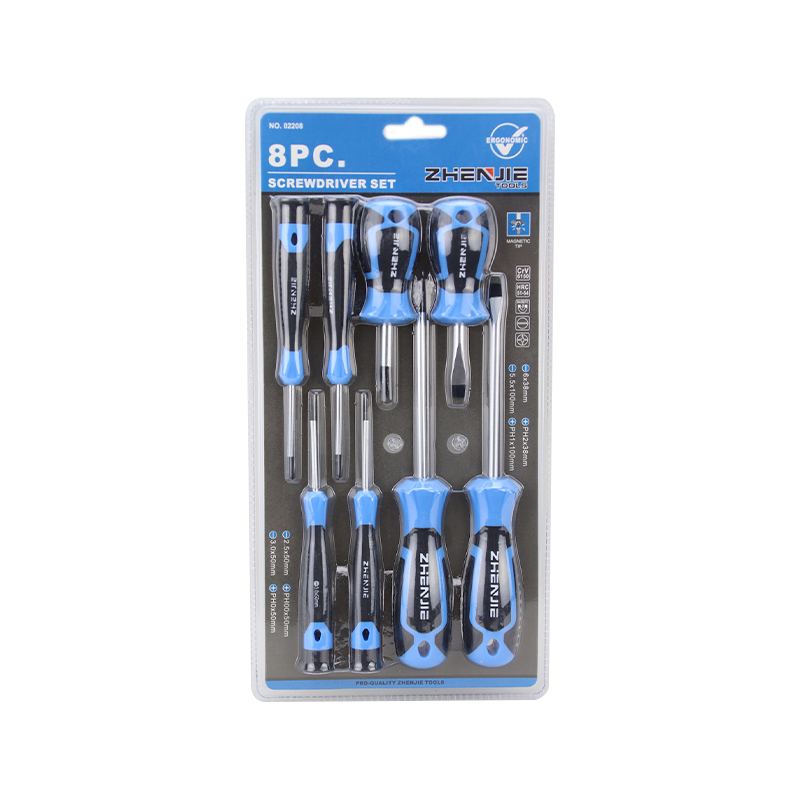
For general household maintenance, a six-piece set covering flathead (small and medium), Phillips PH1 and PH2, and Torx T15 and T25 handles roughly 80% of encountered fasteners. For automotive or electronics work, supplementing with a JIS PH1, Torx T10 and T20, and a precision set for sub-M3 fasteners covers the remaining common scenarios. A dedicated magnetic-tip bit set with an impact-rated shank and a ¼" hex drive will serve power tool use across all standard drives.
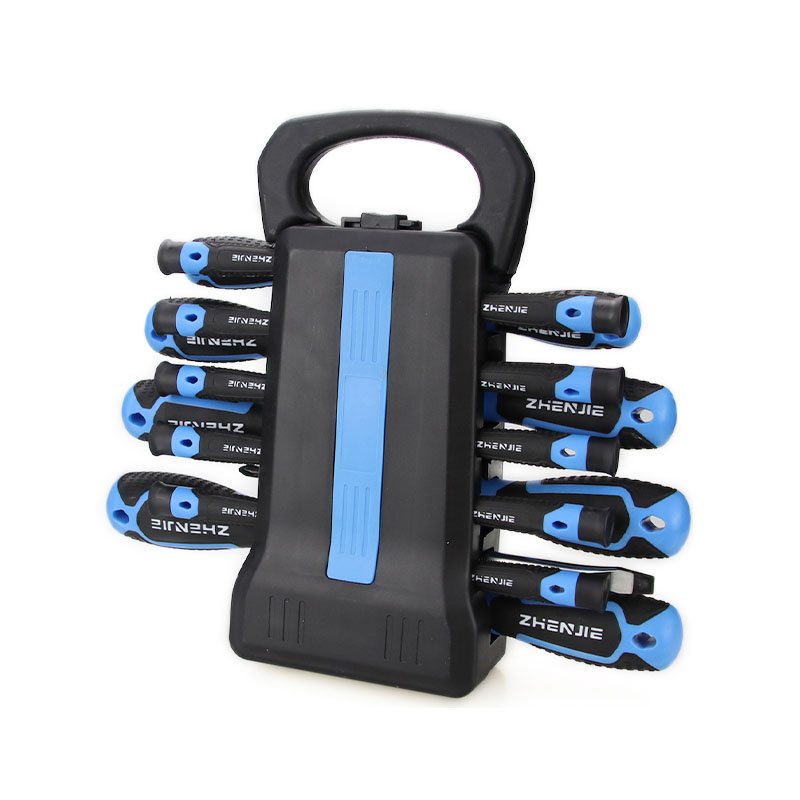
Store screwdrivers with tips protected — contact with metal surfaces in drawers dulls tip geometry faster than actual use. A roll pouch, wall-mounted strip with magnetic holders, or dedicated foam insert tray all extend tip life significantly while keeping sizes quickly identifiable.