

 English
 русский
 Español
What Is a Screwdriver — Definition and Core Function
A screwdriver is a hand tool or powered tool designed to drive screws into or out of a material by applying rotational torque to the screw head. The tool engages a shaped recess or profile on the screw head — the drive type — and transmits the turning force needed to thread the screw into wood, metal, plastic, masonry, or other substrates, or to withdraw it. The screwdriver is one of the most universally used tools across construction, manufacturing, electronics, automotive, and household maintenance work.
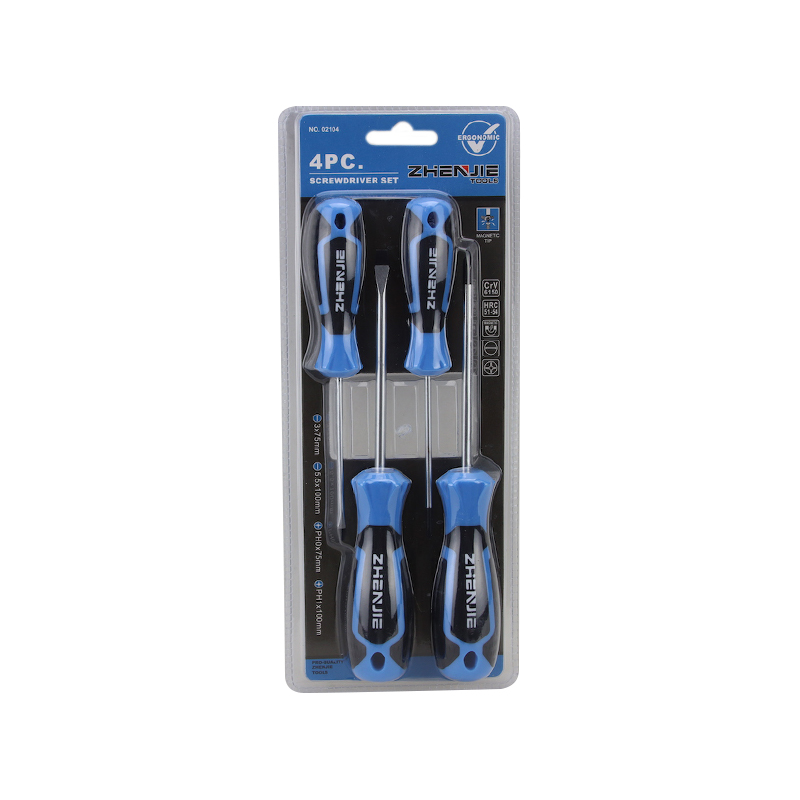
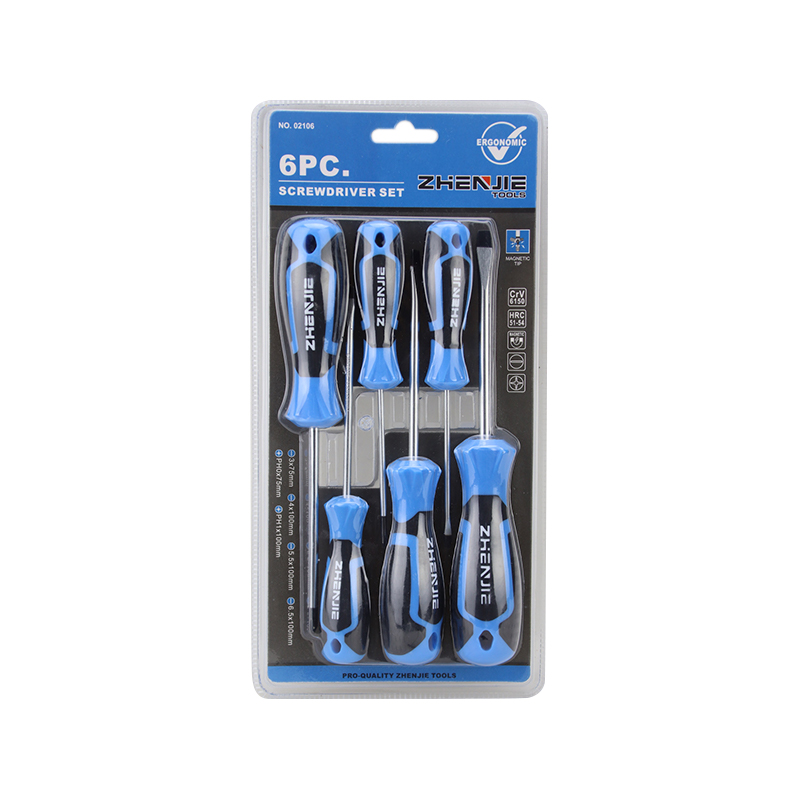
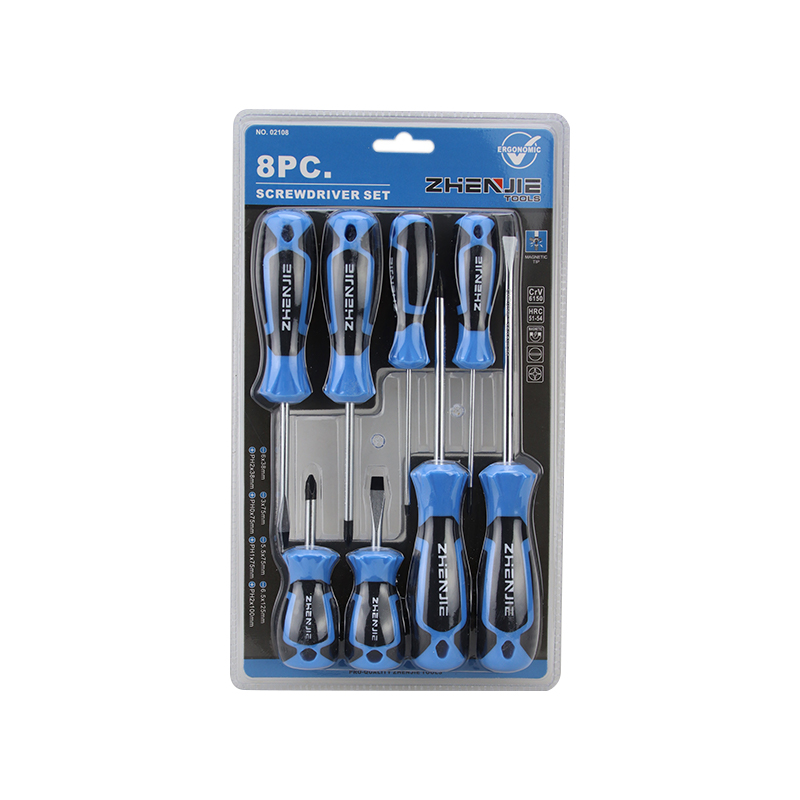
The definition of a screwdriver encompasses a broad family of tools. In its simplest form, a manual screwdriver consists of three components: a handle that provides grip and a surface for the user's hand to apply torque; a shaft (also called the shank) that transmits the turning force; and a tip (or blade) shaped to match the target screw drive. In powered variants — electric screwdrivers, cordless drills in screwdriver mode, and impact drivers — the manual rotation is replaced by a motor, but the tip-to-screw engagement principle remains identical.
The distinction between a screwdriver and a wrench or ratchet is worth clarifying: screwdrivers are designed specifically for screws — fasteners with a threaded shank and a recessed or shaped drive head. Wrenches and sockets engage the external geometry of bolt heads and nuts. A screwdriver bit socket set bridges these two tool families by mounting screwdriver bit tips onto socket drive systems, combining the drive compatibility of both.
What Does a Screwdriver Do — Mechanics and Practical Role
A screwdriver converts the rotational force applied by the user — or a motor — into linear clamping force as the screw thread engages the substrate material. When a screw is driven into wood or metal, the helical thread displaces or cuts material with each rotation, pulling the fastener deeper and generating clamping force between the joined components. The screwdriver's job is to maintain consistent engagement between the tip and the screw head throughout this process, transferring torque without slipping out of the drive recess.
Beyond simple fastening, screwdrivers are used for a wide range of related tasks:
- Removal and disassembly — reversing the rotation withdraws screws, enabling maintenance, repair, and component replacement without damaging surrounding material.
- Torque-controlled fastening — in manufacturing and automotive assembly, screwdrivers with torque-limiting clutches or electronic torque control ensure screws are driven to a precise clamping specification, preventing under-tightening (joint loosening) and over-tightening (thread stripping or material cracking).
- Adjustment — many mechanical and electrical systems use slotted or Phillips screws as adjustment points for calibration — HVAC dampers, carburetor mixture screws, optical instrument focus, and electronics trimmer potentiometers all rely on a screwdriver for fine adjustment.
- Prying and opening — flat-blade screwdrivers are routinely used (though not strictly designed) to open paint can lids, pry apart press-fit panels, and lift retaining clips in electronics work.
Tip fit is the single most important factor in screwdriver performance. A tip that is even slightly too small for the screw drive recess will rock under load, rounding out the recess walls and making the screw impossible to drive or remove — a condition called cam-out. Using correctly sized, correctly profiled tips for the specific screw head prevents cam-out, protects the workpiece surface, and extends tip service life significantly.
Types of Screwdrivers: Drive Profiles, Formats, and Specialized Variants
The variety of screw drive systems in use across industries means that no single screwdriver tip serves all applications. Understanding the major drive types — and the screwdriver formats designed around them — is essential for anyone sourcing, specifying, or using these tools professionally.
By Drive Profile
- Flat / slotted — the oldest and simplest drive: a single straight slot across the screw head. Slotted screws remain common in electrical terminals, legacy plumbing fittings, and decorative hardware. Flat-blade screwdrivers are sized by blade width (e.g., 4 mm, 5.5 mm, 8 mm) and must match the slot width closely to avoid damage.
- Phillips (PH) — a cross-shaped recess with tapered walls, deliberately designed to cam out at a certain torque threshold — originally intended as a self-limiting feature for assembly line production. Available in sizes PH0 through PH4, with PH2 being by far the most common in general woodworking, furniture assembly, and consumer electronics.
- Pozidriv (PZ) — a refinement of Phillips with secondary ribs between the cross arms, providing more contact area and significantly better cam-out resistance. Standard in European construction, cabinetry, and manufactured goods. PZ2 is the dominant size for wood screws in European markets. Phillips and Pozidriv tips are not interchangeable — using a PH tip in a PZ screw will round the recess.
- Torx / Star (TX) — a six-pointed star recess that transmits torque through near-vertical drive walls, virtually eliminating cam-out. Torx has become the dominant drive in automotive assembly, electronics manufacturing, and structural construction screws. Sizes range from T1 (miniature electronics) to T100 (heavy machinery). Torx Plus (IP) and Torx Tamper-Resistant (TR, with a pin in the center) are security variants.
- Hex / Allen (HX) — a hexagonal socket recess driven by an Allen key or hex screwdriver bit. Common in furniture flat-pack assembly (IKEA-type hardware), bicycle components, and machinery set screws. Metric sizes (2–10 mm) and imperial sizes (5/64" – 3/8") both in widespread use.
- Square / Robertson — a square recess providing excellent torque transmission and near-zero cam-out. Dominant in Canadian construction for deck screws and structural timber fastening. Less common in European and Asian markets but growing in adoption globally.
- Security / tamper-resistant drives — Pentalobe (used in Apple products), Tri-Wing, Spanner/Snake-Eye, and One-Way drives are engineered to prevent removal without specialized tools. Common in consumer electronics, transit infrastructure, and public facilities where unauthorized disassembly must be deterred.
By Tool Format
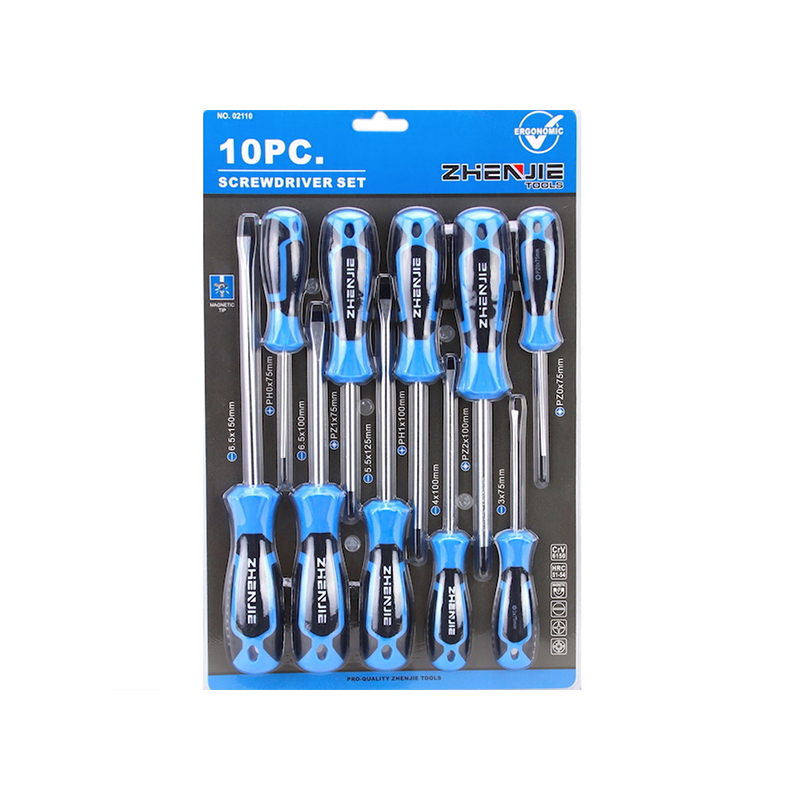
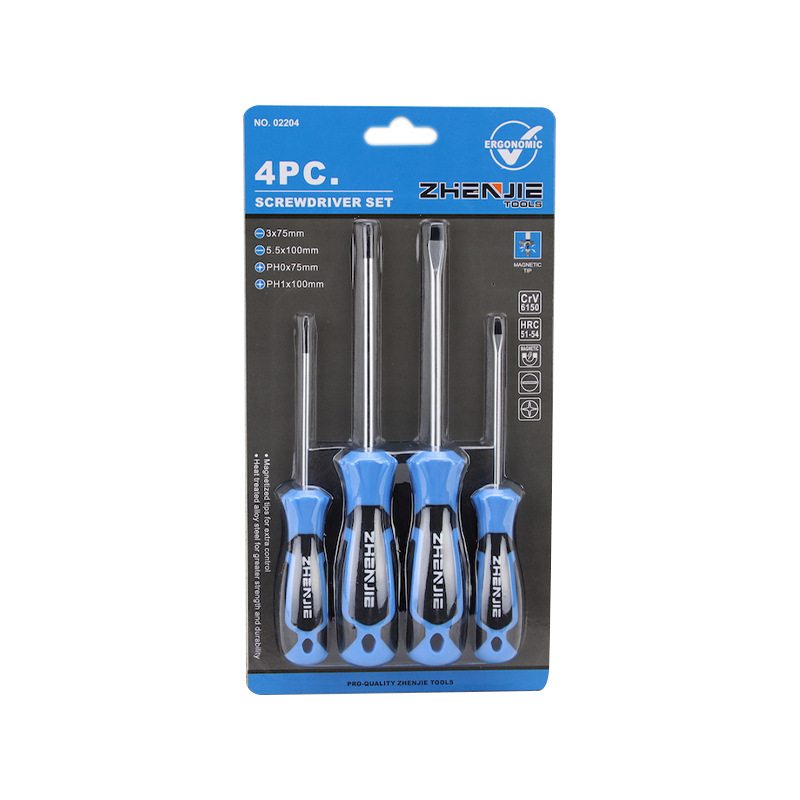
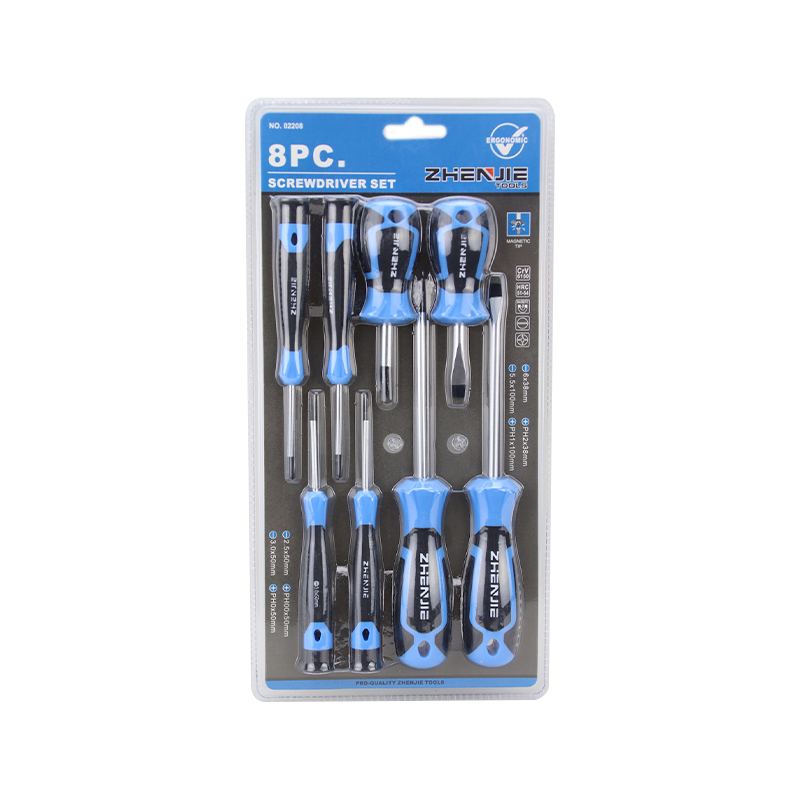
- Fixed-tip manual screwdriver — a single tip permanently attached to a shaft and handle. Preferred by trades professionals for repetitive single-drive tasks where tool changeover time matters. Higher-quality versions have through-hardened S2 or Chrome Vanadium steel tips and ergonomic tri-lobe or soft-grip handles that allow both precision finger-tip control and full-palm torque application.
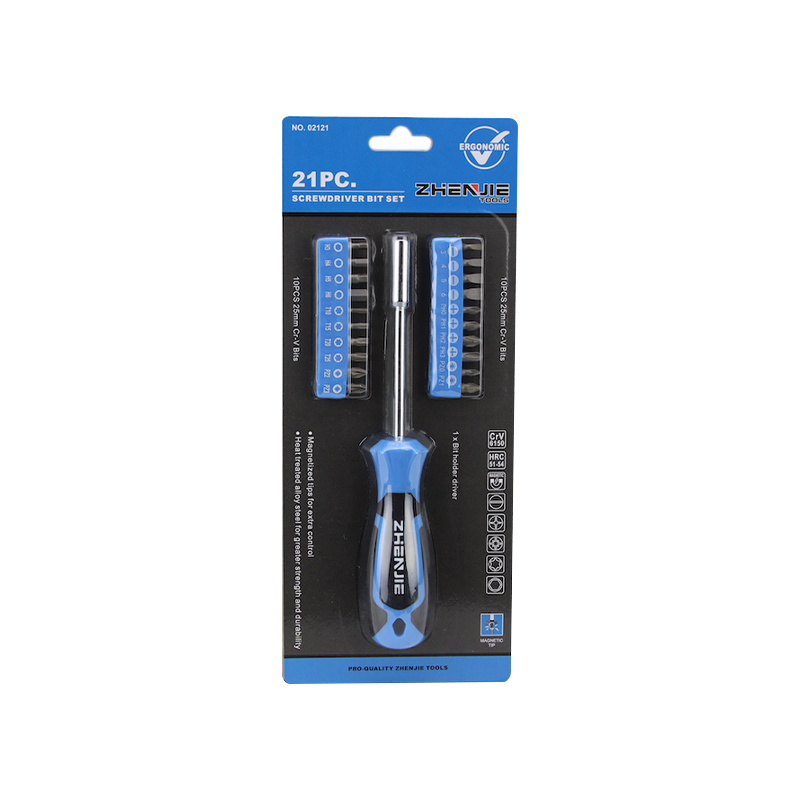
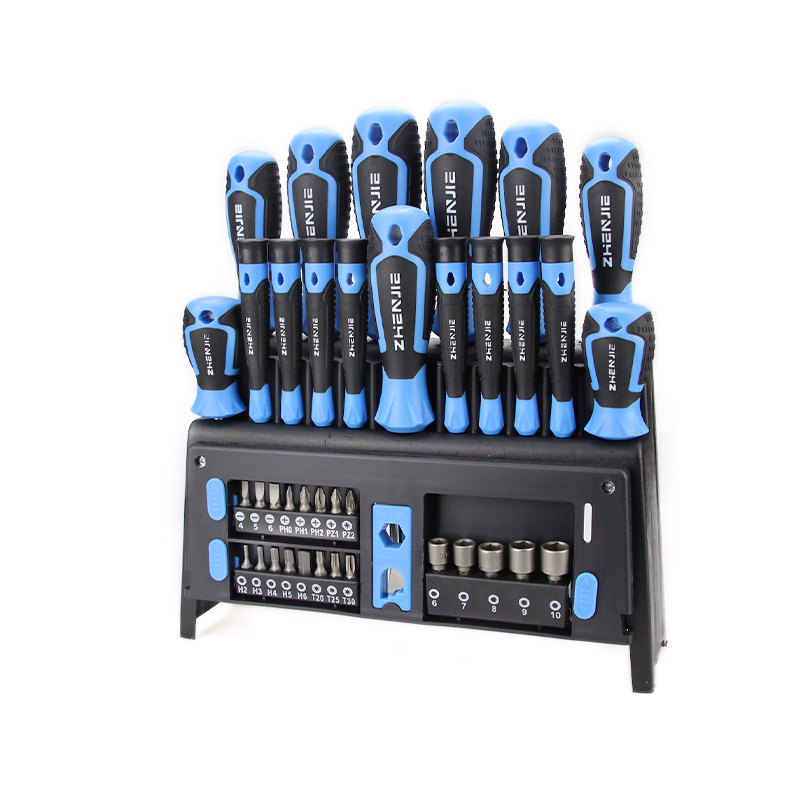
- Interchangeable-bit screwdriver — a handle with a magnetic chuck or quick-release collar that accepts standard ¼" hex shank bits. Provides versatility for multi-drive tasks without carrying multiple individual screwdrivers. The dominant format for toolkit screwdrivers and ratcheting screwdrivers.
- Ratcheting screwdriver — incorporates a directional ratchet mechanism in the handle, allowing the user to drive screws without lifting the tip from the head between strokes. Significantly faster than a standard manual screwdriver in confined spaces where full rotations are not possible.
- Stubby screwdriver — a very short-shaft variant (15–40 mm shaft) designed for access in extremely tight spaces — behind panels, inside appliance cabinets, and in automotive interiors where standard shaft lengths cannot fit.
- Precision / jeweler's screwdriver — small-diameter, lightweight screwdrivers turned between the fingertips rather than gripped in the palm. Essential in electronics repair, watchmaking, eyeglass maintenance, and instrument calibration where applied torque must be minimal and controlled.
- Electric and cordless screwdriver — battery-powered tools with a motor replacing manual rotation. Range from lightweight dedicated screwdrivers (3.6–7.2V) for light assembly work to full-size cordless drills/drivers (18–20V) with torque clutch settings for heavy construction use.
- Impact driver — delivers rotational torque combined with rapid concussive hammer blows along the drive axis, dramatically increasing fastening speed and torque output for structural screws, lag bolts, and self-drilling screws in steel framing. Not suitable for delicate or precision fastening work.
Screwdriver Bit Socket Sets: What They Are and How to Choose
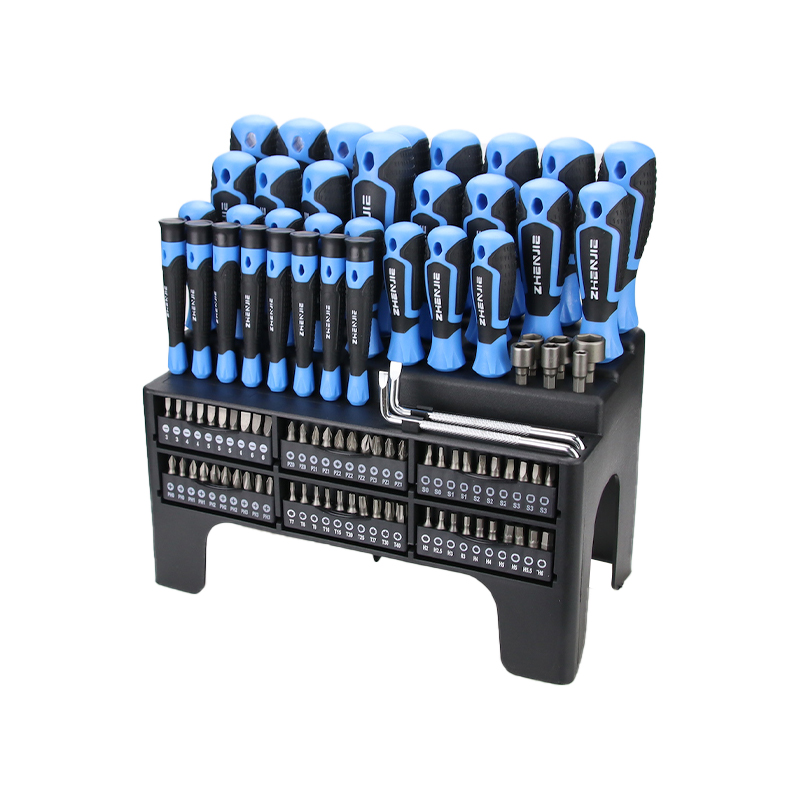
A screwdriver bit socket set combines screwdriver bit tips with socket drive adapters, enabling screwdriver bits to be used with ratchet handles, torque wrenches, extension bars, and power tool drives. This bridges the gap between screwdriving and conventional socket wrench work, making a single ratchet handle usable across both bolt-head and screw-head fasteners.
Components of a Screwdriver Bit Socket Set
A typical set contains several distinct component types that work together:
- Screwdriver bits — short ¼" hex shank tips in various drive profiles (Phillips, Pozidriv, Torx, flat, hex, Robertson) and sizes. Standard bit length is 25 mm (1") for compact use; 50 mm (2") and 75 mm (3") bits provide reach in recessed applications. Bits are typically manufactured from S2 modified steel or Chrome Molybdenum (CrMo) steel, heat-treated to 58–62 HRC for hardness with sufficient toughness to resist brittle fracture under impact.
- Bit holders / adapters — socket-drive receivers with a ¼" square drive (or ⅜" / ½") input that accept standard ¼" hex shank bits. Allow any screwdriver bit to be used in a standard ratchet or torque wrench. Magnetic bit holders retain bits during vertical driving and in overhead work.
- Nut drivers / bit sockets — hex socket heads on a ¼" hex shank or direct ¼" square drive, used for driving hex-head screws and small bolts without a separate wrench. Common sizes are 5–13 mm metric and 3/16"–½" imperial.
- Extension bars — ¼" or ⅜" square drive extensions (50–150 mm) for reaching recessed fasteners in deep housings, engine bays, and structural cavities.
- Drive adapters — convert between ¼", ⅜", and ½" square drives, and between square drive and ¼" hex, enabling maximum compatibility across tool systems.
How to Evaluate a Screwdriver Bit Socket Set
| Criterion | What to Look For | Why It Matters |
|---|---|---|
| Bit steel grade | S2 or CrMo, 58–62 HRC | Harder tips resist wear; tougher steel resists snap fracture under impact |
| Drive profile precision | DIN / ISO dimensional compliance | Accurate tip geometry prevents cam-out and screw recess damage |
| Drive coverage | PH, PZ, TX, flat, HX as minimum | Ensures compatibility across common fastener types |
| Impact rating | "Impact-rated" or "torsion zone" designation | Standard bits fracture in impact drivers; impact-rated bits have a torsion relief zone that absorbs shock |
| Bit retention | Magnetic bit holder included | Prevents bit drop during overhead or one-handed driving |
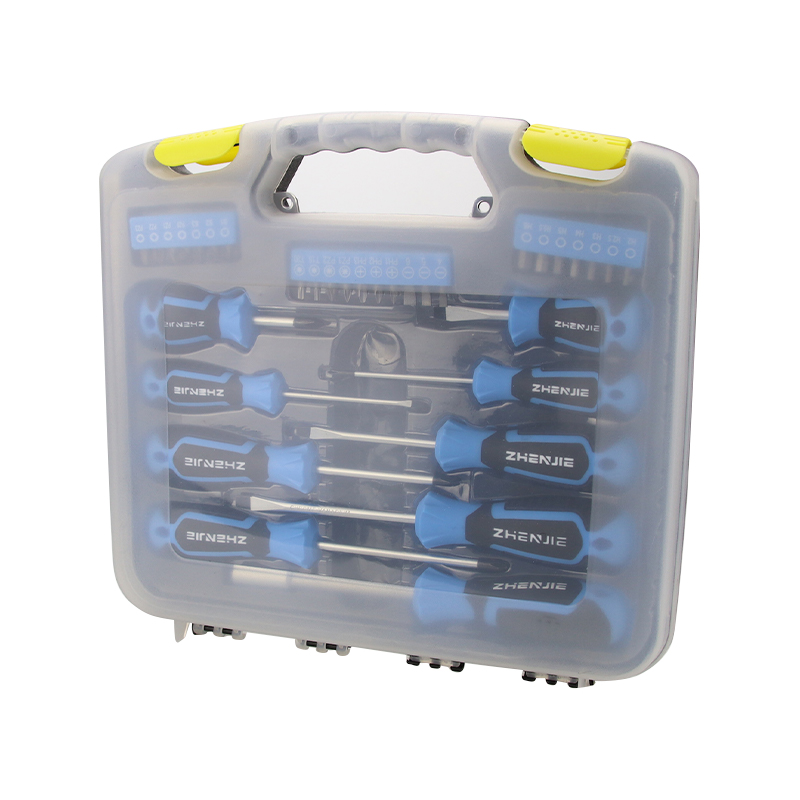
| Storage / organization | Indexed case or rail with labeled slots | Reduces time locating the correct bit; prevents loss on jobsite |
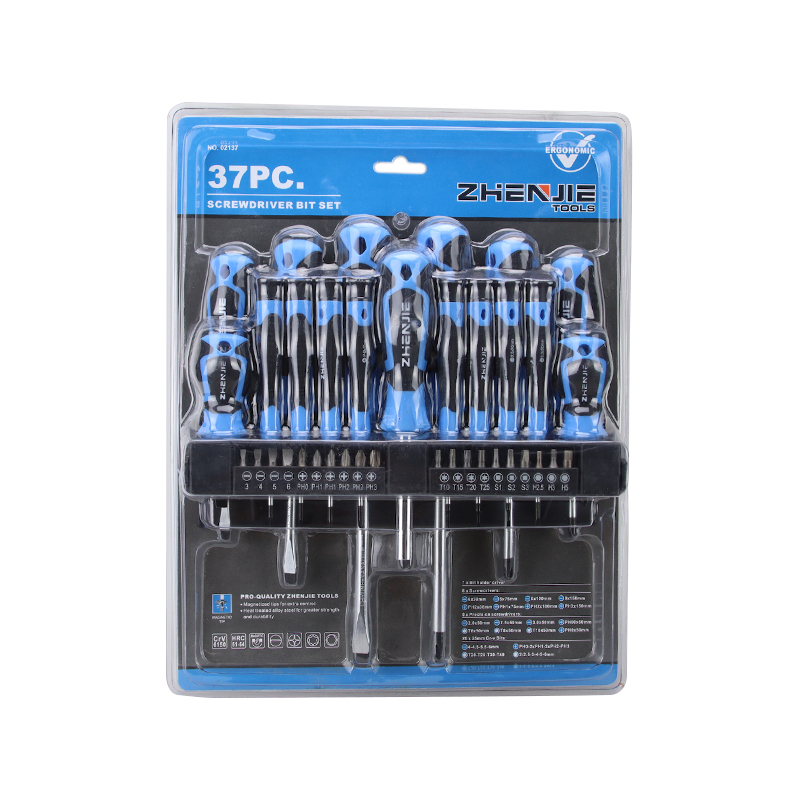
For general trade use, a 40–60 piece set covering ¼" drive with PH1/PH2/PH3, PZ1/PZ2/PZ3, T10 through T40 Torx, flat 4–8 mm, HX 2–8 mm metric, and Robertson #1–#3, plus a ¼" to ⅜" adapter and 75–150 mm extension, covers the vast majority of fastener types encountered in construction, automotive, and appliance repair. For impact driver use, always select sets explicitly rated for impact — standard S2 bits will fracture at the hex shank under repeated impact loading, creating a safety hazard.