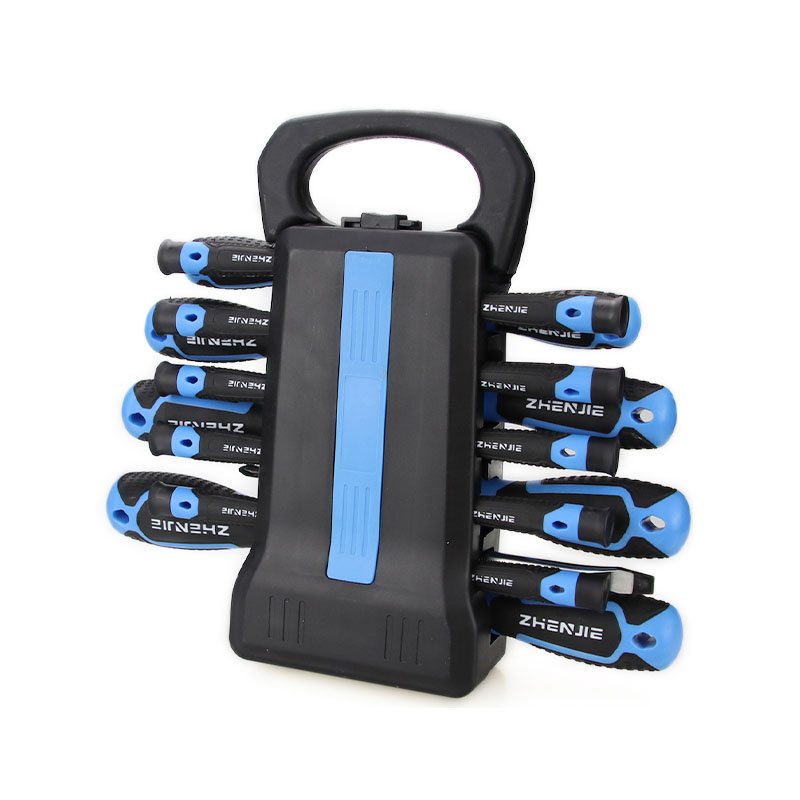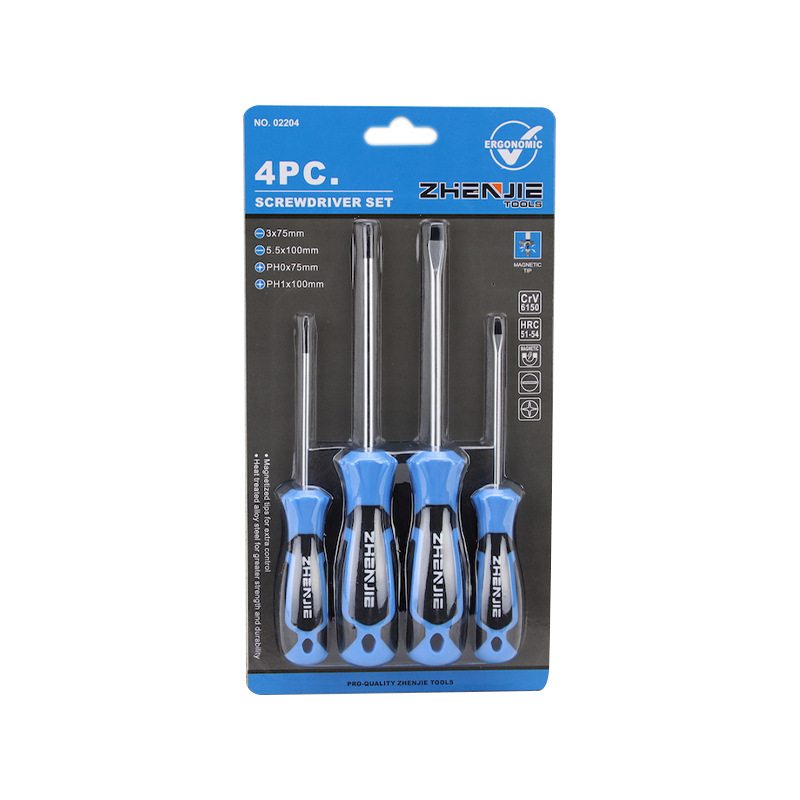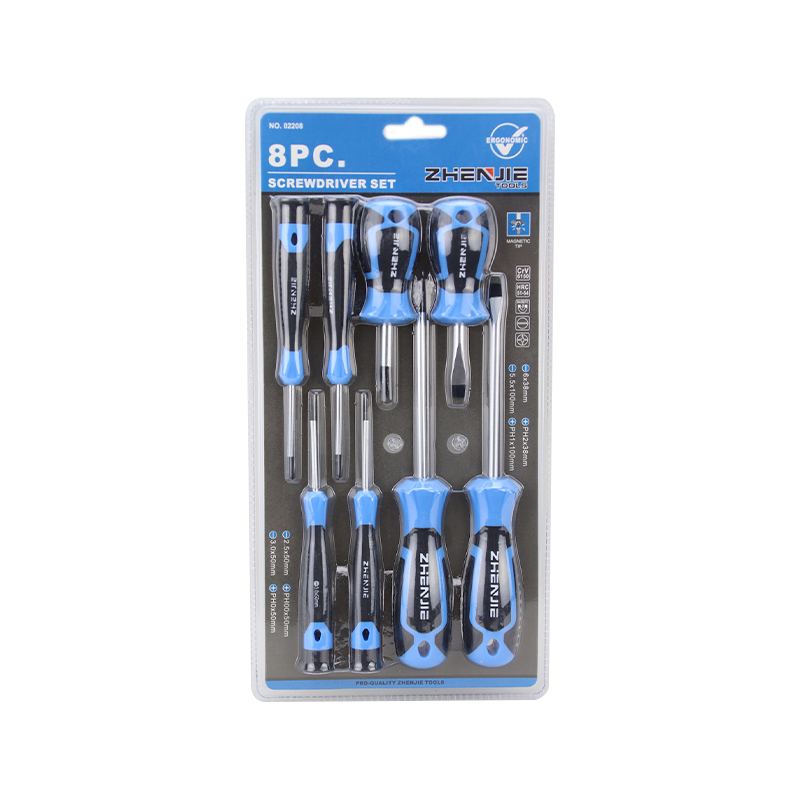


 English
 русский
 Español
All Types of Screwdrivers: An Overview
A screwdriver is one of the most fundamental hand tools in any toolkit, yet the range of screwdriver types available reflects the enormous diversity of fastener systems used across industries — from consumer electronics assembled with sub-millimeter precision screws to structural steel connections requiring high-torque drive systems. Using the wrong screwdriver type on a fastener does not just risk slipping — it damages the fastener head, making removal progressively more difficult and eventually requiring extraction tools. Understanding all kinds of screwdrivers and their intended uses is the foundation of efficient, damage-free assembly and repair work.
Screwdriver types are defined by two variables: the drive recess geometry machined into the fastener head, and the physical size of the tool matched to that recess. Every drive type exists for a reason — some were designed to maximize torque transmission, others to resist cam-out (the tendency for the driver tip to slip out of the recess under load), others to require proprietary tools and deter unauthorized disassembly. Knowing why each type was developed clarifies when to use it and which sets to prioritize for a given type of work.
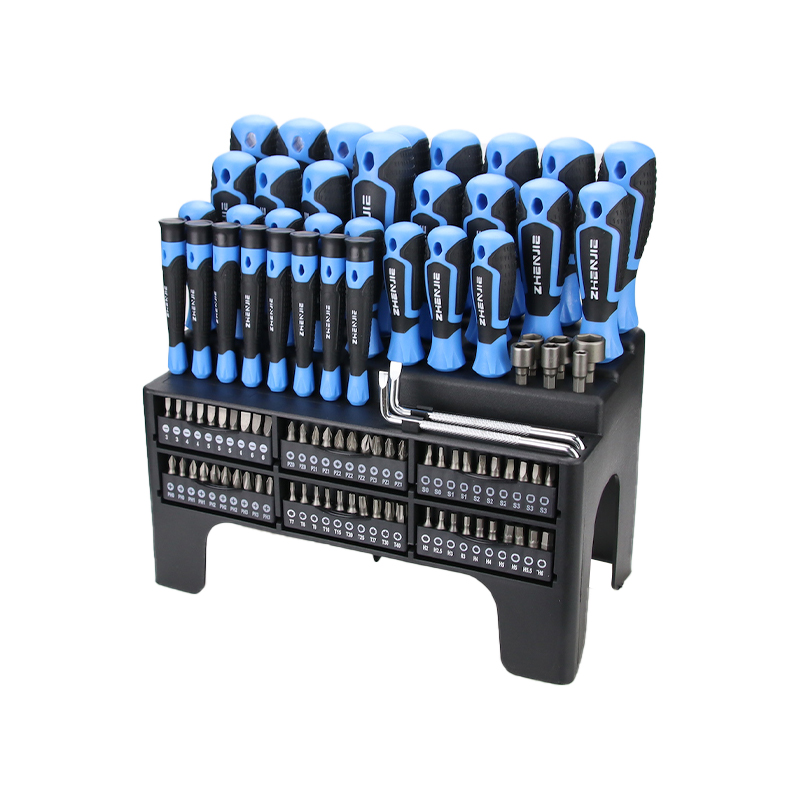
Phillips Screwdriver: The Most Common Type
The Phillips screwdriver — identified by its cross-shaped tip with tapered flanks — is the most widely used screwdriver type globally. Developed by Henry F. Phillips in the 1930s and adopted by major automotive manufacturers for assembly line efficiency, the Phillips drive was specifically designed to cam out under excessive torque, preventing overtightening on automated assembly lines of the era. This intentional cam-out behavior, once an advantage in manufacturing, is the reason Phillips screwdrivers are frustrating in repair work — the driver tip pops out of the recess before reaching the torque needed to break a corroded or over-tightened fastener.
Phillips screwdrivers are manufactured in five sizes: PH0, PH1, PH2, PH3, and PH4, ranging from very small (PH0 for electronics) to large (PH3–PH4 for structural fasteners and heavy equipment). PH2 is the most common size, covering the majority of household, automotive, and general construction fasteners. A critical and frequently overlooked point: using a PH2 driver on a PH1 screw — or any mis-sized combination — accelerates cam-out and rounds the recess. Matching driver size to fastener size precisely is the single most effective way to avoid stripped Phillips heads.
Screwdriver Types and Uses: The Complete Reference
Flathead (Slotted) Screwdriver
The oldest screwdriver type, defined by a flat blade that engages a single slot across the fastener head. Flathead screwdrivers remain in use for legacy fasteners, electrical terminal screws, and applications where a flat blade is needed as a pry or lever tool. They perform poorly in power tool applications because the flat tip requires precise alignment and cams out easily under rotational force. Blade widths range from under 1 mm for electronics work to over 12 mm for large cabinet and structural screws. A correctly sized flathead driver fills the slot width without overhang — an oversized blade damages the surrounding material and reduces engagement.
Pozidriv Screwdriver
Pozidriv (PZ) is visually similar to Phillips but mechanically distinct — it adds four additional contact ribs at 45° to the main cross, producing eight contact points instead of four. This geometry virtually eliminates cam-out, allowing significantly higher torque transmission than Phillips. Pozidriv is the dominant cross-head fastener system in European construction, furniture assembly (flat-pack), and general hardware. PZ screwdrivers are marked with a PZ designation and four small tick marks around the tip. Using a Phillips driver on a Pozidriv fastener — a common mistake given their visual similarity — results in immediate cam-out and rapid fastener damage. Sizes run PZ0 through PZ4, paralleling the Phillips size range.
Torx (Star) Screwdriver
Torx drive features a six-pointed star recess that transfers torque through vertical side walls rather than tapered flanks, providing excellent cam-out resistance and high torque capacity relative to fastener size. Originally developed by Textron Camcar in 1967, Torx has become standard in automotive, electronics, bicycle components, and power tools. Sizes are designated T1 through T100, with T10, T15, T20, T25, and T27 covering the most frequently encountered fasteners in automotive and consumer electronics work. Tamper-resistant Torx (TR or Torx Plus Security) adds a center pin to the recess that prevents engagement with a standard Torx driver, requiring a specialized hollow-center bit — widely used by electronics manufacturers to deter unauthorized repair.
Hex (Allen) Screwdriver
Hex drive fasteners use a six-sided (hexagonal) socket recess engaged by an Allen key or hex screwdriver bit. The geometry provides high torque transmission and is extensively used in furniture assembly, bicycle components, machinery fasteners, and set screws. Hex screwdrivers are available as L-shaped keys, T-handle drivers, and standard handle drivers with hex bits. Metric sizes (1.5 mm through 10 mm) cover most common applications; imperial sizes (5/64" through 3/8") are used in North American manufacturing contexts.
Robertson (Square Drive) Screwdriver
The Robertson drive uses a square socket recess with a slight taper, providing outstanding cam-out resistance — the taper creates a self-centering action that holds the fastener on the driver tip without magnetic assistance. Developed in Canada in 1908 and dominant in Canadian construction to this day, Robertson drive is common in decking, cabinetry, and structural wood fasteners. Sizes #0 (orange) through #4 (black) are color-coded by handle for rapid size identification on the job site.
JIS (Japanese Industrial Standard) Screwdriver
JIS is a cross-head drive visually identical to Phillips but engineered to different angular tolerances — JIS recesses have straighter flanks that provide more contact surface and resist cam-out more effectively than true Phillips geometry. JIS fasteners are standard in Japanese motorcycles, power tools, and electronics manufactured before approximately 2010. Using a Phillips driver on a JIS fastener is the primary cause of stripped cross-head screws in Japanese motorcycle restoration — the apparent similarity conceals enough dimensional difference to cause immediate damage under torque. JIS drivers are identified by a small dot on the tip face and are essential for anyone working on vintage Japanese equipment.
Tri-Wing, Pentalobe, and Security Screwdrivers
Security and proprietary drive types are designed to require specialized tools, discouraging field repair and unauthorized disassembly. Tri-Wing (three asymmetric wings) appears in Nintendo hardware, early Apple products, and aircraft interior fasteners. Pentalobe (five-lobed asymmetric star) is Apple's proprietary fastener used in MacBooks, iPhones, and iPads since 2009. Spanner (two-hole) drive appears in public infrastructure hardware — elevator panels, transit systems — to prevent tampering. None of these types are encountered in general mechanical work, but a comprehensive precision screwdriver set for electronics repair must include pentalobe sizes P2 and P5 to cover current Apple devices.
| Drive Type | Cam-Out Resistance | Common Sizes | Primary Applications |
|---|---|---|---|
| Phillips (PH) | Low (by design) | PH0–PH4 | General hardware, automotive, electronics |
| Pozidriv (PZ) | Very high | PZ0–PZ4 | European construction, furniture |
| Torx (TX) | Very high | T6–T40 (common) | Automotive, electronics, bicycles |
| Hex / Allen | High | 1.5–10 mm metric | Machinery, furniture, bicycles |
| Robertson (Square) | Very high | #0–#4 | Decking, cabinetry, Canadian construction |
| Flathead (Slotted) | Very low | 1–12 mm blade width | Legacy fasteners, electrical terminals |
| JIS | Medium–high | JIS #0–#3 | Japanese motorcycles, vintage electronics |
| Pentalobe | High | P2, P5 | Apple devices (iPhone, MacBook) |
Small Screwdriver Sets: Precision and Electronics Applications
Small screwdriver sets — also called precision screwdriver sets or jeweler's screwdriver sets — are purpose-built for fasteners below approximately 4 mm head diameter, where standard handle screwdrivers are too large to control accurately and generate excessive torque that strips miniature fasteners. These sets are essential for smartphone repair, laptop servicing, camera maintenance, watch and eyeglass work, and RC hobby equipment.
A quality small screwdriver set for electronics work must cover at minimum: Phillips PH000, PH00, PH0, and PH1; flathead 1.0 mm, 1.5 mm, and 2.0 mm; Torx T3, T4, T5, T6, T8, and T10; and pentalobe P2 and P5 for Apple devices. Sets sold for general precision work that omit pentalobe and Torx are inadequate for modern consumer electronics repair regardless of overall piece count.
The handle design of a precision screwdriver determines control quality more than any other factor at this scale. Rotating caps on the handle end allow the thumb to maintain downward pressure while the fingers rotate the barrel — a critical feature when driving tiny fasteners that require precise axial force to avoid tip pop-out. Knurled or rubberized barrels provide the grip needed for controlled torque without the slip that smooth metal barrels produce at the fine movements required for sub-2 mm fasteners.
What Makes a High Quality Screwdriver
The difference between a high quality screwdriver and a budget tool is not visible at purchase — it becomes apparent after 50 fasteners, when the tip of a cheap driver begins to round and the handle of a quality driver still transmits torque cleanly. Several specific material and manufacturing factors determine screwdriver quality and longevity.
- Tip steel and hardness: High quality screwdriver tips are manufactured from chrome vanadium (Cr-V) or S2 tool steel, heat-treated to a hardness of 58–64 HRC. S2 steel — a shock-resistant tool steel with higher molybdenum content than standard Cr-V — is the benchmark for premium screwdrivers because it maintains tip geometry under repeated impact and torsional stress. Budget screwdrivers use mild steel tips that deform after minimal use, rounding the contact surfaces and accelerating fastener damage.
- Tip geometry precision: The tip dimensions must conform tightly to the fastener recess geometry. This requires precision grinding of the tip profile — a manufacturing step that adds cost but determines engagement quality. Well-made Phillips tips have the correct taper angle (approximately 26.5°) and flat flank geometry; poorly made tips have approximated profiles that contact only the outer edges of the recess, concentrating stress and accelerating cam-out.
- Tip surface treatment: Black oxide or black phosphate tip treatments provide mild corrosion resistance and, importantly, a micro-textured surface that increases friction between the tip and fastener recess — measurably reducing cam-out tendency compared to polished tips. This is why professional-grade screwdrivers typically have black tips rather than bright chrome finishes.
- Handle ergonomics and material: Bi-material handles — hard polypropylene core overmolded with soft-grip TPE or rubber — provide the combination of structural rigidity and surface grip that allows high torque transfer without hand fatigue. Handle diameter matters: a diameter of 35–40 mm for standard screwdrivers allows the palm to apply torque efficiently, while smaller diameters reduce leverage and increase the effort required to drive fasteners.
- Blade-to-handle connection: The weakest point of a screwdriver under high torque is the junction between the metal blade and the handle. Quality screwdrivers use a through-blade design where the metal extends the full length of the handle with a formed or pinned connection — or a full-tang construction where the steel widens into a plate embedded in the handle. Budget designs with a short stub inserted into a plastic handle twist loose under the sustained high torque needed to remove corroded fasteners.
Choosing a Versatile Screwdriver Set: What to Look For
A versatile screwdriver set should cover the drive types and sizes most commonly encountered across the intended work scope — without unnecessary duplication that inflates piece count without adding practical coverage. For most general-purpose needs, a well-specified set of 10–20 pieces covers more real-world fasteners than a 100-piece set built around excessive flathead and Phillips duplication.
- For general household and automotive maintenance: Prioritize Phillips PH1, PH2, PH3; flathead in 3 mm, 5 mm, and 6.5 mm; Torx T10, T15, T20, T25, T27, T30; and Robertson #1 and #2 if working with Canadian or decking hardware. This 12–15 piece selection handles the vast majority of consumer products, appliances, and vehicle fasteners.
- For electronics and device repair: A dedicated precision set covering PH000–PH1, flathead 1–3 mm, Torx T3–T10, and pentalobe P2 and P5 is required. Supplement with a spudger and opening pick set for smartphone and laptop work where prying components without damaging housings is as important as the screwdriver selection.
- For professional and trade use: Individual handle screwdrivers with insulated handles rated to 1,000 V are mandatory for electrical work — VDE-certified screwdrivers meeting IEC 60900 are the industry standard. The insulation protects against accidental contact with live conductors during panel work and outlet installation. Never use standard screwdrivers for live electrical work regardless of apparent safety.
- Ratcheting screwdriver sets: A ratcheting handle compatible with standard 1/4" hex bit inserts combines the versatility of a full bit set with the speed advantage of ratcheting action. Quality ratcheting mechanisms have fine-tooth pawls — 60 teeth or more — that allow engagement in tight spaces where a full rotation is impossible. The bit storage within the handle or in a dedicated case determines whether the set is genuinely versatile in field use or just comprehensive in a workshop context.
The most reliable quality indicator when evaluating a set of screwdrivers is the tip specification — sets that clearly state S2 steel, hardness rating, and tip geometry tolerances are manufactured to a defined standard. Sets that list only "chrome vanadium" or provide no material specification are using that claim as a marketing baseline rather than a performance differentiator. Among established brands, Wera, Wiha, PB Swiss, and Vessel represent the benchmark for tip precision and handle ergonomics in professional screwdriver sets across all drive types and sizes.