

 English
 русский
 Español
Strip the heat sink off a laptop motherboard and you will face a row of PH00 screws that a standard #2 Phillips driver cannot touch: the tip is too wide, the torque range too high, and the fastener cams out before it turns. That one moment explains the difference between a precision screwdriver set and a standard screwdriver set better than any product label. Both families are genuinely engineered tools, but they are built for different fastener sizes, different torque ranges, and different jobs.
What Defines a Precision Screwdriver Set
A precision screwdriver set is a group of drivers with blade diameters below 4.8 mm and tips scaled for small fasteners, typically PH000 to PH1 Phillips, 1.0 to 3.0 mm slotted, and T1 to T10 Torx, mounted on short handles that limit applied torque.
Small size alone does not make a screwdriver precise. A miniature standard driver can still carry a crude tip, while a true precision driver pairs an accurately ground tip with a handle that prevents the user from over-torquing it. JianDe Zhenjie Hardware Tools Co., Ltd. produces both families on automated production lines, and the steel grades used for the blades often overlap. The geometry is where the two product lines split.
A precision screwdriver set is a set of small-format screwdrivers that drives fasteners up to roughly #4 or a 3.0 mm head size without cam-out, using blade diameters under 4.8 mm and torque-limited handles.
| Criterion | Precision set | Standard set |
| Blade diameter | 2.0 to 4.8 mm | 5.0 to 8.0 mm |
| Common Phillips tips | PH000, PH00, PH0, PH1 | PH1, PH2, PH3, PH4 |
| Slotted tip width | 1.0 to 3.0 mm | 3.0 to 6.0 mm |
| Typical torque range | 0.05 to 1.5 Nm | 1.0 to 20 Nm |
| Handle length | 90 to 120 mm | 120 to 220 mm |
| Best-suited work | Electronics, eyeglasses, instruments | Furniture, appliances, construction |
The table shows how little overlap the two families actually have. The torque ranges meet at only one point around 1.0 to 1.5 Nm, and a buyer who ignores these numbers will end up damaging the tool, the screw, or the device.
Blade Geometry and Tip Fit: The Machining Gap
Precision blades are machined to tighter tolerances than standard blades, because a 0.1 mm error that passes unnoticed on a #2 screw guarantees a cam-out on a PH00 screw.
Standard screwdriver tips follow ISO 8764-1 for Phillips and ISO 2380 for slotted profiles, and their tolerances are generous enough for large fasteners. Precision tips, in contrast, are usually CNC-ground so the flanks stay parallel and the corners keep a controlled radius. A correct precision tip seats fully in the recess and transfers torque through the flank faces; a loose tip transfers torque to the edges and lifts out under load.
Fastener size reach of each screwdriver family. Precision tips stop where standard tips start.
Steel selection reinforces the split. Both families commonly use CRV chrome vanadium steel, and hardness targets often fall between HRC 48 and HRC 56. The thinner precision blade is not weaker; it simply has a lower safe torque ceiling, which the handle is designed to enforce.
Torque and Handle Design Diverge for a Reason
Precision handles are deliberately short, slim, and fitted with a swivel cap so the user stays below roughly 1.5 Nm, while standard handles use longer shafts and palm-filling grips to deliver the 5 to 20 Nm that large fasteners demand.
Lever arm math explains the design. A 100 mm standard handle produces four times the torque of a 25 mm precision handle at the same hand force. A short precision handle is therefore a safety feature: it limits the damage a careful operator can do to a tiny screw. Swivel caps let the operator spin the tool between two fingers, and hex bolsters allow a wrench to assist when a seized screw needs help.
Precision handle logic
- Short shaft and thin barrel for fingertip control
- Swivel cap for low-friction spinning
- Torque ceiling below 1.5 Nm
- Anti-roll profile for bench safety
Standard handle logic
- Long shaft for access and leverage
- Large double-injected grip for palm force
- Torque delivery from 2 Nm upward
- Magnetic or impact-ready tips on demand
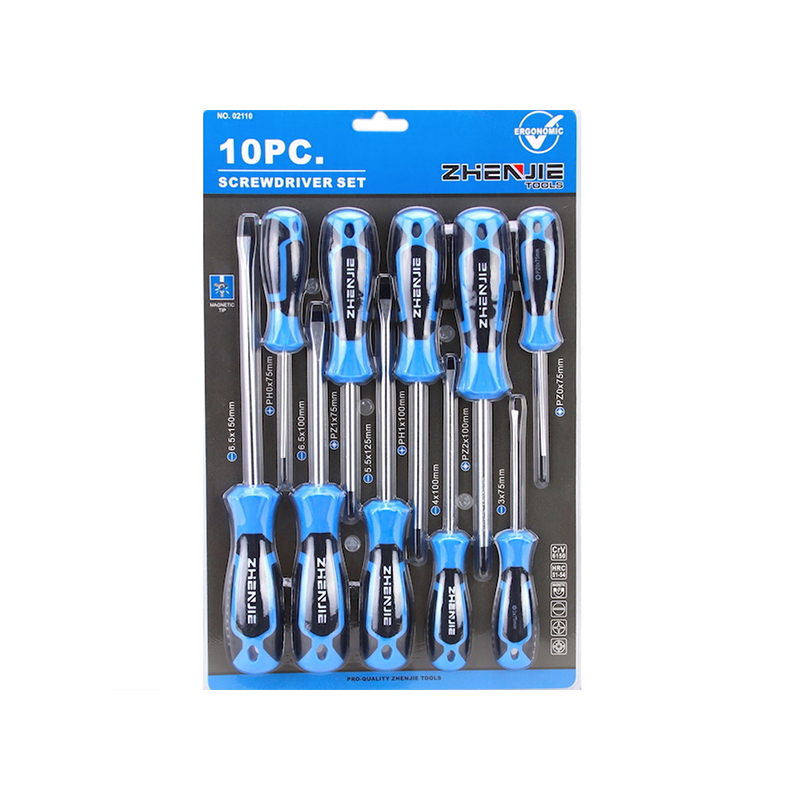
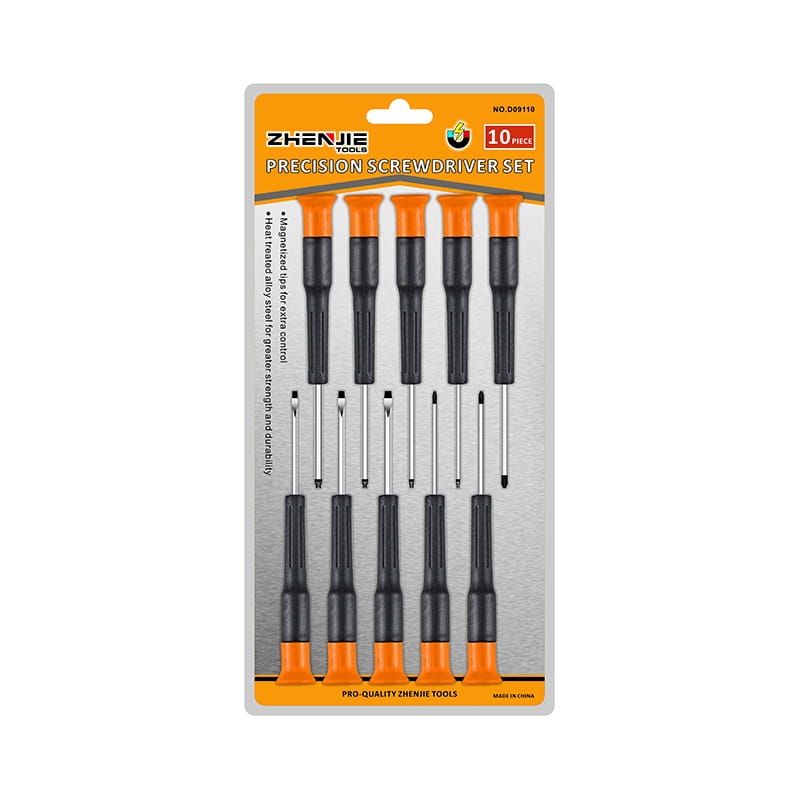 10-Piece CRV Precision Screwdriver Set with Ergonomic HandlesThis precision set covers slotted, Phillips, and Torx tips with anti-slip handles. It suits fine work where torque must stay limited, making it a practical pick for controlled screwdriving.View Product →
Zhenjie applies this same logic to the precision sets it builds for retail buyers: CRV blades, ergonomic anti-slip handles, and compact packaging that communicates the torque limit to the end user.
When a Standard Screwdriver Set Is the Right Choice
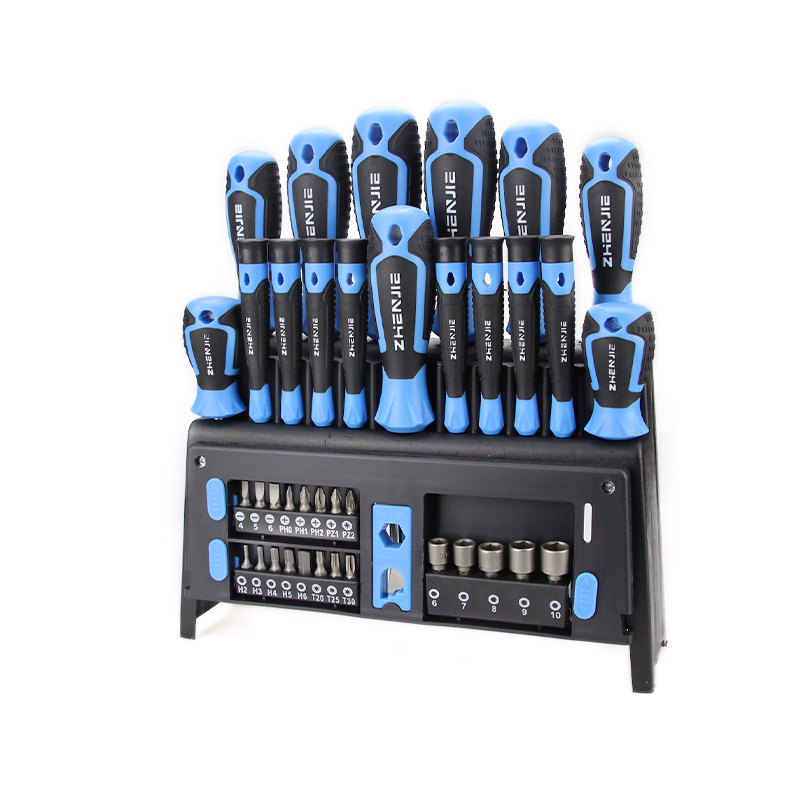
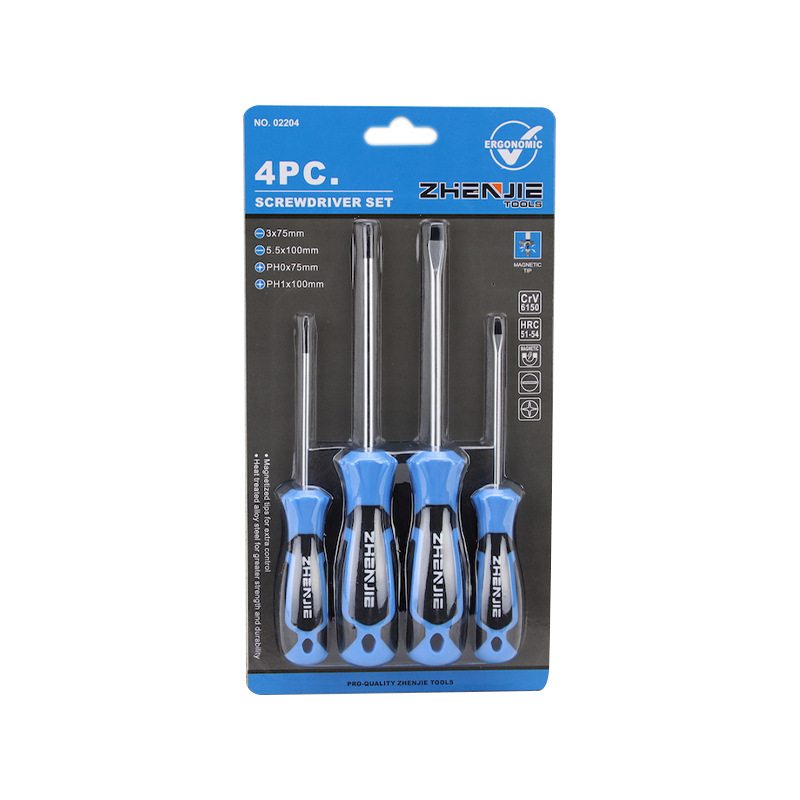
Choose a standard set for woodwork, furniture assembly, appliance repair, shelving, and any fastener larger than #6 or 3.0 mm, where torque and impact resistance matter more than micron-level tip geometry.
Standard sets dominate the jobs where the screw does not ask for mercy: PH2 furniture screws, drywall anchors, hinge plates, and appliance panels. A #2 Phillips tip that fits firmly in a 7 mm screw head can take chest pressure and repeated turning without concern, and a longer handle keeps the hand clear of obstructions.
- Furniture box assembly and cabinet hardware
- Door hinges, switch plates, and general household fasteners
- Appliances, power tools, and automotive interior screws
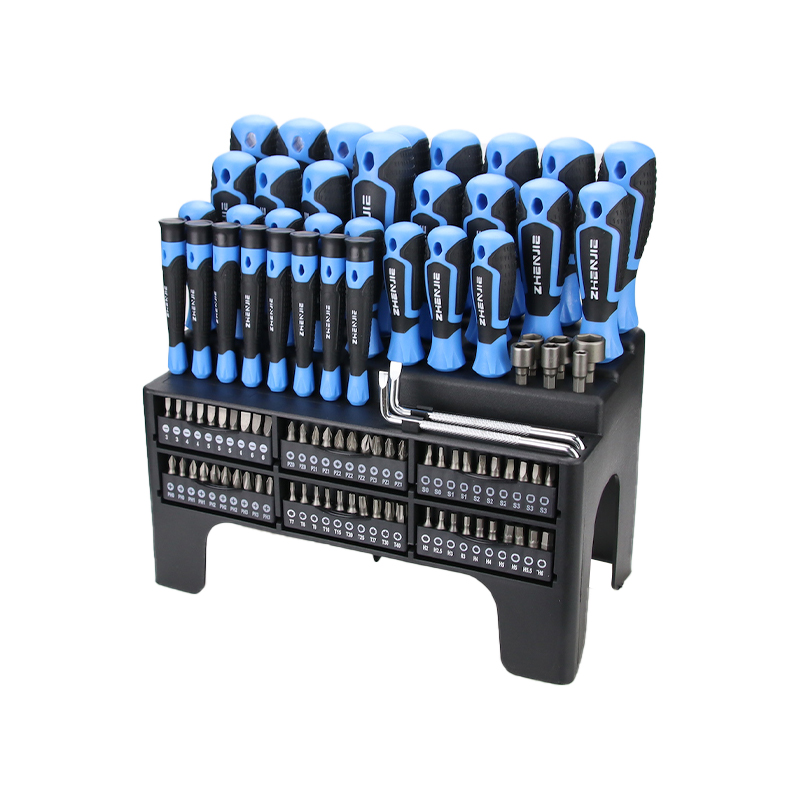
- Build counts from 6 to 132 pieces for full-household coverage
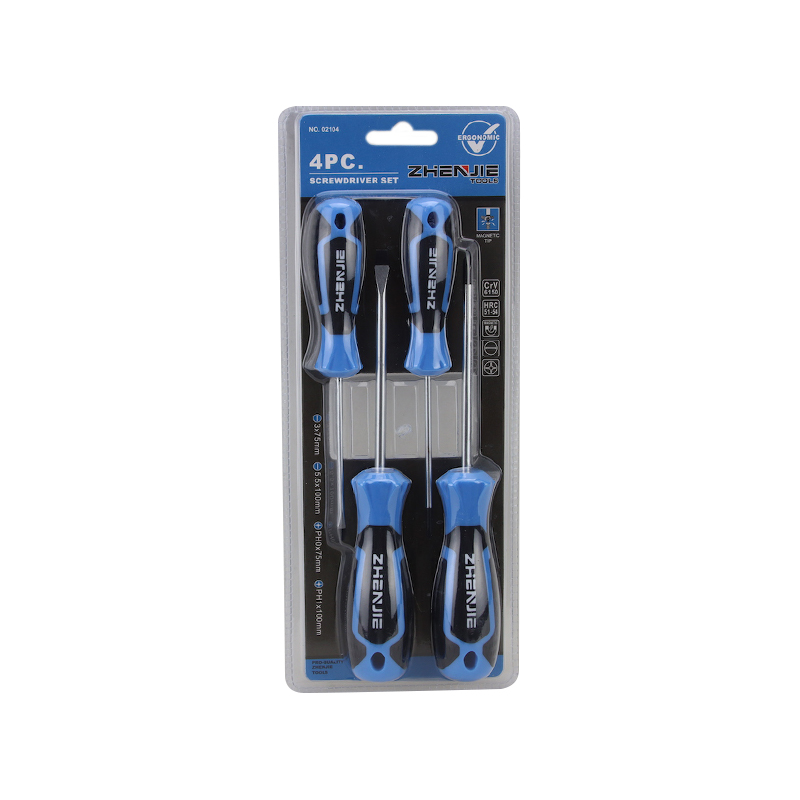
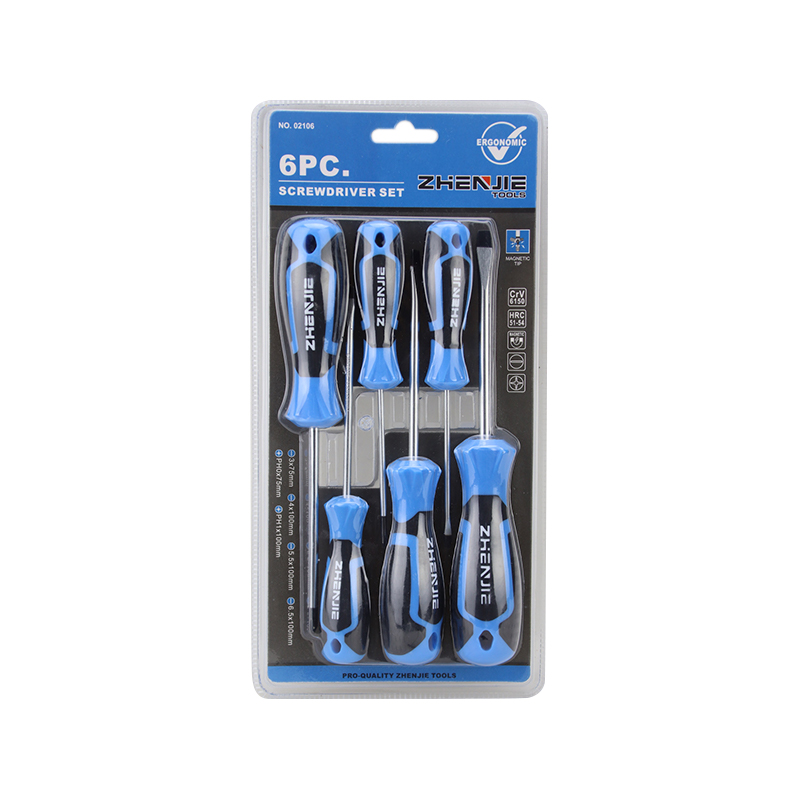
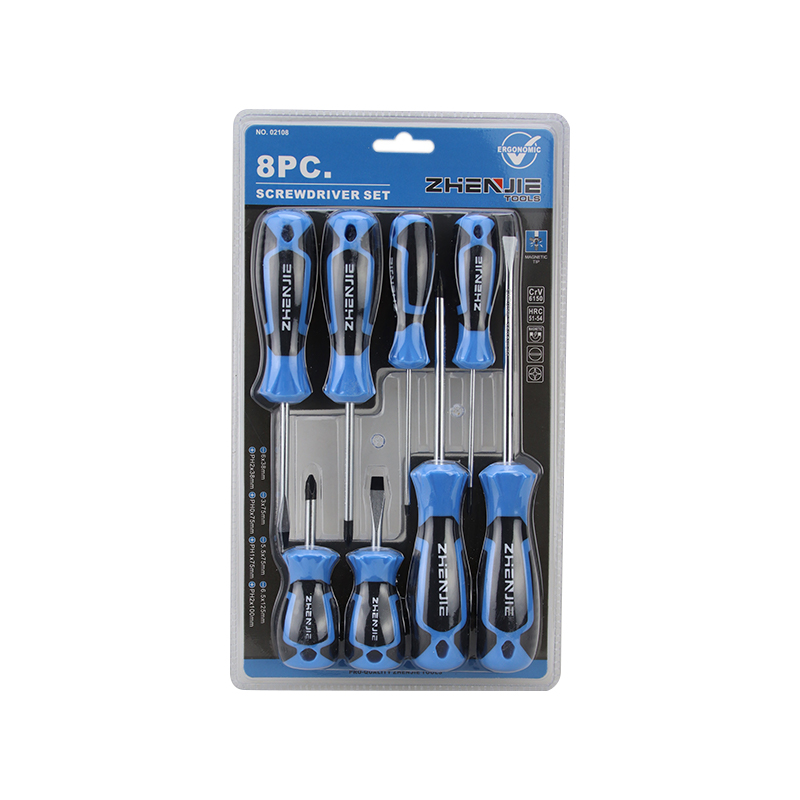
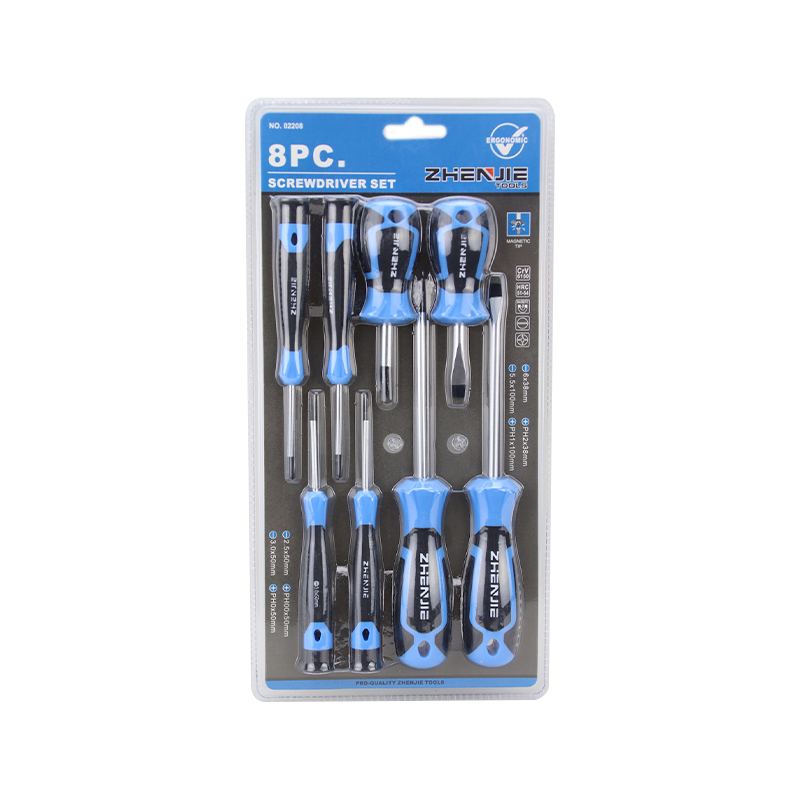
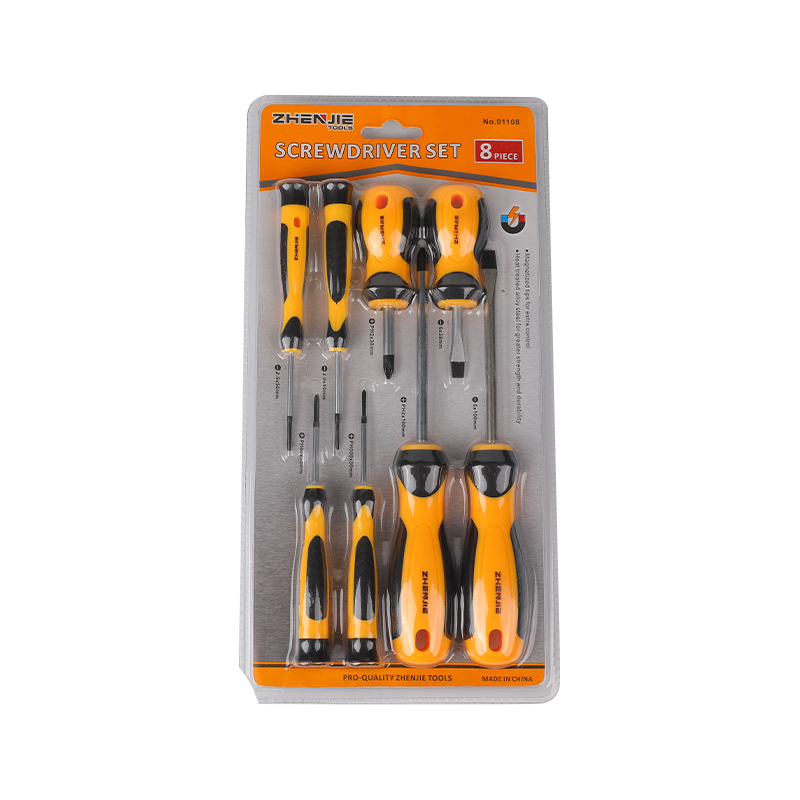 8-Piece Slotted and Phillips Screwdriver Set with Soft GripA compact standard set built for everyday fasteners like furniture screws and appliance panels. The chrome vanadium blades and double-injected handles offer durability and comfortable grip.View Product →
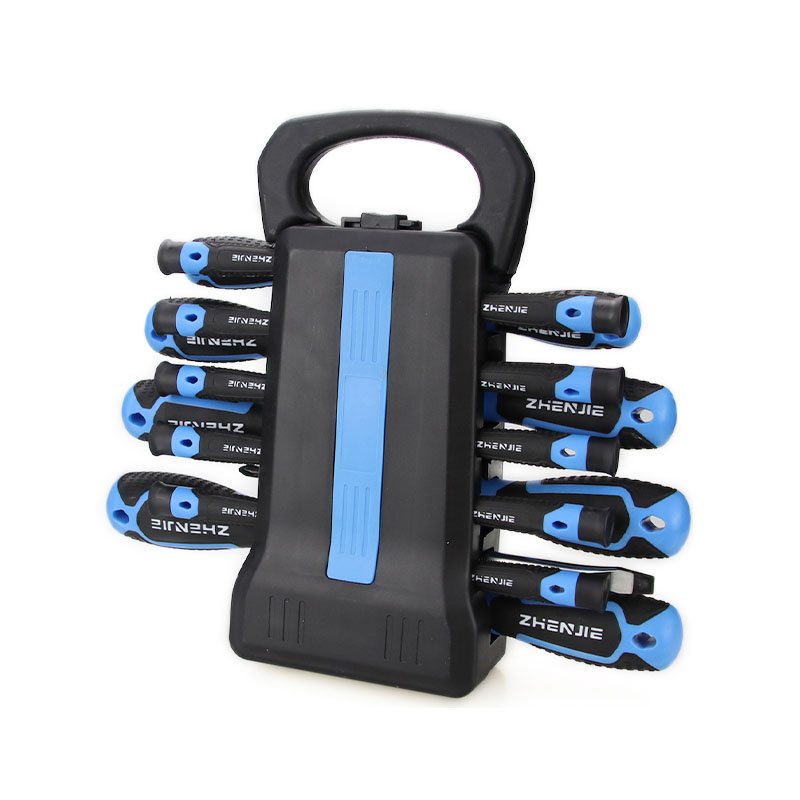
The standard family is also the retail workhorse. Large assortments, from compact 8-piece blister packs to 132-piece shelf systems, are what most supermarkets and hardware chains order first from a screwdriver set manufacturer.
When You Need a Precision Set for Electronics and Fine Assembly
Use a precision set as soon as the fastener is smaller than 3 mm, is made of soft brass or plastic, or sits inside a device you cannot afford to strip, such as a laptop, phone, camera, eyeglass frame, watch, or laboratory instrument.
Electronics repair is the largest precision market. A single laptop teardown can involve PH00, PH0, T5, and T6 fasteners, sometimes on the same board. The correct precision tip engages the recess completely, so the driver transmits rotation instead of scraping the head.
- Laptop and phone repair: PH000 to PH0 and T5 to T6
- Eyeglass hinges and watch straps: 1.0 to 1.6 mm slotted
- Terminal blocks, sensors, and control panels
- RC models, jewelry, and instrument calibration
For a detailed head-to-head of the models that handle boards and handheld devices best, see our guide to the best precision screwdriver set for electronics repair.
A service technician turns PH00, PH0, and T5 fasteners dozens of times per day. The set that never cams out is the set that pays for itself before the first shift ends.
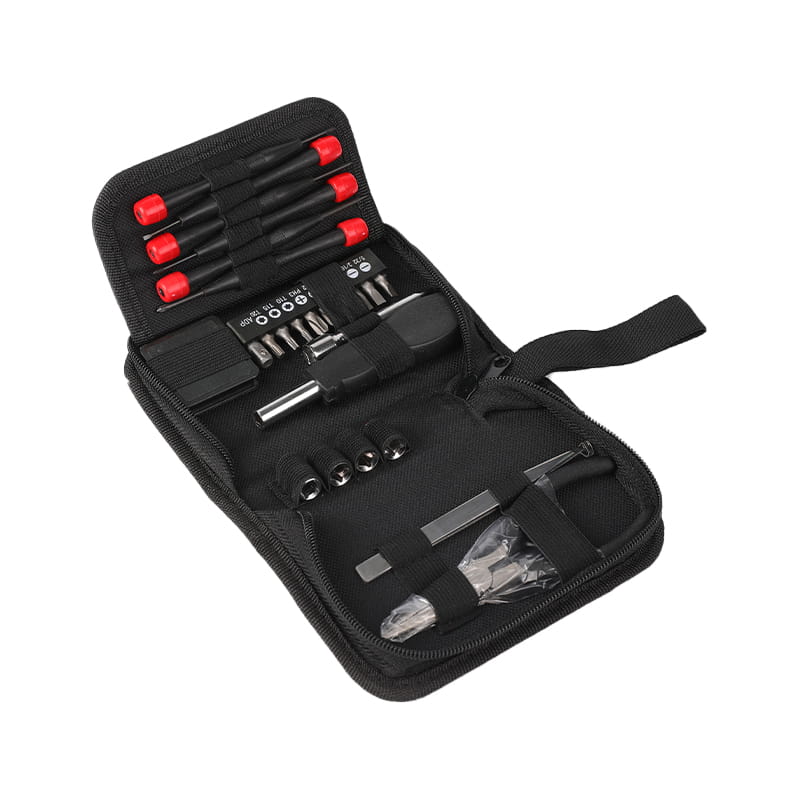 24-Piece Precision Screwdriver Set for Service TechniciansDesigned for repeated use on small fasteners, this kit pairs precision tips with extra tools like pick hooks and tweezers. It turns a basic screwdriver into a full workbench system.View Product →
Complete precision kits add pick hooks, tweezers, and magnetic trays, which turn the set into a workbench system rather than a single tool.
Build a Balanced Toolkit Instead of Forcing One Set to Do Everything
The practical answer to the precision versus standard question is to own both, because the only genuine overlap is fasteners in the #4 to #6 range, where either family can work with a careful hand.
Interchangeable bit sets that combine a standard handle with small bits cover part of that middle ground, but they inherit the torque behavior of the handle. A 120 mm bit-driver handle can still over-torque a PH00 screw even when the correct bit is installed. The two-family strategy removes that risk entirely.
Keep a standard set when
- The screw enters wood or composite material
- The shaft is longer than 60 mm and needs leverage
- You expect impact or prying work
- One hand needs to push hard while turning
Add a precision set when
- The screw holds electronics or fine mechanisms
- The thread is fine and the metal is soft
- The screw sits in a recessed pocket
- You repeat the same small fastener many times
Retail buyers, importers, and OEM customers can simplify this decision by sourcing both families from one manufacturer. Zhenjie has produced screwdrivers for more than 15 years, with annual capacity above 65 million pieces, and the two product lines share the same quality lab and packaging systems. If you are building a private-label assortment, contact our engineering and sales team to define tip range, handle length, and torque limits for each set.
Frequently Asked Questions
Can I use a standard screwdriver on a precision screw?
No. A standard tip is too wide for the recess, applies torque to the edges, cams out under load, and usually damages the screw head before the screw moves. Match the driver family to the fastener size.
Are precision screwdriver blades weaker than standard blades?
Not in any practical sense. Precision blades use the same CRV or alloy steel families and similar hardness targets, typically HRC 48 to 56. They are thinner, so their safe torque limit is lower; that is a geometry fact, not a quality difference.
Which precision screwdriver tip size is used most often?
PH00 and PH0 are the most used tips in electronics repair, followed by 1.5 and 2.0 mm slotted tips for terminals and T5 plus T6 for Torx screws on laptops and controllers.
How many pieces should a precision screwdriver set include?
A 6 to 10 piece set covers most eyeglass, jewelry, and small-electronic repairs; a 20 to 30 piece set adds Torx, hex, nut drivers, and pick tools for a full bench setup.