

 English
 русский
 Español
Two nearly identical screwdrivers, one at four dollars and the other at twenty, can produce opposite safety outcomes on the same job. The difference between insulated vs standard screwdrivers shows up only when a live conductor touches the shaft: a standard chrome-vanadium blade conducts the fault current straight into the hand, while a VDE-certified insulated blade blocks it. Before you buy another set, the practical question is whether any task in your workflow can bring a screwdriver within reach of live voltage.
An insulated screwdriver is defined by IEC 60900 as a hand tool whose shaft and handle carry an insulating layer type-tested at 10,000 volts, supporting a working rating of 1,000 volts AC and 1,500 volts DC. A standard screwdriver carries no dielectric rating at all. Every decision in this comparison follows from those two facts.
What Really Separates Insulated and Standard Screwdrivers
Start with the shaft, not the tip. A standard screwdriver blade is bare steel from handle to tip, which is exactly what you want for mechanical work. An insulated screwdriver covers that same steel with a bonded insulating layer that runs the full length of the shaft and continues into the handle. If any part of the shaft is exposed between tip and handle, the tool does not qualify as insulated.
| Feature | Standard screwdriver | VDE insulated screwdriver |
| Voltage rating | None | 1,000 V AC / 1,500 V DC |
| Shaft coverage | Bare CRV steel | Full-length insulating layer |
| Handle construction | Comfort grip optional | Insulating core continuous from shaft |
| Test standard | None | IEC 60900 test at 10,000 V |
| Typical price, 6-piece set | $6-$10 | $24-$35 |
| Best use case | Mechanical, DIY, dry assembly | Live electrical work |
The blade material is normally the same. Jiande Zhenjie Hardware Tools Co., Ltd. builds its standard and 1000V lines on chrome-vanadium steel blanks, then adds the bonded insulation and an ergonomic PP-TPR handle only on the VDE-certified models. Certification is what raises the price, not the steel.
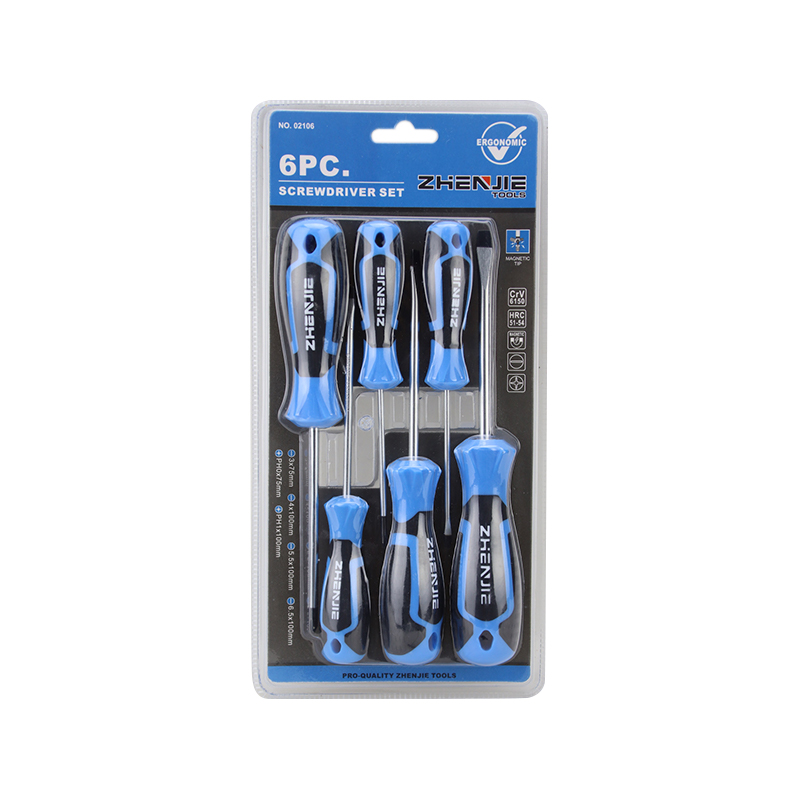
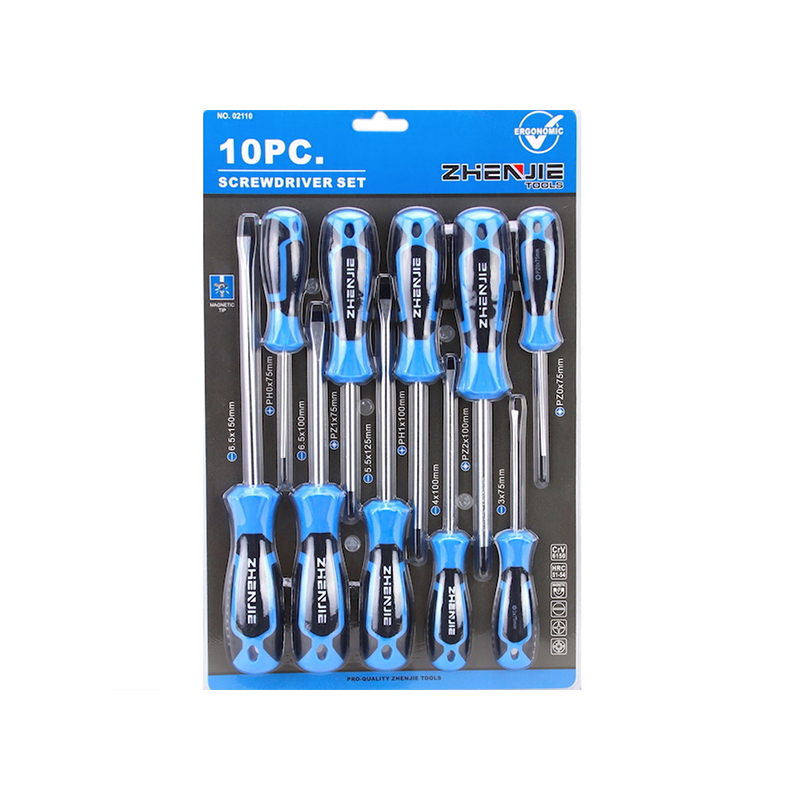
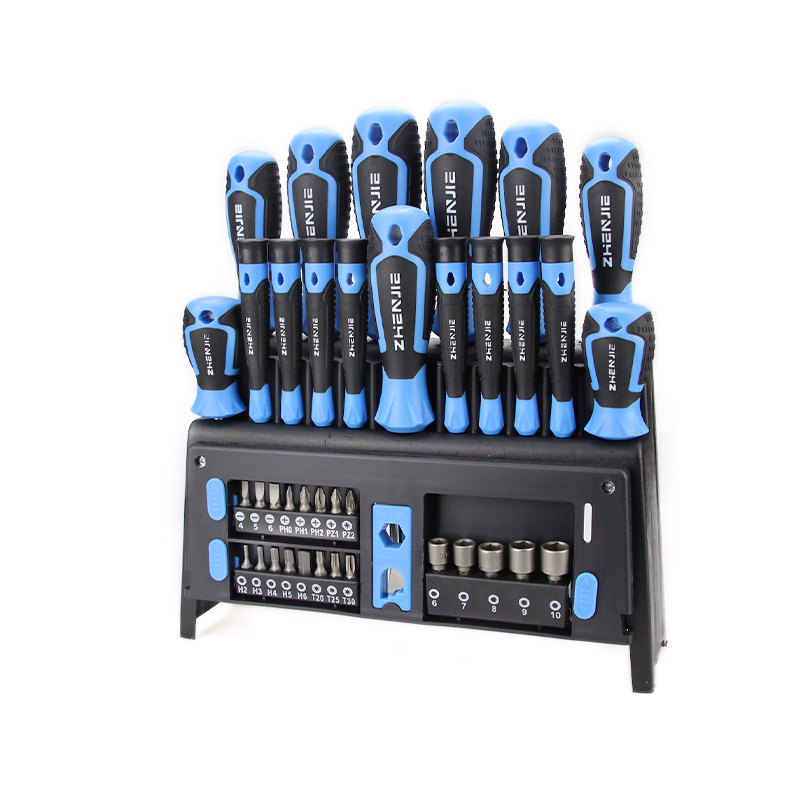
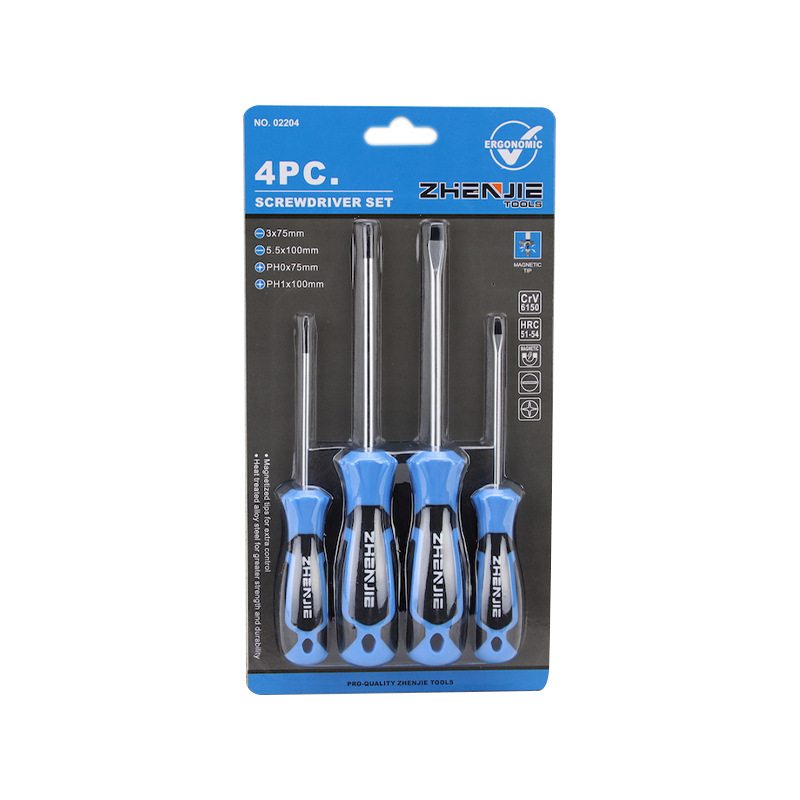
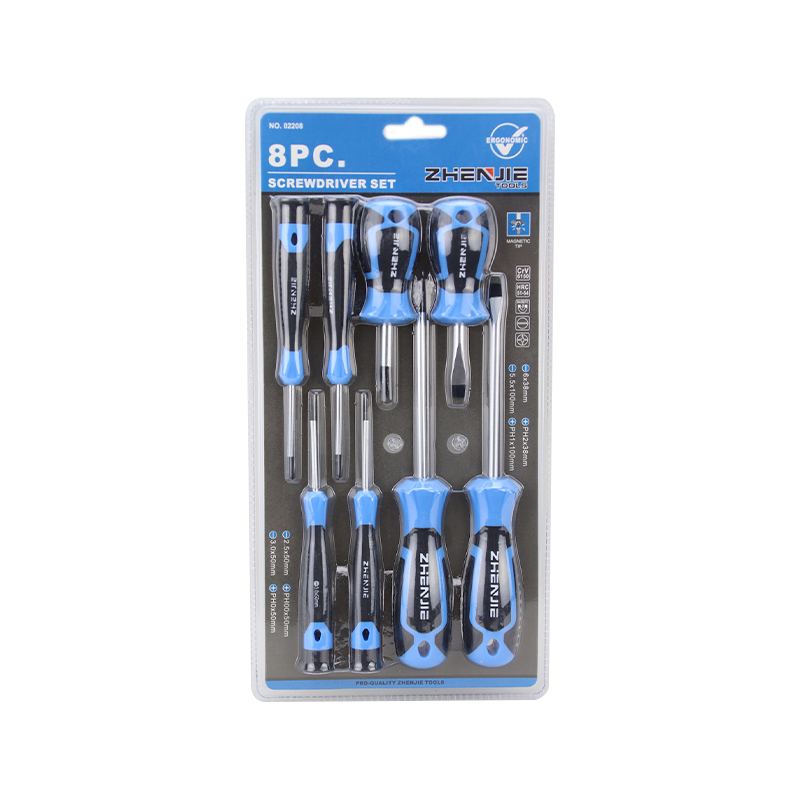
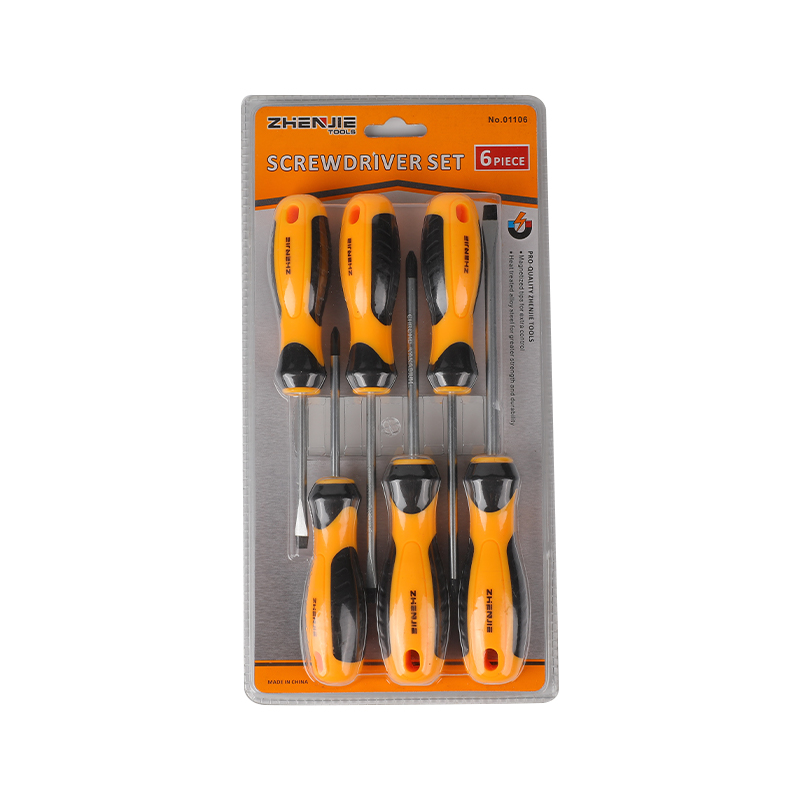 6-Piece Slotted and Phillips Chrome-Vanadium Screwdriver SetThis set pairs chrome-vanadium blades with double-injected soft handles, offering a durable everyday option. It is placed here to contrast standard drivers with the certified 1000V models discussed in the surrounding text.View Product →
The 1,000-Volt Rating: What IEC 60900 Demands of Insulated Screwdrivers
The 1,000-volt mark is the working rating, not the test limit. IEC 60900 requires an insulated screwdriver to survive a 10,000-volt dielectric test during type approval before it receives the 1,000 V AC and 1,500 V DC operating range. The 10-to-1 margin exists because real panels generate voltage spikes, and a tool that fails at 1,100 volts would be useless as protection.
Independent bodies such as VDE run the tests, including dielectric withstand, flame resistance, impact strength, and conditioning at minus 25 degrees Celsius. Tools that pass carry the VDE mark and a reference to IEC 60900. When a handle says only "1000V" with no certification mark and no standard number, treat the rating as unverified. Our insulated screwdriver safety standards and selection guide covers the marks and documents you should ask for.
A compliant set confirms every driver individually rather than testing one sample. The 11-piece 1000V VDE set offered by Jiande Zhenjie, for example, marks each tool and adds magnetic tips that electricians commonly need in confined enclosures.
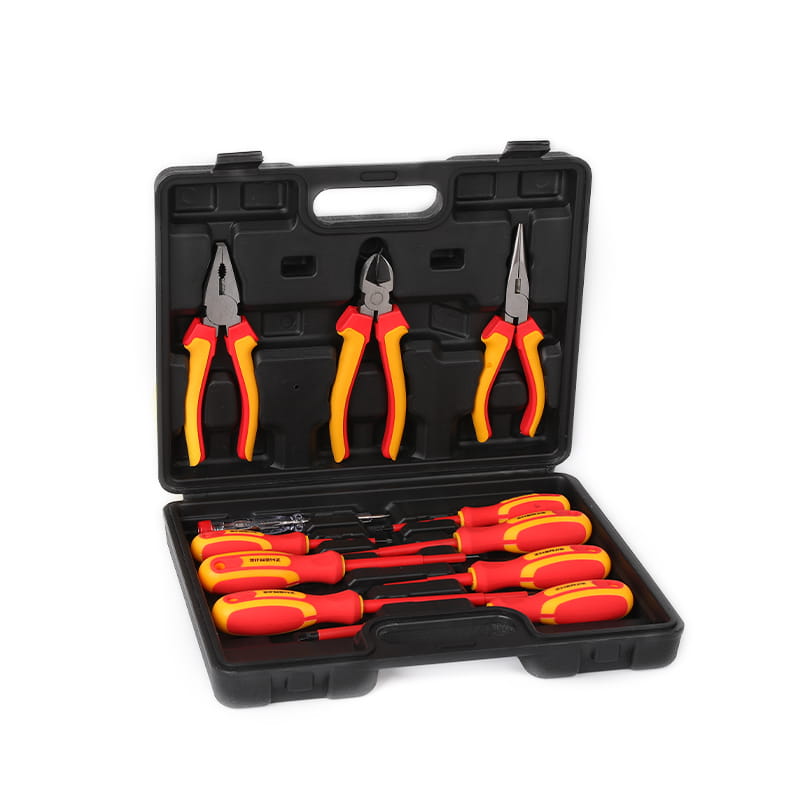 11-Piece 1000V Insulated Screwdriver Set with Magnetic TipsEach driver in this VDE-certified set is individually marked and features magnetic tips, making it suited for confined electrical enclosures. The set is referenced as an example of compliant tools that meet IEC 60900 requirements.View Product →
Insulated vs Standard Screwdrivers: Real Failure Scenarios
The typical accident sequence is short. A technician reaches into a panel to tighten a terminal, the bare screwdriver shaft bridges a live phase to ground or to an adjacent terminal, and the current runs down the shaft into the fingers. Even a 230-volt circuit can drive a lethal current through this path when the body provides the return path.
- Bare shaft contacts a live terminal directly
- Current flows through the hand without resistance
- Handle material is irrelevant once steel conducts
- Outcome depends on grip point and grounding
- Insulating layer blocks contact current
- Bonded shaft insulation prevents phase-to-phase bridging
- Insulating handle isolates the holding hand
- Rating margin covers voltage spikes
This is why safety standards treat screwdrivers as a task-by-task decision. The insulated model is not a stricter version of the standard one; it is a different safety class. The importance of insulated screwdriver sets for electrical safety becomes clear only when you look at the failure path inside a real enclosure.
Insulated vs Standard Screwdrivers: Cost Versus Risk
Pay for insulation only where the job can touch live circuits; buy standard sets for everything else. A mixed inventory is the economically correct answer for most buyers, because insulated drivers cost three to five times more than equivalent standard tools.
Market prices make the trade-off visible. A standard 6-piece CRV set typically sells for $6 to $10. A VDE 6-piece set runs from $24 to $35, and a professional 11-piece VDE set lands between $40 and $55. The insulation premium is a reasonable insurance cost for anyone who opens electrical enclosures, and a waste of money for dry workshop tasks.
Typical retail ranges for entry-level and mid-range sets in US and EU markets; prices are indicative, not quotes.
Apply three selection rules:
- Buy standard drivers for furniture assembly, appliance work after disconnection, plastic enclosures, and general DIY.
- Buy VDE insulated drivers for panel work, junction boxes, terminal tightening, and any location where wiring can remain live.
- Never assume a rubberized handle makes a standard tool safe. The shaft insulation is the deciding layer, and the certification mark proves it.
What to Check Before You Buy a Certified Insulated Screwdriver Set
The certification marking is the product. A visually identical driver without a mark, a standard reference, and a traceable part number offers no verifiable protection. Work through this checklist before adding a set to your inventory:
- VDE mark or another recognized certification body mark on every driver, not only on the packaging
- IEC 60900 reference printed on the handle
- Insulating layer visible along the full shaft, not only near the handle
- Smooth shaft-to-handle transition with no exposed steel ring
- Part number or stock code traceable to the manufacturer for audit purposes
Retail buyers can verify these points from product photos. Procurement teams should go one step further and compare test reports. Jiande Zhenjie Hardware Tools Co., Ltd., which supplies certified insulated sets to retailers and brand programs across more than 30 export markets, publishes the same compliance information for its stock lines that it provides to supermarket buyers. If a listing does not show the markings, request the specification sheet directly from the manufacturer and let your quality team review it during supplier approval.
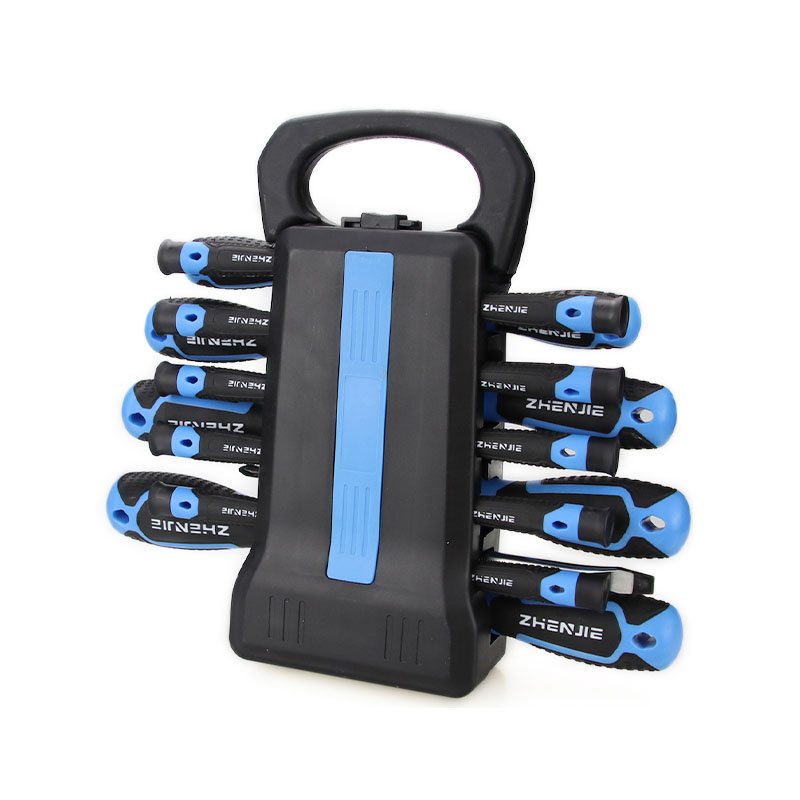
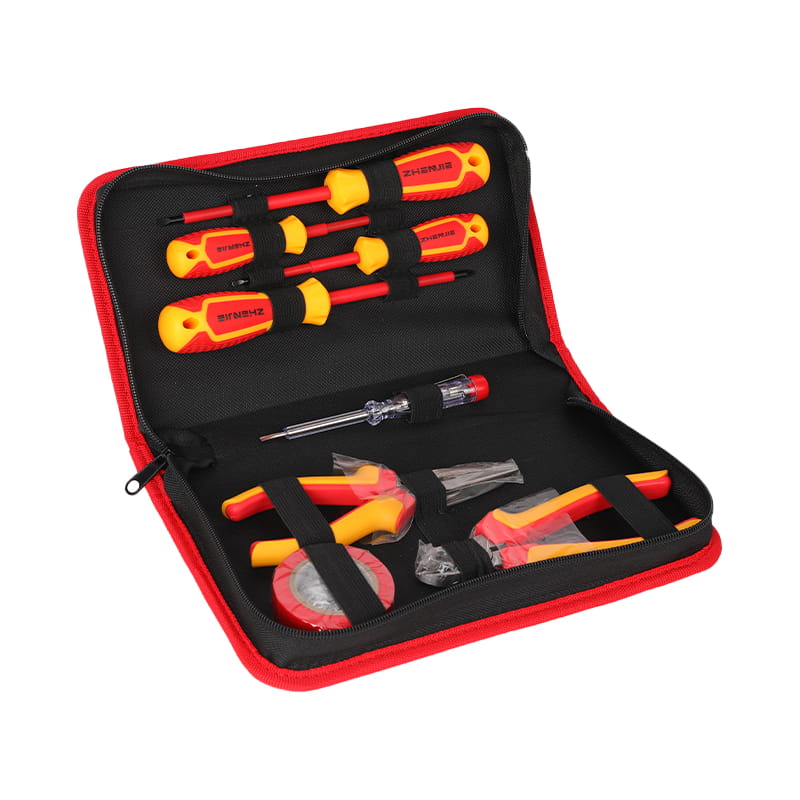 8-Piece VDE Insulated Screwdriver and Pliers Tool SetThis insulated combo set includes screwdrivers and pliers with PP-TPR handles, designed for electrical work. It appears in the guide as a practical option for tasks where voltage exposure is possible, reinforcing the need for certified insulation.View Product →
Frequently Asked Questions
Can a standard screwdriver be used for minor electrical repairs?
Only after the circuit is verified dead and locked out. A standard screwdriver has no dielectric rating, so a loose terminal screw inside a live fixture is already beyond its capability. Use an insulated model for any task that can involve voltage.
Does a 1,000-volt rating mean I can work on 1,000-volt lines?
No. The 1,000-volt rating assumes intact insulation, clean surfaces, and correct handling by trained personnel. High-voltage line work uses additional protection and procedures beyond hand-tool insulation.
Are magnetic tips safe on insulated screwdrivers?
Yes. Magnetic retention is safe because the magnetism sits inside the blade and the insulating layer remains on the outside. Keep the tip free of metal debris that could track across the insulation.
How often should insulated screwdrivers be replaced?
Replace a driver as soon as the insulation shows nicks, scratches down to the steel, burns, or chemical damage. A visual check before every live-area task is the accepted practice under IEC 60900 guidance.