

 English
 русский
 Español
Try to remove a 1.2 mm Phillips screw from a laptop hinge with a standard #1 screwdriver and the bit will wobble before it skips. By the time the damage is visible, the screw head is rounded. This scenario is exactly why a precision screwdriver set has become essential kit for electronics repair work.
A precision screwdriver set is a matched group of small-format screwdrivers and interchangeable bits - typically Phillips #000 to #1, slotted 1.0 to 3.0 mm, Torx T3 to T8, and hex 0.7 to 2.0 mm - engineered for fasteners that full-size tools cannot reach or would over-torque.
What a Precision Screwdriver Set Is Actually Built For
A precision screwdriver set is built for one job: driving small fasteners with controlled torque in confined spaces, without transmitting the force that strips miniature threads.
A full-size screwdriver delivers two to four times the torque of a precision driver at the same wrist angle. On an M1.2 mainboard screw, that extra force breaks the thread or twists off the head. Precision drivers counter this with shorter blades, slender shafts, and small handles that limit how much force a hand can apply.
An M1.2 screw strips at torque below 0.2 Nm - less than the force needed to turn a door key.
The dominant uses in repair work:
- Phones and tablets: Phillips #00 and #000 screws around camera modules and charging ports.
- Laptops: Torx T5 and Phillips #0 fasteners in hinges and bottom cases.
- Eyeglasses and watches: slotted screws 0.8 to 1.4 mm that need a tip seated dead-center.
- Drones, RC vehicles, and models: M1.0 to M2.0 machine screws.
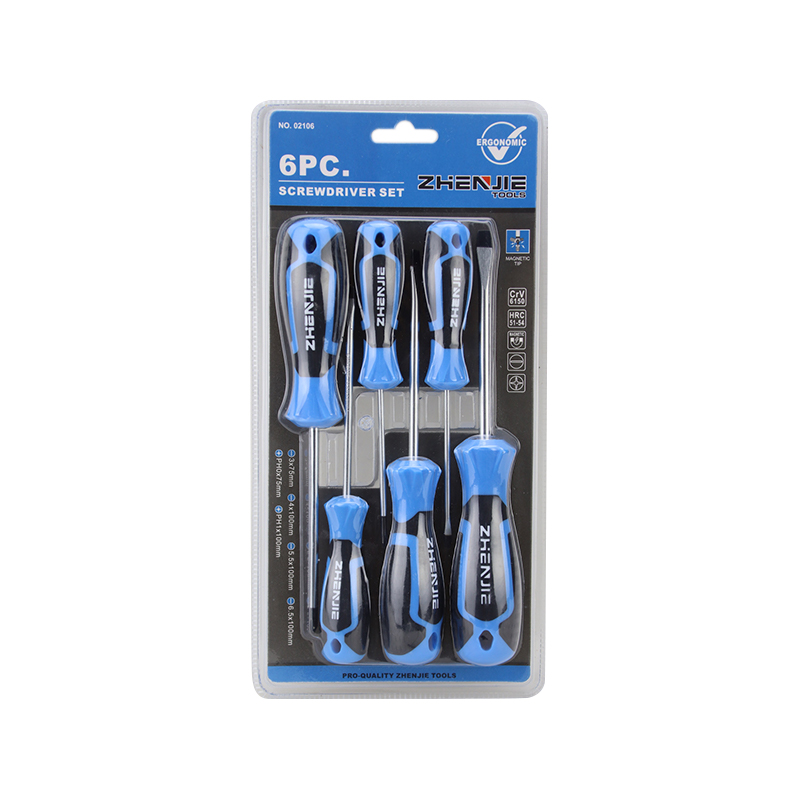
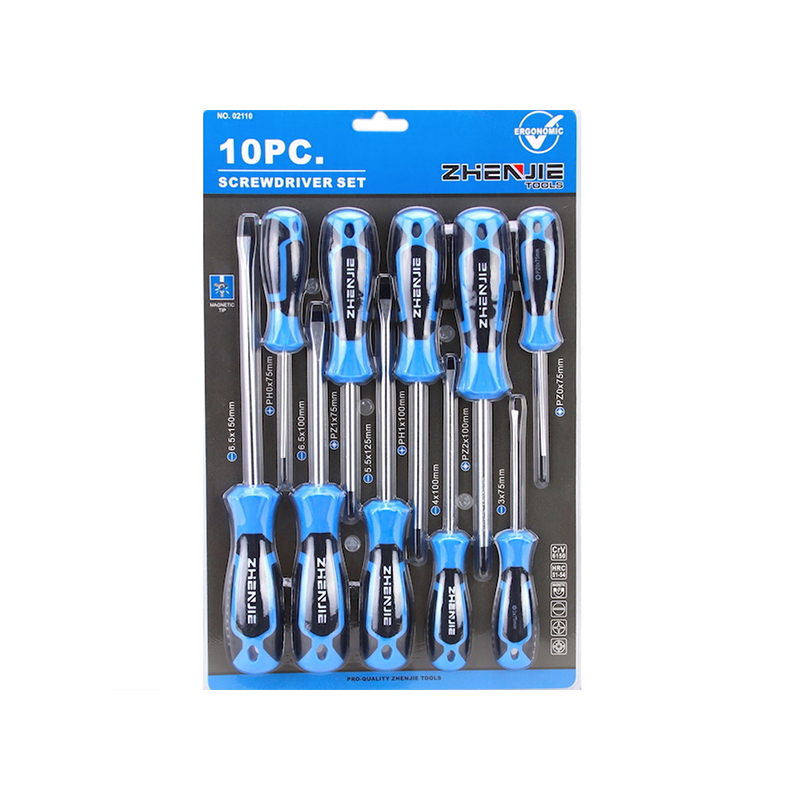
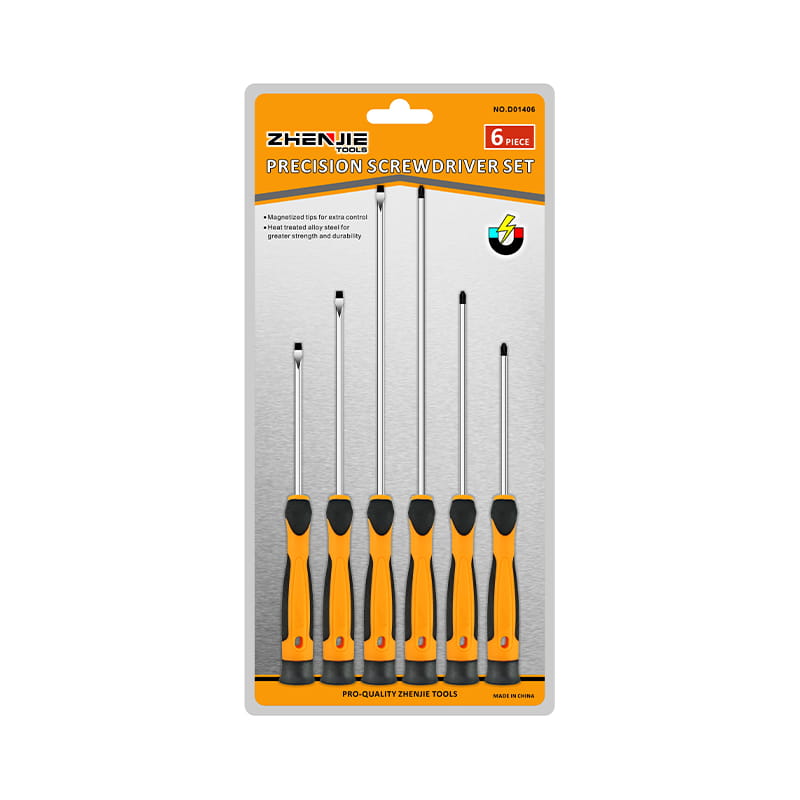 6-Piece Precision Screwdriver Set with Slotted, Phillips, and Torx TipsThis compact set covers the three most common drive types for small fasteners under 2.5 mm, making it a practical choice for electronics and eyeglass repairs where standard tools won't fit.View Product →
If a fastener is smaller than 2.5 mm across, a standard screwdriver is the wrong tool.
Precision Screwdriver Set Applications in Electronics Repair
Electronics repair accounts for the largest share of precision screwdriver work, because modern devices mix several drive types inside a single housing.
A typical phone repair needs a #00 Phillips for the outer case, a Torx T3 for the camera bracket, and a slotted 1.0 mm tip for the SIM spring.
One phone repair can require four different bit sizes within a 90-second window.
| Repair scenario | Drive types used | Typical bit sizes | Main failure risk |
| Smartphone battery or screen | Phillips, Tri-wing | #00, Y-0.6 | Cam-out on mainboard standoffs |
| Laptop hinge or bottom case | Phillips, Torx | #0, T5 | Stripped hinge threads |
| Eyeglass arm adjustment | Slotted | 1.0 to 1.2 mm | Rounded slot edges |
| Smartwatch case-back | Slotted, Phillips | 0.8 mm, #000 | Over-torque damage |
| Game console shell | Torx security, Tri-wing | T8, Y1 | Broken security pins |
None of these fasteners exceed 3.0 mm in head diameter.
Bit Types and Sizes That Matter Most
Five drive types cover nearly every fastener in consumer electronics: Phillips, slotted, Torx, hex, and security variants.
Phillips self-centers but cam-outs under torque; Torx resists cam-out and accepts higher torque; slotted demands an exact width match.
| Drive type | Common sizes | Typical use | Cam-out risk |
| Phillips | #000, #00, #0 | Phones, laptops, toys | Medium |
| Slotted | 0.8 to 3.0 mm | Eyeglasses, instruments | High |
| Torx | T3, T4, T5, T6, T8 | Drives, hinges, consoles | Low |
| Hex | 0.7 to 2.0 mm | RC sets, set screws | Low |
| Security | Tri-wing Y0.6, Pentalobe | Game consoles, smartphones | Medium |
Check tip geometry: a precision bit should seat fully into the screw head with no visible play. Bits machined from CRV or S2 alloy steel hold that geometry far longer than stamped or soft steel tips.
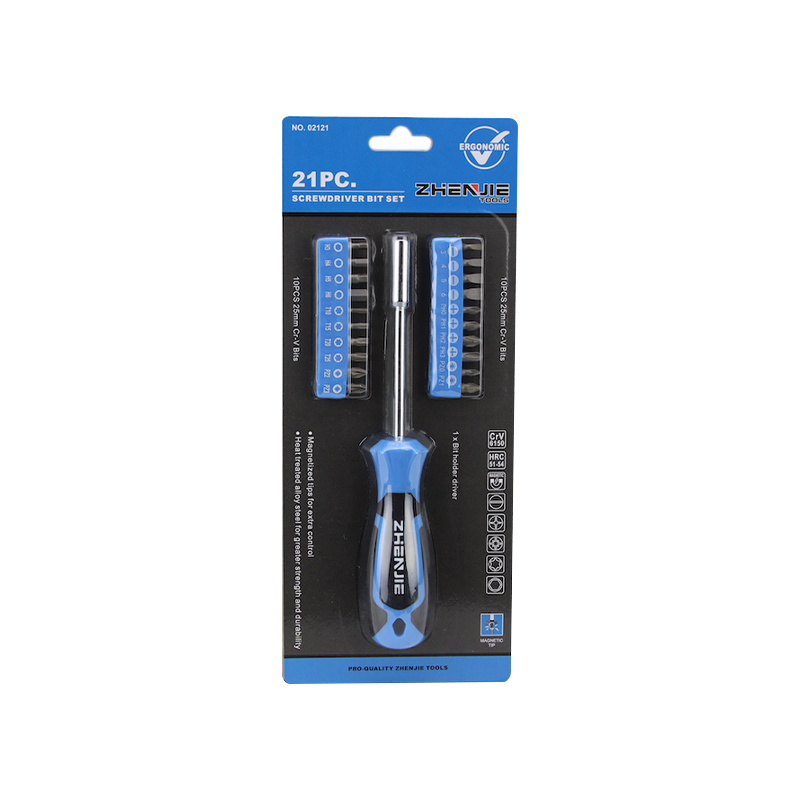
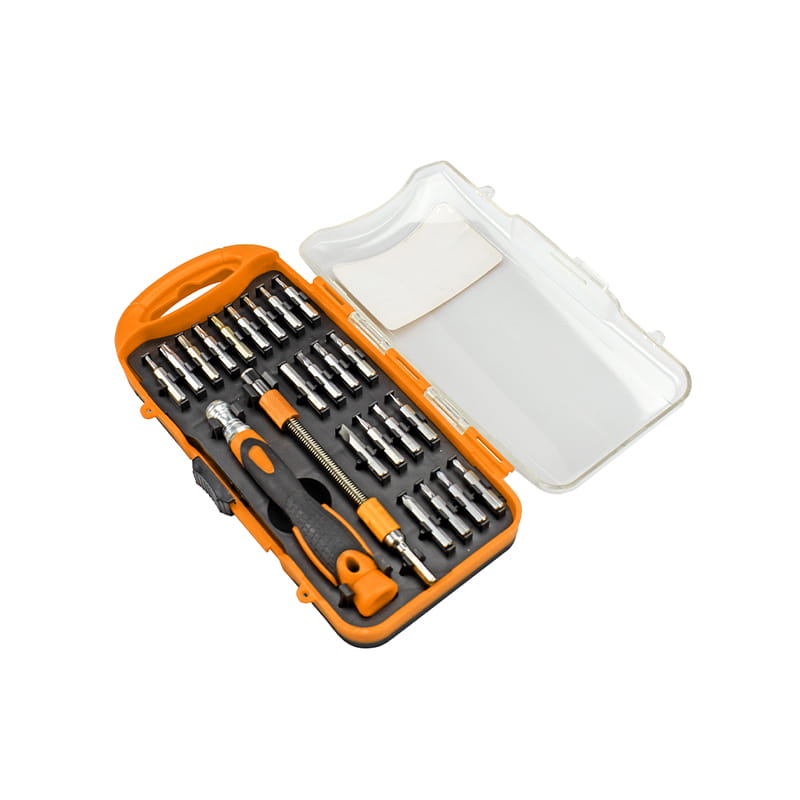 23-Piece Precision Bit Driver Set with Extension Bar and CRV BitsThe CRV steel bits are designed to seat fully into screw heads without play, and the included extension bar improves access in tight spots. It suits users who need reliable tip geometry for delicate device work.View Product →
The bit, not the handle, decides whether you walk away with an intact device.
How to Choose a Precision Screwdriver Set
Four specifications determine whether a precision screwdriver set survives daily repair work: steel hardness, tip geometry, handle design, and case organization.
These are the same criteria retail chains use when sourcing from manufacturers such as Jiande Zhenjie Hardware Tools Co., Ltd., a China-based supplier with over 15 years of screwdriver production.
- Steel grade: CRV at 50-52 HRC is budget-friendly and works for light repair; S2 alloy at 58-60 HRC keeps its tip shape under repeated use.
- Tip geometry: machined and precisely ground tips seat deeper in the screw head and reduce cam-out by a wide margin.
- Handle with rotating cap: a swivel cap lets you press with the index finger while turning with the thumb and middle finger.
- Case layout: slotted foam or clip positions keep bits from rolling away and protect the tips from impact.
CRV steel
Hardness 50-52 HRC, lower cost, good for home repair and light production work, adequate tip retention on #0 and larger sizes.
S2 alloy steel
Hardness 58-60 HRC, higher wear resistance, keeps #000 and T3 tips sharp through repeated disassembly, slightly higher price.
S2 is the better professional choice; CRV is acceptable for household use. Buyers with OEM or wholesale requirements can contact the factory directly for exact material specifications.
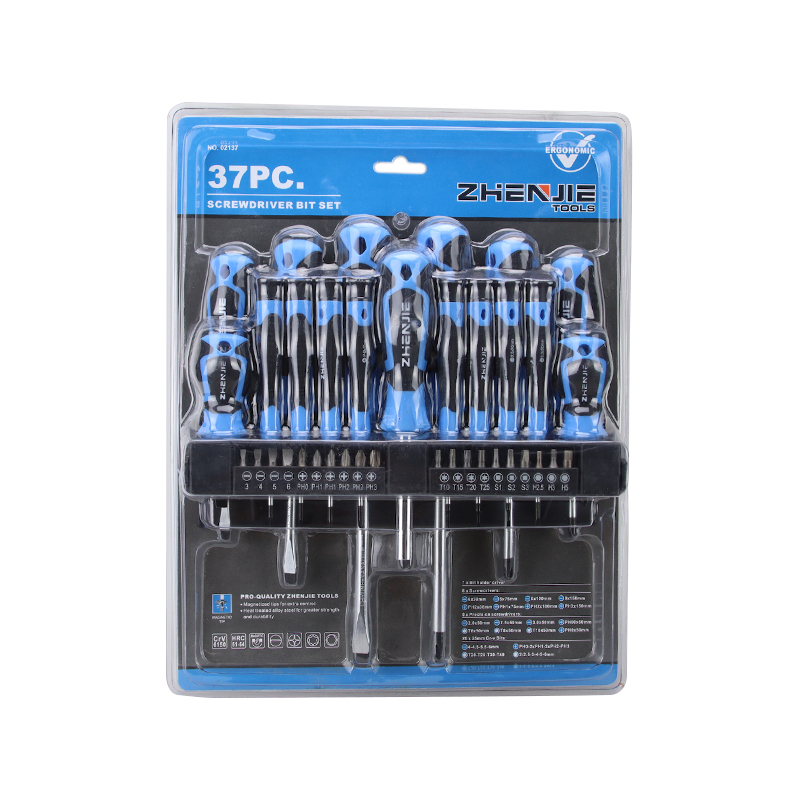
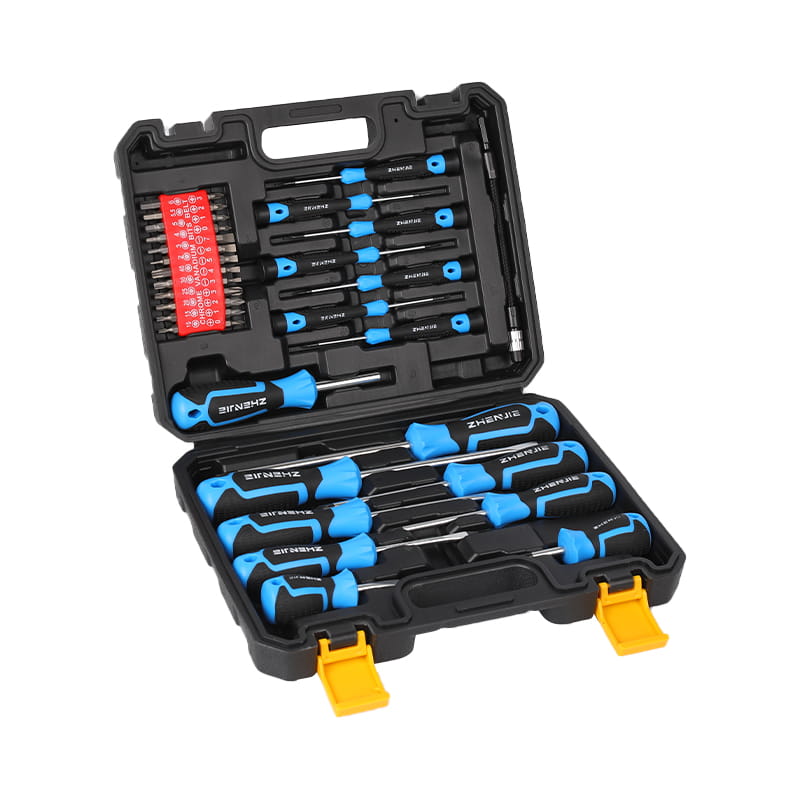 28-Piece CRV Precision Screwdriver Bit Set for Common Drive TypesWith 28 bits covering Phillips, Torx, slotted, hex, and security drives, this set addresses the most frequent fastener types encountered in repair work. CRV steel offers a good balance for household and light professional use.View Product →
Fastener Types in Real Electronics Repair: A Data Snapshot
A 1,200-job repair benchmark shows how often each drive type actually appears: Phillips bits were required in 58% of jobs, Torx in 22%, slotted in 9%, hex in 6%, and security drives in 5%.
Fastener drive types observed in 1,200 consumer electronics repair jobs (2025 benchmark).
This distribution explains why a complete set is the practical minimum for repair work. A single #00 Phillips driver covers more than half of real jobs.
Common Mistakes That Damage Devices
Most precision repair failures come from applying full-size technique to small fasteners, not from the tool itself.
- Using a mismatched bit. A #1 Phillips is about 0.5 mm wider than a #00; forcing it into a phone screw rounds the screw tip in seconds. Always test-fit before applying torque.
- Over-torquing. M1.2 and M1.4 threads strip below 0.2 Nm. If a screw does not turn with light wrist pressure, stop and check for threadlocker or a hidden locking tab.
- Skipping ESD precautions. Dry air and synthetic clothing generate enough static to damage logic boards. Use a grounded mat, or discharge yourself on a metal frame before opening a device.
- Ignoring shaft length. A blade that is too short to reach a recessed screw will wobble and cam out. Match the shaft length to the depth of the hole.
Fastener damage is the single most common reason a precision repair escalates from a low-cost screw to an expensive component swap.
How to Use a Precision Screwdriver Set Correctly
Correct technique takes less than a minute to learn and prevents most of the damage described above.
- Select the exact bit and check the fit visually: the bit should cover the full screw head without side play.
- Pick up the screw with a lightly magnetized tip, or set it in place with tweezers, so it does not drop into the device.
- Apply axial pressure with your index finger on the rotating cap while keeping the handle perpendicular to the screw axis.
- Turn with the thumb and middle finger in slow, short arcs instead of a full wrist rotation.
- Return every bit to its slot after finishing so the next repair starts with a complete set.
For a #00 Phillips, correct torque is roughly 0.05 to 0.15 Nm. Your wrist should stay relaxed; if you feel the handle flex, you are over-torquing.
Frequently Asked Questions
These questions appear constantly in repair forums and factory procurement emails. The answers apply to both individual technicians and wholesale buyers.
What size precision screwdriver set do I need for phone repair?
A minimal phone-repair kit includes Phillips #00 and #000, a slotted 1.0 mm, and a Torx T3. Most phones also require a Tri-wing or Pentalobe bit for the outer case. A 20-to-30-piece set covers nearly all of these needs.
Are magnetic tips safe for electronics?
Moderately magnetized bits are safe for most circuit boards and connectors. Keep strong magnets away from analog watch movements and magnetic storage. Light magnetization, standard on quality sets, prevents screws from dropping onto live circuits.
Which is better, CRV or S2 steel, for precision screwdrivers?
S2 alloy steel at 58-60 HRC holds a sharp tip significantly longer than CRV at 50-52 HRC, which makes it the better choice for daily professional use. CRV remains a dependable, lower-cost option for household repair.
Can a precision screwdriver set replace a standard screwdriver set?
No. Standard sets handle larger fasteners and higher torque loads. Precision sets complement them: use standard drivers for furniture, automotive, and appliance work, and precision drivers for electronics, eyewear, instruments, and models.
Bottom line: a precision screwdriver set pays for itself the first time it prevents a single ruined screw.