

 English
 русский
 Español
What Are Screwdrivers Made Out Of?
Screwdrivers are made from two main components — the blade (shaft and tip) and the handle — each manufactured from different materials optimized for strength, grip, and durability.
Blade and Tip Materials
The shaft and tip of a screwdriver must withstand high rotational torque without deforming or snapping. The most widely used material is chrome vanadium steel (Cr-V), an alloy that combines hardness with toughness. A typical Cr-V screwdriver tip reaches a Rockwell hardness of HRC 58–62, which is hard enough to resist cam-out but still flexible enough to absorb shock without fracturing.
Professional-grade tools often use S2 modified steel, a shock-resistant alloy originally developed for impact applications. S2 steel is heat-treated to achieve similar surface hardness as Cr-V while maintaining a tougher core, making it the preferred choice for power screwdriver bits and heavy-duty manual drivers.
For specialty applications, manufacturers also produce screwdrivers from:
- Stainless steel — used in medical, food processing, and marine environments where corrosion resistance outweighs raw hardness
- Titanium alloy — extremely lightweight with good corrosion resistance, found in aerospace maintenance tools
- Non-sparking beryllium copper or brass — mandated in explosive or flammable environments such as oil refineries and chemical plants
Handle Materials
Handle design directly impacts comfort and torque transfer. The majority of modern screwdriver handles are made from thermoplastic polymers — most commonly polypropylene (PP), acrylonitrile butadiene styrene (ABS), or cellulose acetate butyrate (CAB). These materials are injection-molded into ergonomic contours and can be produced in multiple colors for fast visual identification.
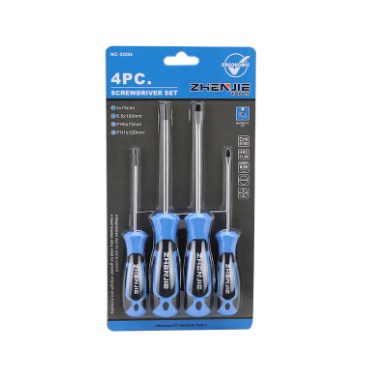
High-end handles feature a bi-material or tri-material construction: a rigid plastic core for structural support, a softer thermoplastic elastomer (TPE) or rubber overmold for grip, and sometimes a third hard-plastic end cap to enable palm-assisted driving. This construction is often referred to as a "soft-grip" or "comfort-grip" handle and has become the standard in professional-grade sets.
Legacy and vintage tools used wooden handles — typically beech, ash, or hornbeam — prized for their feel but gradually replaced by polymers due to susceptibility to cracking, swelling, and oil absorption. Wooden-handled drivers are still produced today as premium workshop tools valued for aesthetics and tradition.
| Material | Component | Key Property | Typical Application |
|---|---|---|---|
| Chrome Vanadium Steel | Shaft / Tip | High hardness + toughness | General-purpose manual drivers |
| S2 Modified Steel | Shaft / Tip | Shock resistance | Impact bits, heavy-duty drivers |
| Stainless Steel | Shaft / Tip | Corrosion resistance | Medical, food-safe, marine |
| Thermoplastic (PP / ABS) | Handle | Lightweight, moldable | Most consumer and trade drivers |
| TPE Overmold | Handle (outer layer) | Soft grip, vibration damping | Professional-grade sets |
| Wood (Beech / Ash) | Handle | Traditional feel | Heritage / workshop tools |
The Most Common Type of Crosshead Screwdriver
The most common type of crosshead screwdriver is the Phillips screwdriver, identified by its four-wing, self-centering recess. Invented by Henry F. Phillips and commercially introduced in the 1930s, the Phillips design was adopted by the automotive industry because it allows a power-driven bit to cam out automatically when a set torque is reached — a feature that prevents over-tightening on assembly lines.
Today, Phillips head fasteners are found in virtually every product category — consumer electronics, furniture, automotive components, electrical fixtures, and construction materials. More Phillips screws are produced annually than any other drive type, which is precisely why Phillips screwdrivers dominate every general-purpose tool set worldwide.
Phillips vs. Other Crosshead Types
While Phillips is the global standard, several other crosshead designs address its limitations:
- Pozidriv (PZ) — A European evolution of Phillips with added ribs between the four wings, providing greater bit engagement and significantly less cam-out. Dominant in European construction and furniture assembly. Pozidriv and Phillips bits are not fully interchangeable despite appearing similar.
- JIS (Japanese Industrial Standard) — Used extensively in Japanese-manufactured motorcycles, cameras, and electronics. JIS screws have a tighter, flatter recess than Phillips; using a Phillips bit on a JIS screw is a leading cause of stripped heads on Japanese equipment.
- Frearson (Reed and Prince) — An older crosshead design with a sharper, more pointed tip. It accepts any Frearson driver regardless of size, but is rarely encountered outside of marine hardware.
For everyday use, Phillips remains the default crosshead choice. Pozidriv is the preferred upgrade for tradespeople who want reduced slippage, while JIS is essential for precision work on Japanese-origin machinery.
What to Look for in a Phillips Screwdriver Set
A quality Phillips screwdriver set covers the full range of standard sizes and is built to maintain tip geometry over thousands of uses. Here is what separates a set worth buying from one that strips screws on its second job.
Size Coverage: PH0 Through PH3
Phillips sizes are designated by point size — PH0, PH1, PH2, and PH3 — corresponding to increasingly larger screw heads. A practical set should include at minimum:
- PH0 — Small electronics, eyeglass frames, precision devices
- PH1 — Computer hardware, small appliances, light fixtures
- PH2 — The most commonly used size; covers wood screws, drywall, general construction
- PH3 — Large structural screws, heavy machinery panels
Some sets also include PH00 and PH000 for ultra-fine electronics work, expanding coverage for repair technicians and hobbyists.
Tip Quality and Finish
The tip is the most failure-prone part of any screwdriver. Look for sets where tips are machined to tight tolerances rather than stamped, and finished with a black oxide or titanium nitride (TiN) coating. Black oxide reduces friction slightly and helps the tip seat correctly in the recess; TiN coatings extend tip life under heavy power-tool use.
A useful field test: a well-made Phillips tip will hold a matching screw horizontally without the screw falling off. If the screw drops immediately, the tip geometry is too loose for reliable engagement.
Shaft Length Options
Professional sets typically include both standard-length and stubby shafts for the most common sizes (PH1 and PH2). Stubby drivers — usually 40–60 mm overall length — access recessed fasteners in tight panel gaps and confined spaces where a full-length driver cannot rotate freely. Some sets add extra-long shafts (250–300 mm) for deep-recess applications in cabinetry and electrical panels.
Handle Ergonomics and VDE Rating
For trade and maintenance use, look for handles with a tri-lobe or hex cross-section — the flat facets prevent the driver from rolling off a surface and improve grip at high torque. Electricians should specify sets rated to VDE/IEC 60900 at 1,000V AC, which requires individual testing of each tool and is the industry standard for live electrical work. VDE-rated handles are made from materials that resist electrical breakdown even at sustained high voltage.
Recommended Set Configurations
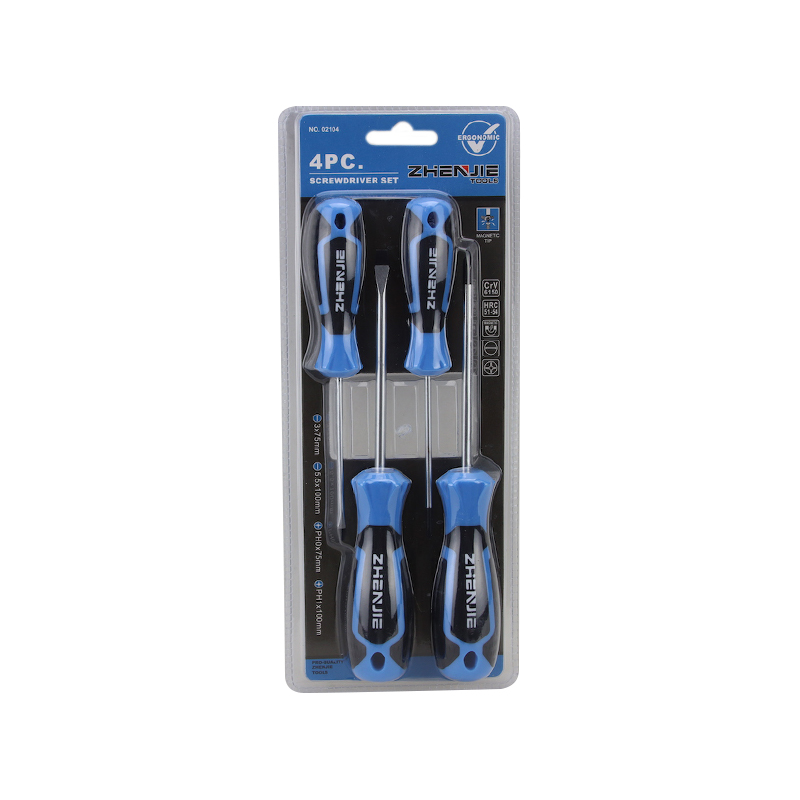
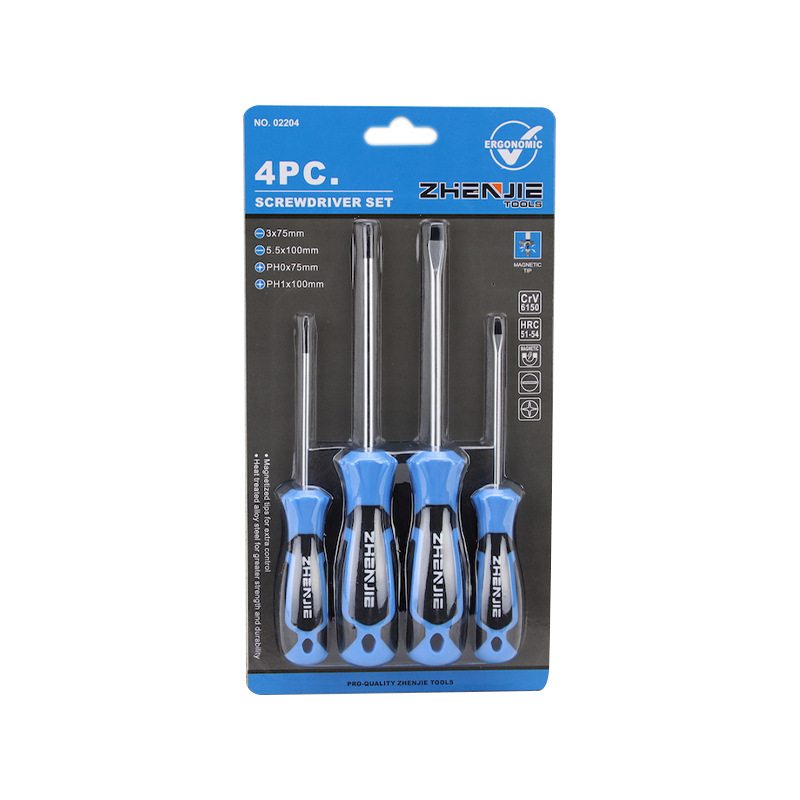
- Home and DIY (4-piece): PH0, PH1, PH2, PH3 — standard lengths, soft-grip handles
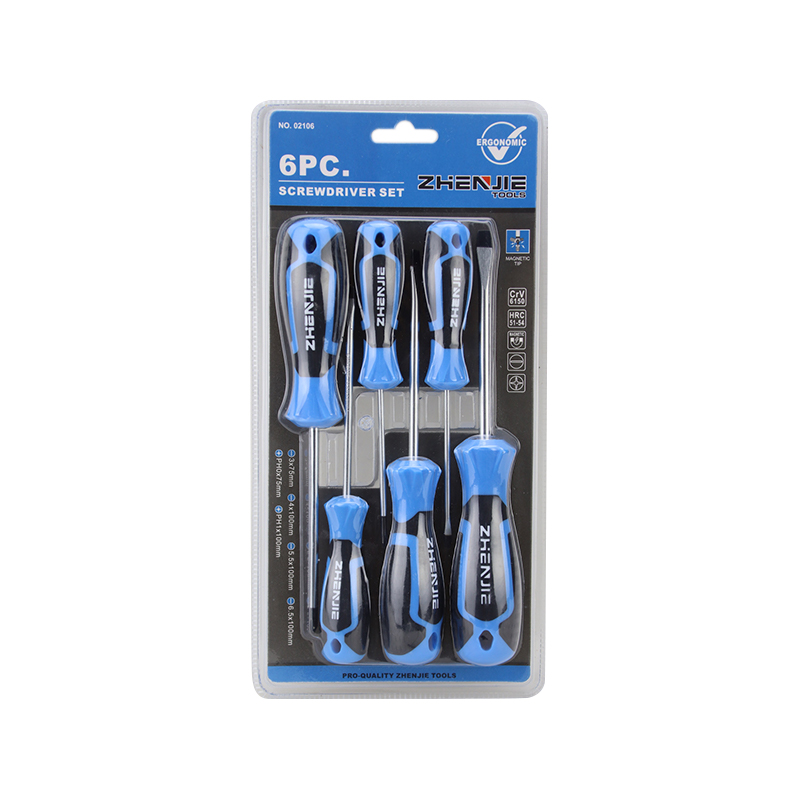
- Electronics repair (6-piece): PH000, PH00, PH0, PH1, PH2 with precision handles, plus a PH2 stubby
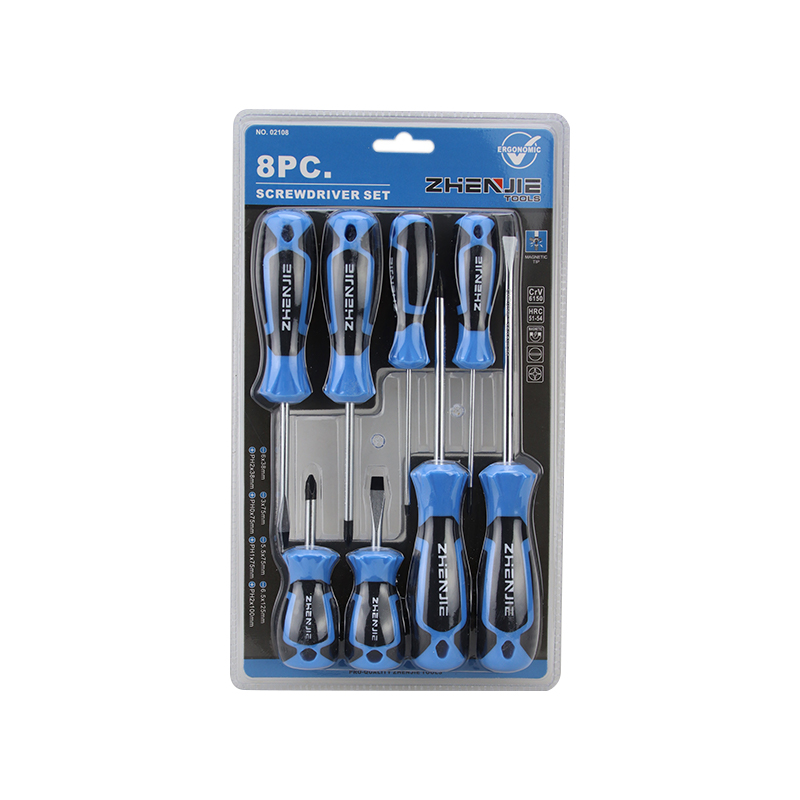
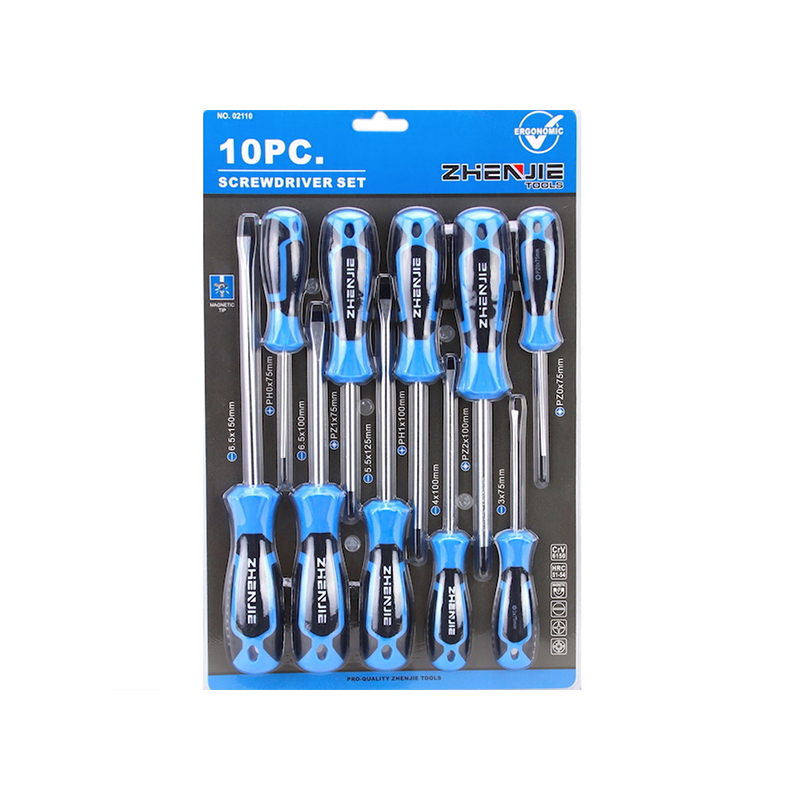
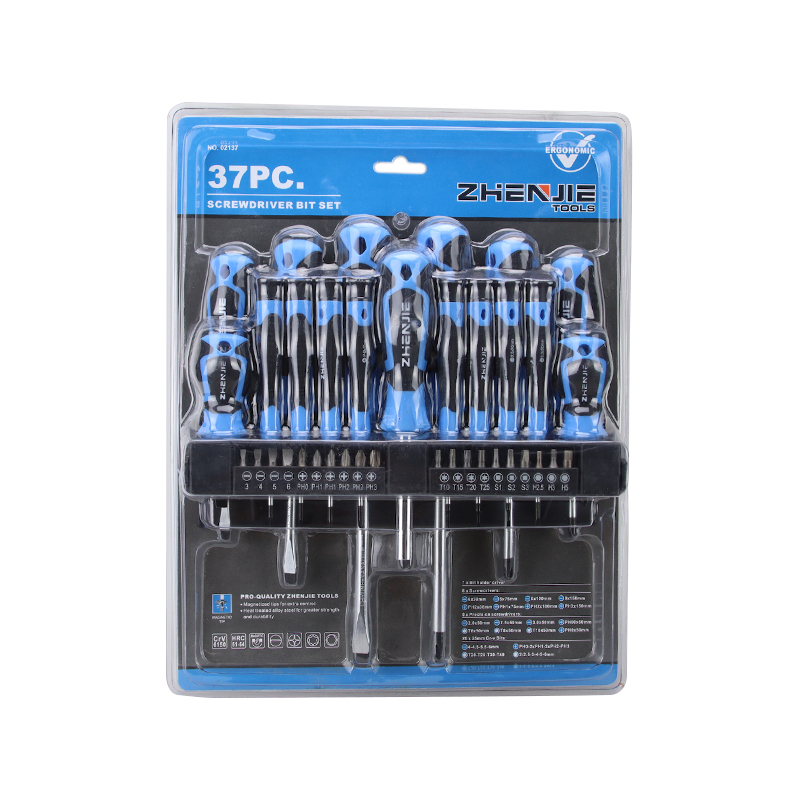
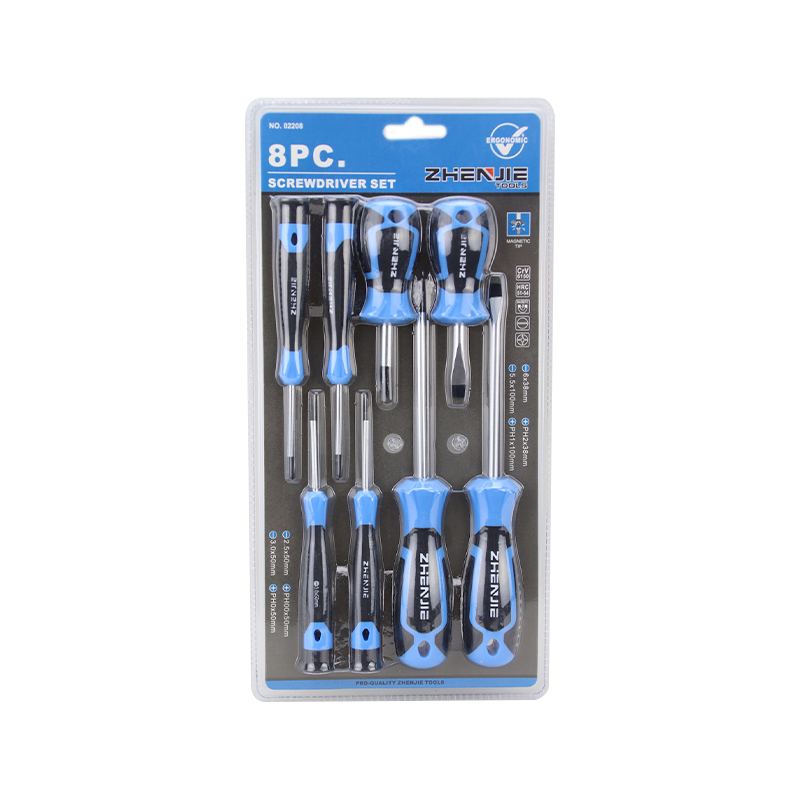
- Tradesperson (8-piece): PH1 and PH2 in standard, stubby, and long variants; PH0 and PH3 standard; full Cr-V or S2 blades, VDE-rated if electrical work is involved
- Combination set: Many professionals prefer sets that pair Phillips with Pozidriv sizes (e.g., PH1/PZ1, PH2/PZ2), covering both European and North American fastener standards in a single kit
How to Keep a Phillips Screwdriver Set in Good Condition
Even a high-quality Phillips screwdriver set degrades faster than it should when used incorrectly. The two most common mistakes are using a driver one size too small (which rounds both the tip and the screw recess) and applying forward pressure without sufficient downward force — a combination that guarantees cam-out.
The correct technique is the "push-turn" method: apply firm downward pressure into the screw recess before rotating. This seats the bit fully in the recess and converts more of your applied torque into rotational force rather than cam-out force. On stubborn screws, a few drops of penetrating oil and a minute of dwell time will reduce the torque needed and protect the tip geometry.
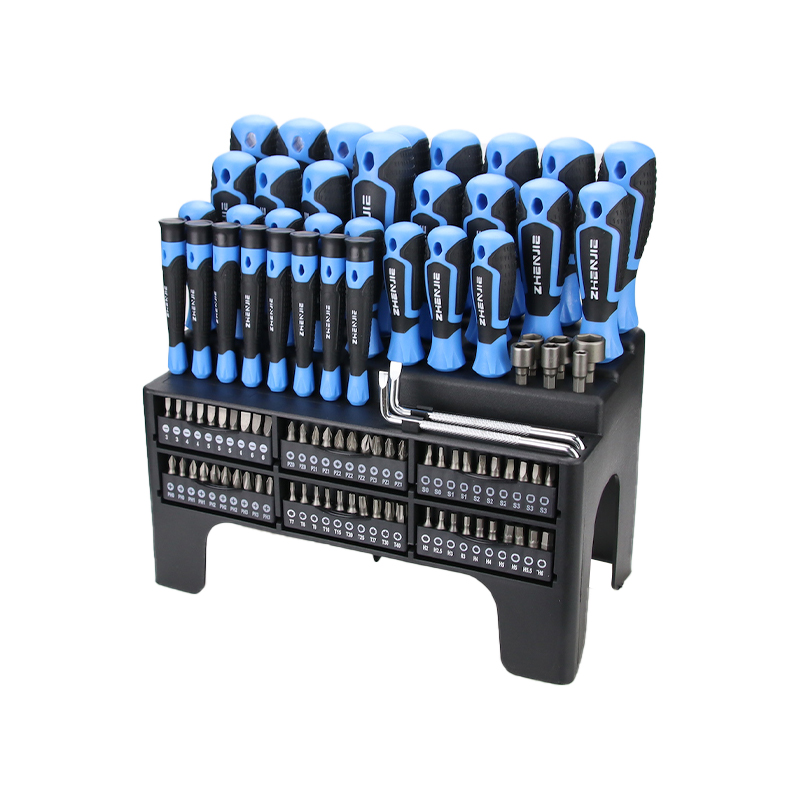
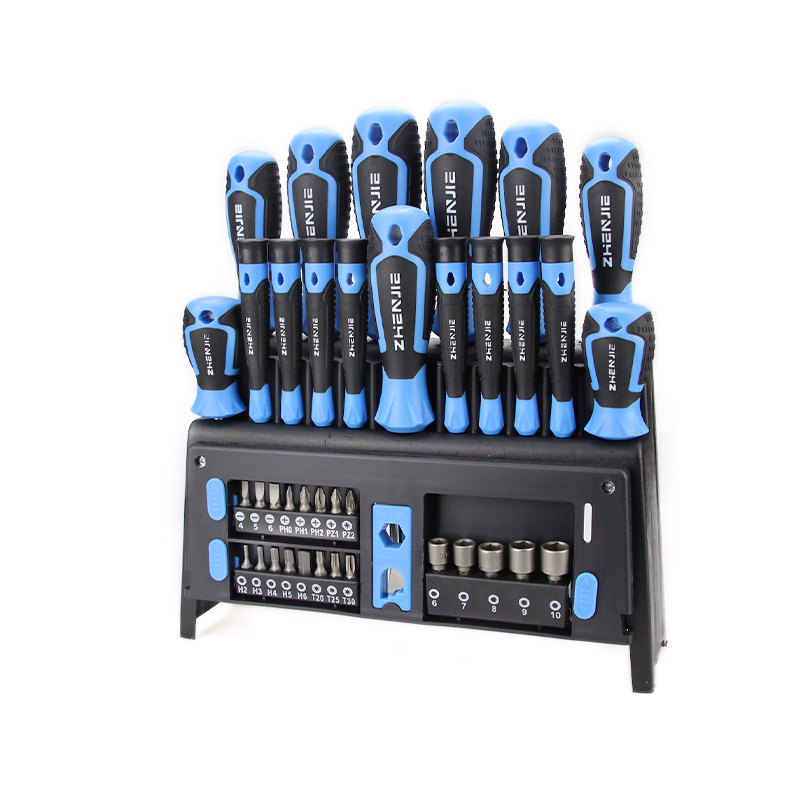
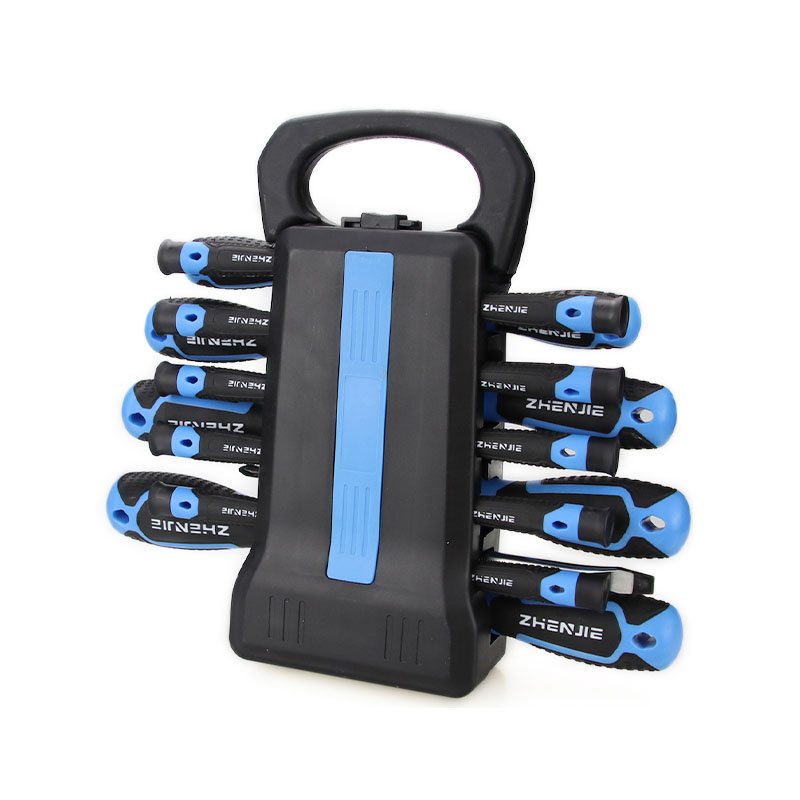
Storage matters too. Keeping drivers loose in a toolbox where tips contact metal surfaces accelerates edge wear. A roll-up pouch, wall-mounted magnetic strip, or indexed stand that holds each driver tip-up preserves tip sharpness significantly longer and makes size selection faster in the field.
Inspect tips periodically for rounding, chipping, or wing distortion. A worn Phillips tip is not worth trying to salvage with a grinder — the geometry is too precise for hand reconditioning. Replace individual drivers as needed rather than waiting for an entire set to fail.