

 English
 русский
 Español
The moment that forces most people to think about buying a screwdriver set is the same everywhere: the flat-pack shelf is half built, the supplied hex key has rounded off, and the Phillips head has started to cam out because the only driver within reach is a worn 20-year-old blade. The practical way to choose the right household screwdriver set for home repair is to work backwards from the fasteners in your home, not from the piece count on the package. A set that covers slotted, Phillips, Pozidriv, Torx, and hex in the sizes you actually meet, made from chrome-vanadium steel, will outperform an arbitrary 44-piece box in daily use.
Retail category data from major European DIY chains shows that screwdriver sets are consistently among the three best-selling hand tool categories, yet the same buying data indicates that most households regularly use only two or three drivers from any set: a No. 2 Phillips, a 5.5 mm slotted, and one Torx for appliance panels. That gap between what a set contains and what a home actually needs is why selection fails when it starts with a budget or a brand logo instead of a fastener inventory.
Match the Household Screwdriver Set to the Drive Types You Own
The drive types installed in your home define the minimum set you should buy: slotted, Phillips, Pozidriv, Torx, and hex together cover more than 90 percent of residential fasteners. A household screwdriver set that starts with these five, in useful sizes, will rarely leave you blocked by the wrong tool.
Phillips No. 1 and No. 2 dominate furniture, bathroom fittings, and electrical fixtures. Slotted blades still appear on older switch plates, grounding clamps, and many appliance terminals. Torx shows up on modern white goods, laptops, and car interior trim, where it resists cam-out far better than Phillips. Pozidriv, common on European flat-pack furniture and hinges, is frequently mistaken for Phillips; using a Phillips driver on a Pozidriv screw invites immediate slippage that damages the head. Hex tips are needed for casters, hex bolts on workbenches, and cam-lock fittings on ready-to-assemble furniture.
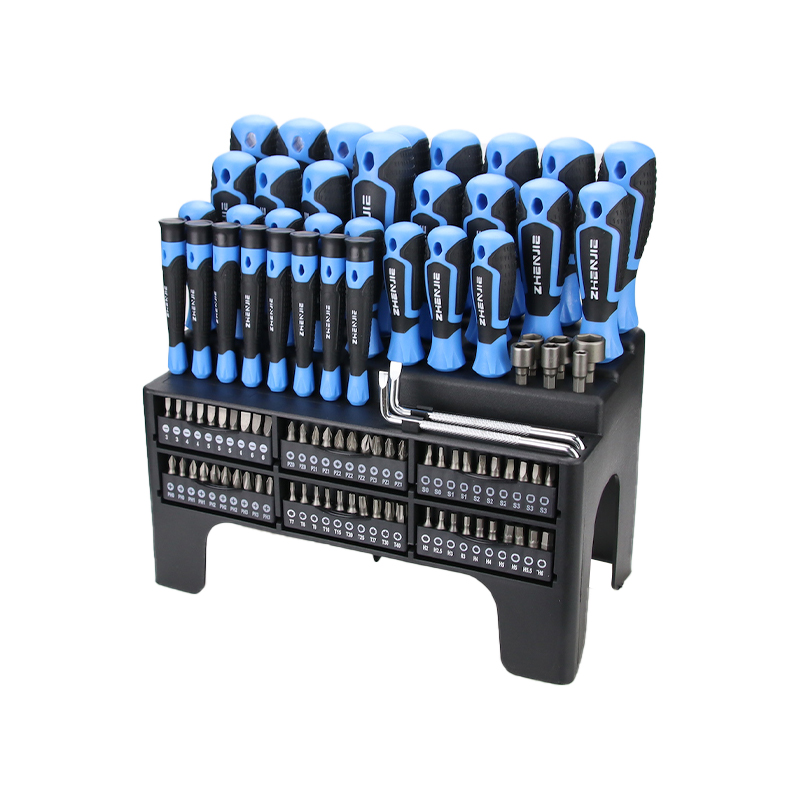
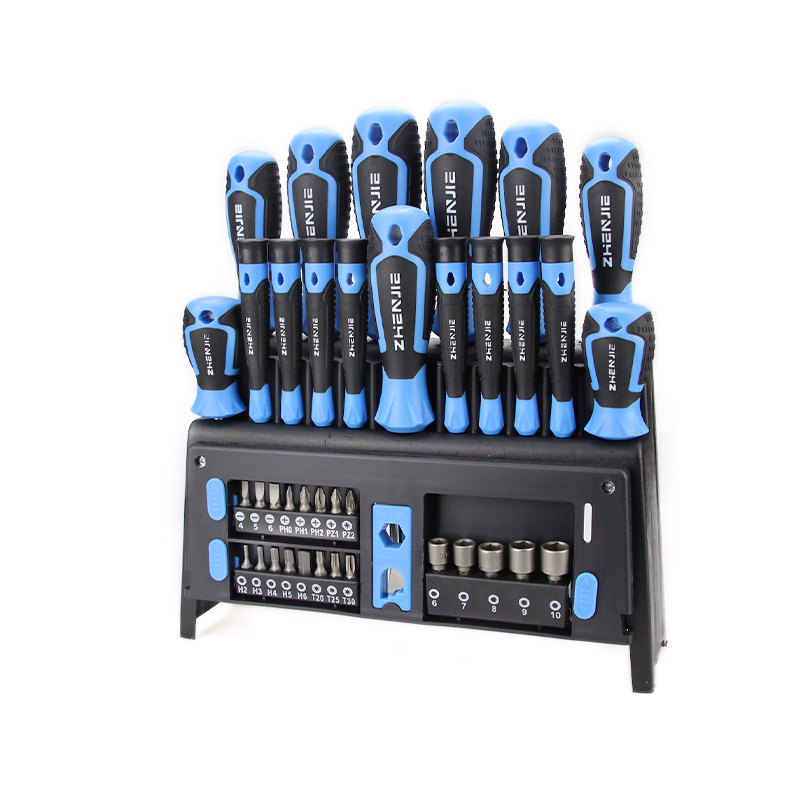
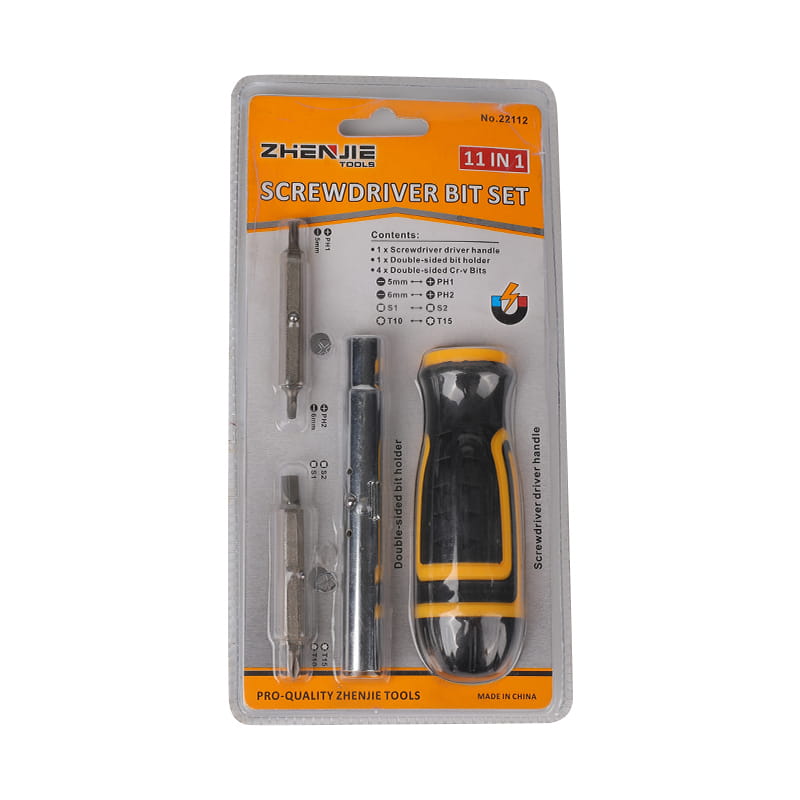 11-in-1 Household Screwdriver Bit Set for Everyday RepairsThis compact set bundles the essential slotted, Phillips, Torx, and hex tips commonly needed for furniture, fixtures, and appliance maintenance, making it a practical starting point for a well-rounded home toolkit.View Product →
| Drive type | Typical home use | Most common size | Cam-out risk with a wrong driver |
| Slotted | Switch plates, terminals, older fixtures | 5.5 mm / 6.5 mm | Low |
| Phillips | Furniture, drywall, electrical accessories | No. 1 / No. 2 | Medium |
| Pozidriv | European flat-pack furniture, hinges | PZ1 / PZ2 | High if Phillips is used |
| Torx | Appliances, laptops, car trim | T15 / T20 | Low if the size matches |
| Hex | Casters, furniture bolts, workbenches | 4 mm / 5 mm | Medium |
A household set should include at least one slotted driver, one Phillips No. 2, one Torx, and one hex driver before it spends budget on duplicate sizes or decorative handles.
If you are still mapping the fasteners in your home, the household screwdriver selection guide on this site walks through identification, sizing, and common confusion points in more detail.
Check Steel Grade and Tip Hardness Before You Count Pieces
Chrome-vanadium (CR-V) steel is the minimum acceptable material for a household screwdriver set, and hardened S2 tool steel is the right choice for bits that carry high torque. A set that does not state its steel grade is very likely made from soft carbon steel that rounds off in the first season of active use.
CR-V blades typically run at 48 to 52 HRC, which balances bending resistance with tip toughness for hand-driven household work. S2 bits reach 58 to 62 HRC and hold their cutting profile far longer in ratchet drivers and electric screwdrivers, at the cost of being slightly more brittle under side loading. Magnetized tips are not a gimmick: they hold the screw on the blade during assembly, and a well-made set keeps useful magnetism for years.
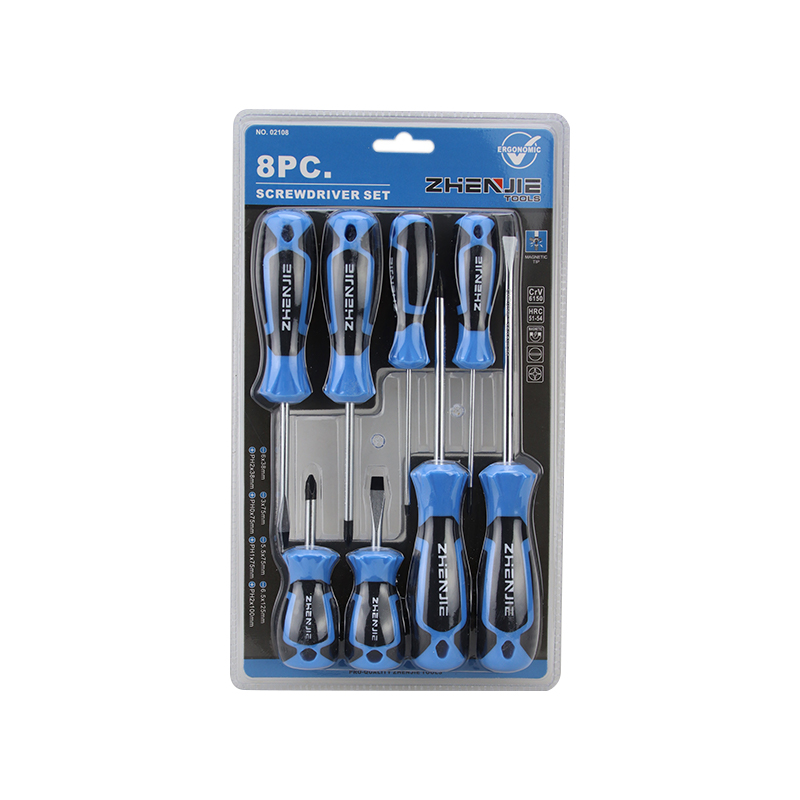
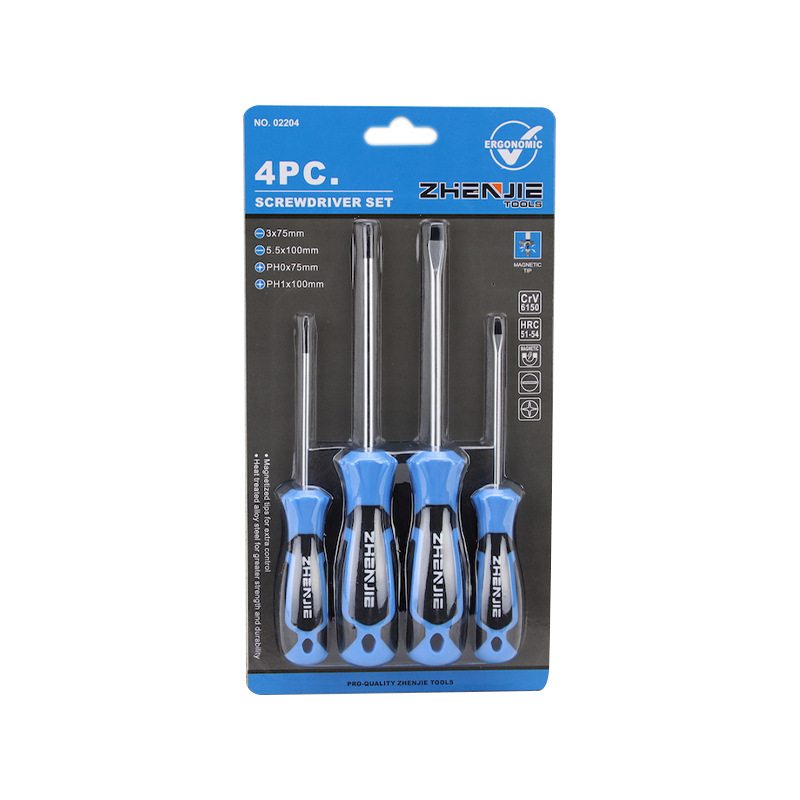
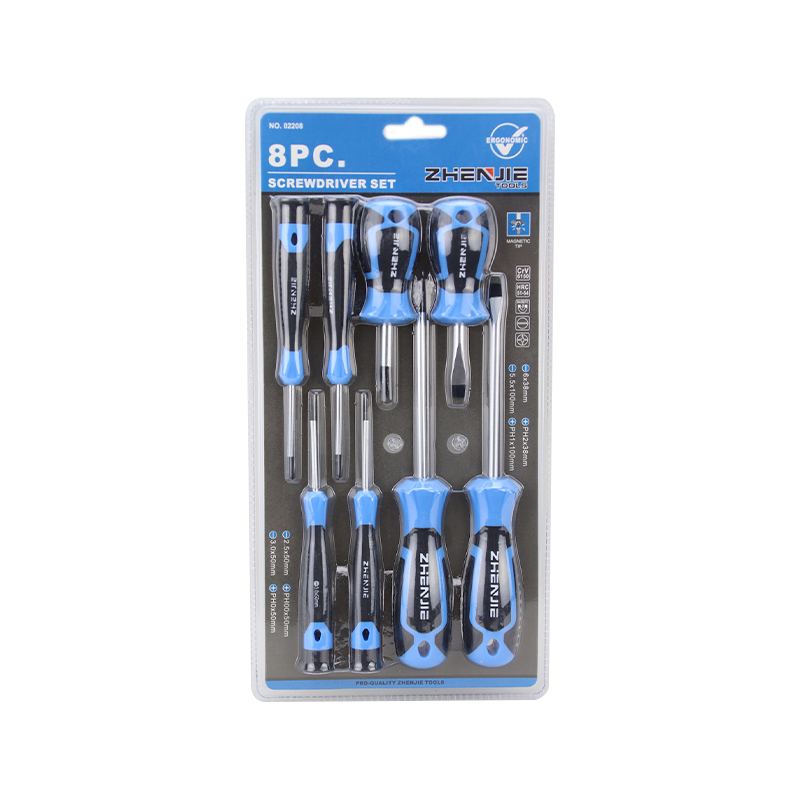
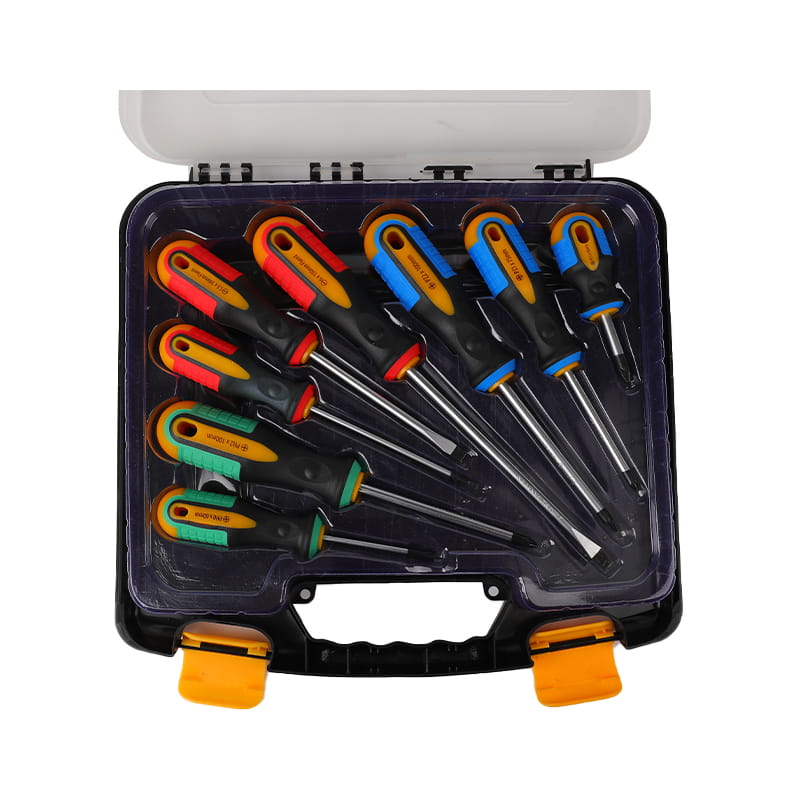 8-Piece General Household Screwdriver Set for Home UseFeaturing CR-V steel construction, this professionally styled screwdriver set delivers dependable performance for typical household tasks, though without specified steel grade details, it's best suited for casual repair work.View Product →
Hardness shows up in real repairs. A soft tip on a No. 2 Phillips will cam out and chew the screw head, turning a five-minute fix into a 40-minute extraction job. Sets labeled CR-V with a passivated or nickel-plated finish also resist rust in humid garages and kitchens, which is why material claims belong on your checklist before piece count.
Size the Household Screwdriver Set to Your Repair Load
A 6- to 12-piece household screwdriver set covers between 60 and 80 percent of common home repairs, while a 21- to 44-piece set pushes coverage above 90 percent by adding Torx bits, nut drivers, and sockets for appliances and automotive trim. Beyond about 24 pieces, the curve flattens quickly and the added weight is convenience, not capability.
The analysis below maps set size to the share of fasteners found in a typical home across furniture, electrical fixtures, white goods, and basic car maintenance. The jump from 6 to 11 pieces buys the most new coverage per dollar; the jump from 24 to 44 pieces buys mostly organizational comfort.
Share of typical household fasteners covered by set size
The practical takeaway: households that mainly assemble furniture and fix fixtures should buy the 11-piece class, while households with appliances, bicycles, and cars should move to the 21- to 24-piece class. Piece counts beyond 40 mainly serve workshop and professional use.
6- to 12-piece household class
- Covers furniture, shelves, switch plates, and hooks
- Usually one fixed driver per tip, zero selection time
- Covers roughly 60 to 80 percent of residential fasteners
21- to 44-piece expanded class
- Adds Torx, hex, nut drivers, sockets, and extensions
- Better for appliances, bicycles, and car trim repair
- Covers 90 to 96 percent with interchangeable bits
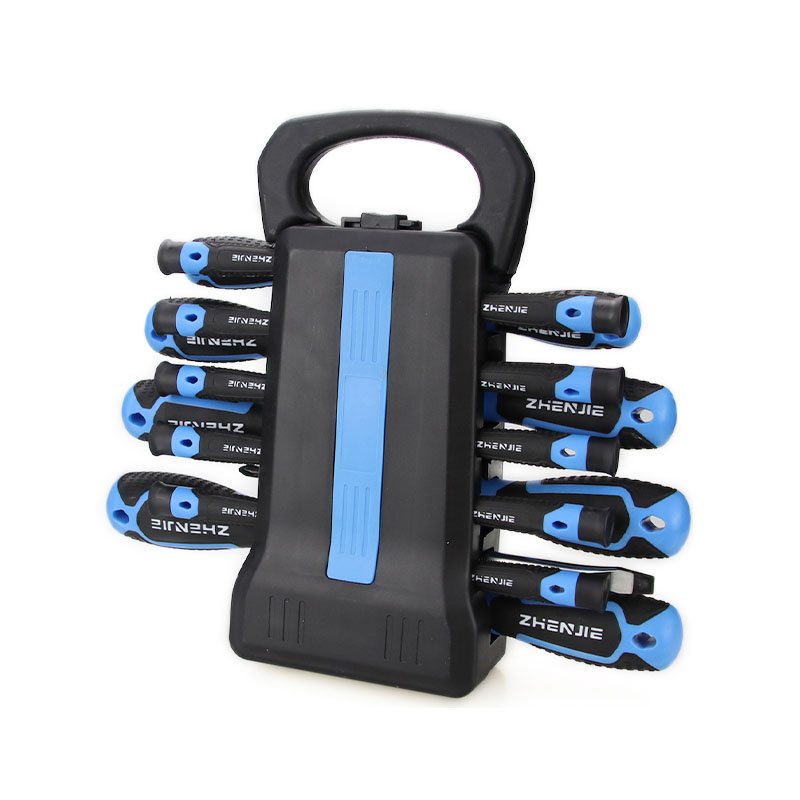
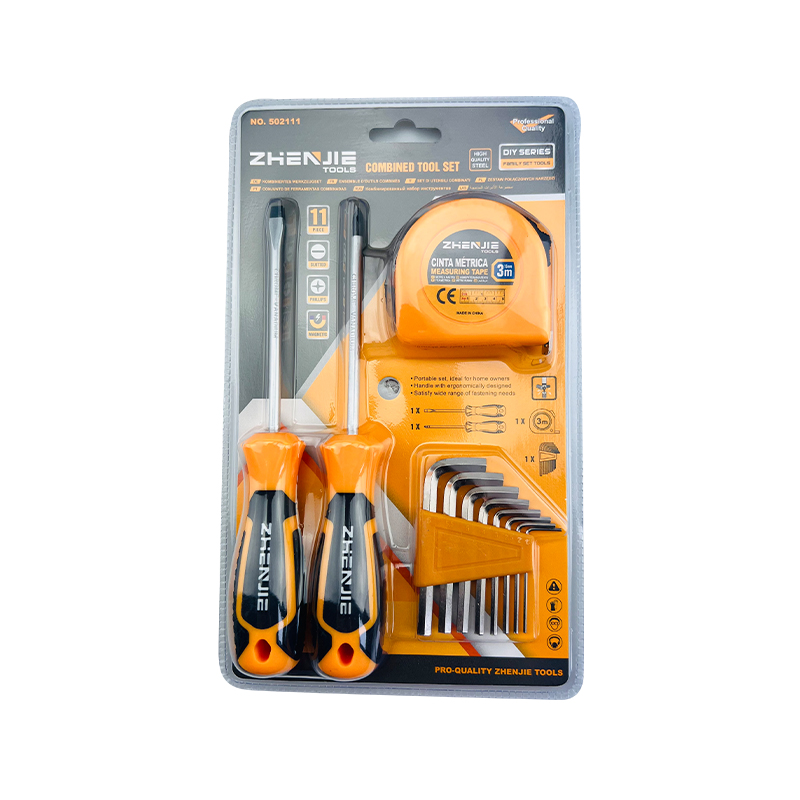 11 PIECE COMBINED TOOL SETThe 11-piece 002-handle set is an essential tool combination for daily maintenance and DIY projects, suitable for all kinds of fine work. The kit includes: 1 5.5x100mm...View Product →
Storage also matters at the upper end of the range: a partitioned tray or box keeps the 21-piece class organized, while loose 44-piece sets cost more time in selection than they save in reach.
Evaluate Handle Design, Magnetization, and Insulation
A dual-injection soft-grip handle, a magnetic tip, and an insulated blade for anything near live circuits define the practical difference between a comfortable household screwdriver set and an accident waiting to happen.
Handle diameter is the most ignored specification. Adult hands need roughly 30 to 38 mm at the grip to transfer torque comfortably; slim promotional handles force a harder squeeze, transferring strain to the wrist and forearm. Dual-injection TPR over a polypropylene core absorbs pressure, while square or hexagonal handle profiles stop the tool from rolling off a sloped bench. One stubby driver belongs in the set for tight spots under sinks and inside appliance cabinets, where a full-length shaft cannot rotate.
Electrically, only sets explicitly marked 1000 V VDE are certified for live work. A CR-V blade can conduct current through a damaged handle, while the insulation on a VDE tool is individually tested to a much higher proof voltage. For a home with children or older wiring, keeping a clearly marked insulated set for outlets, switches, and lighting circuits is the single strongest safety upgrade.
A 1000 V VDE insulated screwdriver set is a household safety tool, not an electrician exclusive: it isolates the user from live terminals at the rated voltage and is batch-tested to a higher proof voltage during certification.
Quality Signals to Check in Any Household Screwdriver Set
Whether you buy from a supermarket shelf or evaluate a wholesale order, the same five quality signals decide whether a household screwdriver set will last: stated steel grade, correct tip fit, corrosion protection, protective packaging, and batch-level inspection.
Most household sets sold through European and North American retailers are OEM products made by specialist hardware factories. Jiande Zhenjie Hardware Tools Co., Ltd. is one such manufacturer: it produces screwdriver sets, bit sets, and hand tool combinations for supermarket chains across more than 30 countries, under brands that end consumers never see. From the buyer's side, the difference between an outstanding set and a failing one is often invisible on the outside: a CR-V blade that has been correctly heat-treated, a tip ground to the exact JIS or DIN profile, a passivated finish that resists rust, and blister or tray packaging that protects tips during shipping.
Check the tip fit by inserting the driver into the screw head at a 90-degree angle; if it rocks or wobbles, the grinding tolerance is poor. Check the magnet by holding a screw vertically; it should keep the screw in place against light shaking. And check whether the handle is molded firmly onto the shank, since a loose handle destroys control under torque. Buyers evaluating stock from factory sources should ask for the steel grade, the hardness range, and the packaging compliance for the target market; a manufacturer with in-house testing facilities answers those questions without delay. You can contact the factory sourcing team directly if you need specification sheets or sample approvals.
Maintain the Set So the Tips Stay Crisp
Most household screwdriver sets fail through abuse, not manufacturing defects, and three habits extend service life by years: keep tips aligned to the fastener, reserve the set for turning screws, and replace any driver the moment the tip rounds.
- Clean the tips with a dry cloth after greasy repairs, because oil and dirt build-up causes slippage on the screw head.
- Never use a screwdriver as a chisel, scraper, or pry bar; side loading is what snaps shafts and rounds off tips.
- Test the tip fit on the screw head before applying torque, and replace worn drivers instead of forcing them through a job.
A 10-second visual check before each repair, looking for a rolled edge or a bent shaft, prevents most stripped-screw incidents in the house.
Frequently Asked Questions
How many screwdrivers do I need for basic home repair?
Five tools cover the majority of home repairs: a slotted 5.5 mm driver, a Phillips No. 2, a Torx T20, a hex 4 mm, and a stubby Phillips for tight spaces. That combination covers roughly 75 percent of furniture and fixture work in a typical home.
Are magnetic screwdriver tips safe for electronics?
Yes, for almost all household electronics. Modern circuit boards and data cables tolerate the field from a standard magnetic tip; the real risk is slipping and scratching the board. A precision screwdriver set with magnetic tips is recommended for small screws, because the magnet holds each screw in place during reassembly.
What does the 1000 V VDE insulation rating actually mean?
It means the tool has been individually tested to withstand at least 10,000 V during certification and is rated for work on live circuits up to 1000 V AC. For homeowners it is the only screwdriver category you should use near outlets, switches, or lighting circuits.
Is a ratcheting screwdriver set worth the extra cost?
Yes, when you tighten or loosen more than a few dozen fasteners in a single session. A ratcheting driver keeps the handle aligned with your hand and the tip seated in the screw, reducing wrist motion and preventing cam-out. For occasional single-screw fixes, a simple fixed driver is sufficient.