

 English
 русский
 Español
Four hundred retail returns in one quarter traced to a single defect: screwdriver tips that rounded off inside ordinary cabinet screws. The buyer had chosen the set for its 42-piece count and promotional price, not for its blade steel. That is how procurement decisions fail: the visible spec sheet wins the argument while the invisible metallurgy decides whether the tool actually works.
A professional tool set earns its category through measurable decisions: the steel grade that keeps an edge, the drive coverage that matches the fasteners in the field, the handle construction that transfers torque without slipping, and the supplier discipline that keeps every unit consistent. This hardware tools buying guide covers what to look for in a professional tool set in the order that matters most: material, drive coverage, ergonomics and safety, composition, and manufacturer capability.
Steel Grade: The First Reliability Filter in a Professional Tool Set
The blade material determines whether a professional tool set survives its first year of real use. Chromium-vanadium steel, usually labeled CRV, is the baseline for professional screwdrivers: at 48 to 52 HRC it keeps a sharp tip while retaining enough ductility to absorb shock without snapping.
Budget sets often drop to ordinary carbon steel, which feels similar on the shelf but deforms in a fraction of the service life. Procurement teams that request hardness test reports in advance avoid the most common quality complaint in the hardware category: tips that twist, round off, or chip on fasteners that were never even seized.
| Material | Hardness (HRC) | Toughness | Typical Application | Cost Index |
| CRV steel | 48-52 | High | Standard sets and bits | 1.0 |
| 6150 alloy steel | 50-55 | Medium-high | Heavy-use drivers | 1.2 |
| S2 tool steel | 56-60 | Medium | Impact and hard-fastener work | 1.5 |
| Carbon steel | 42-48 | Low | Budget household tools | 0.6 |
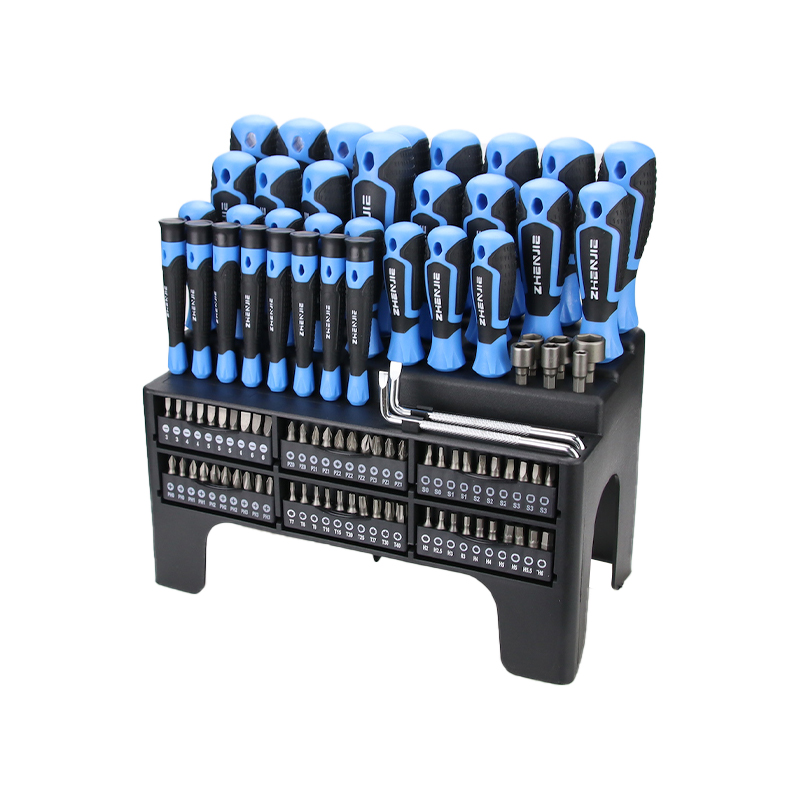
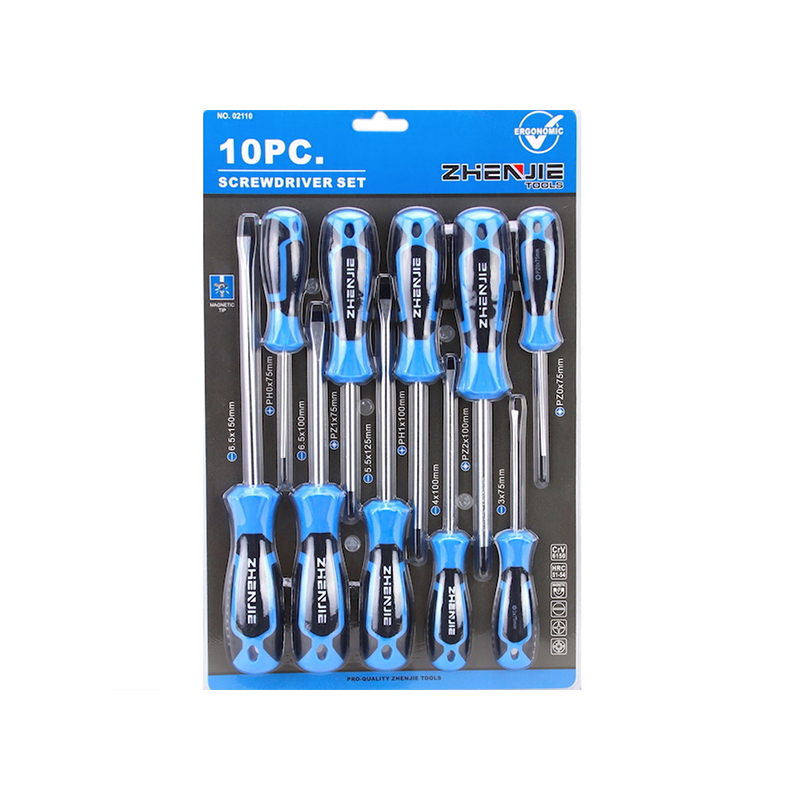
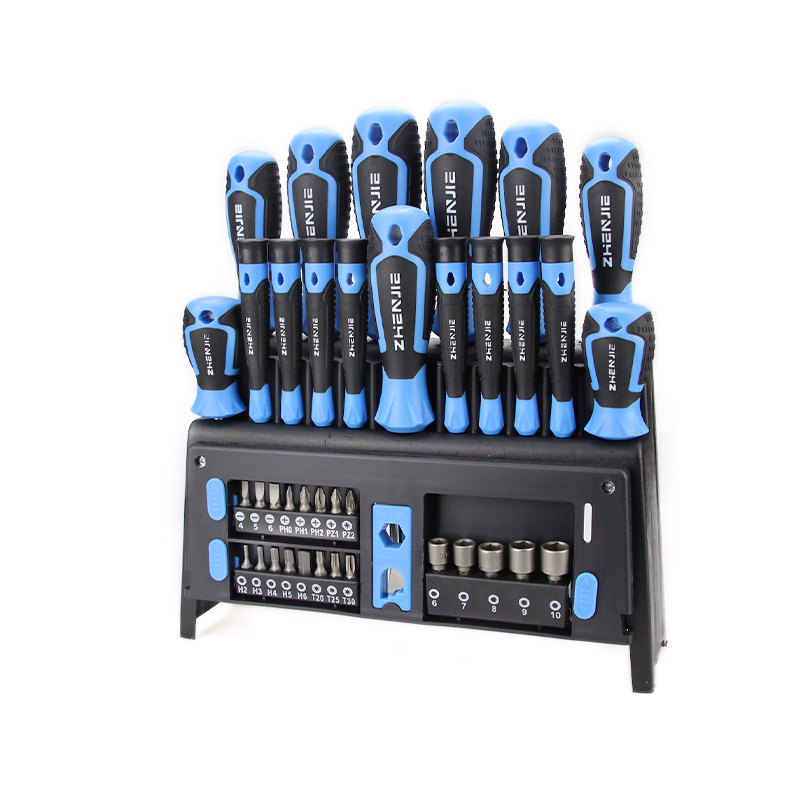
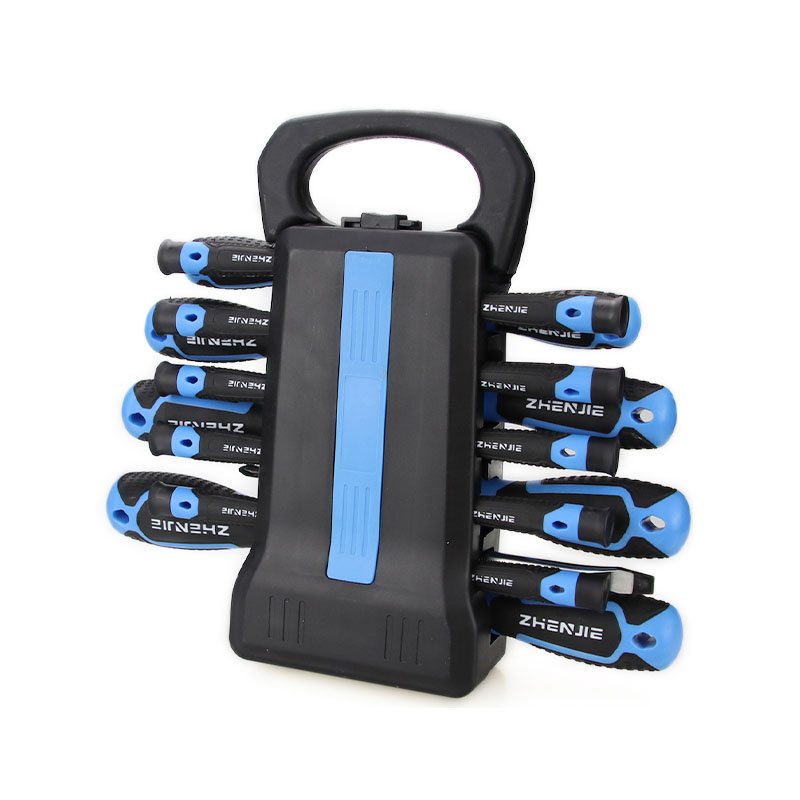
For most buyers, the best starting point is a set that combines CRV blades with the common slotted and Phillips sizes in one organized case. A 17-piece professional screwdriver set is a representative configuration of that approach.
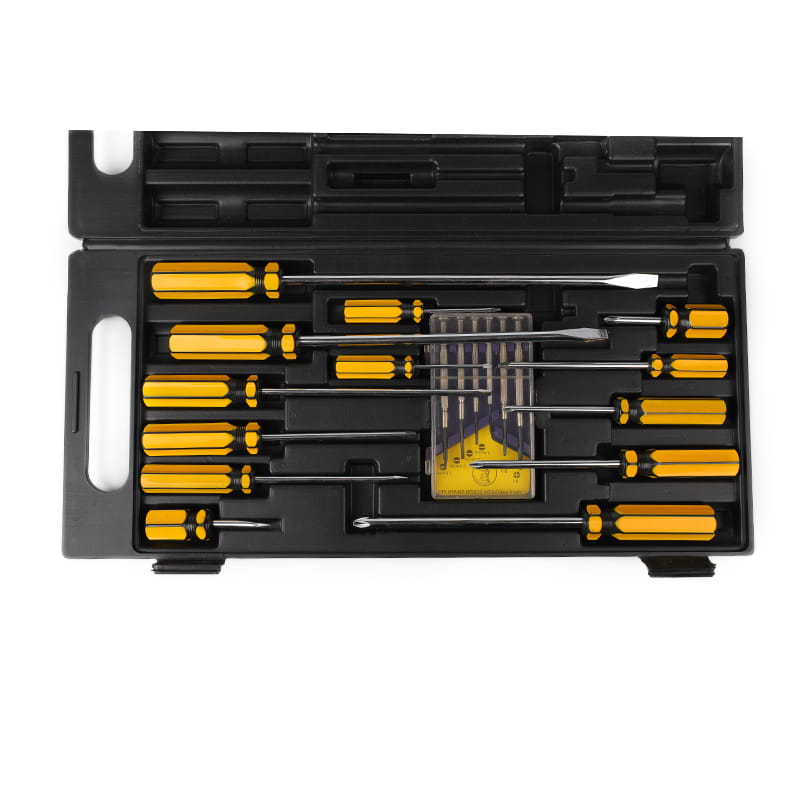 17-Piece Professional Screwdriver Set with CRV BladesThis set organizes common slotted and Phillips sizes in a single case, making it a practical choice for buyers who want everyday fastener coverage with durable CRV steel blades.View Product →
The practical floor: a blade below 45 HRC deforms in a seized screw head, and a blade above 60 HRC risks brittle fracture under impact.
Drive Type Coverage: What a Professional Tool Set Must Include
Drive coverage decides whether the set can finish a job, not just start it. A professional tool set should include at least four drive families: slotted, Phillips, Pozidriv, and Torx, plus a bit holder for hex-shank screwdriver bits. Packing 40 drivers of two drive types does not make a set professional.
Fastener distribution in maintenance and repair work explains why coverage matters. Phillips still appears most often, but Torx has grown quickly in appliances, electronics, and automotive trim.
Beyond the drive shapes, check the details that make a set usable: magnetic tips strong enough to hold a screw at a 45-degree angle, hex-shank seating that prevents a bit from spinning inside the handle, and double-ended bits that reduce tool changes.
A 48-piece set can be less capable than a 21-piece one if the larger box duplicates Phillips sizes and omits Pozidriv, Torx, and hex entirely.
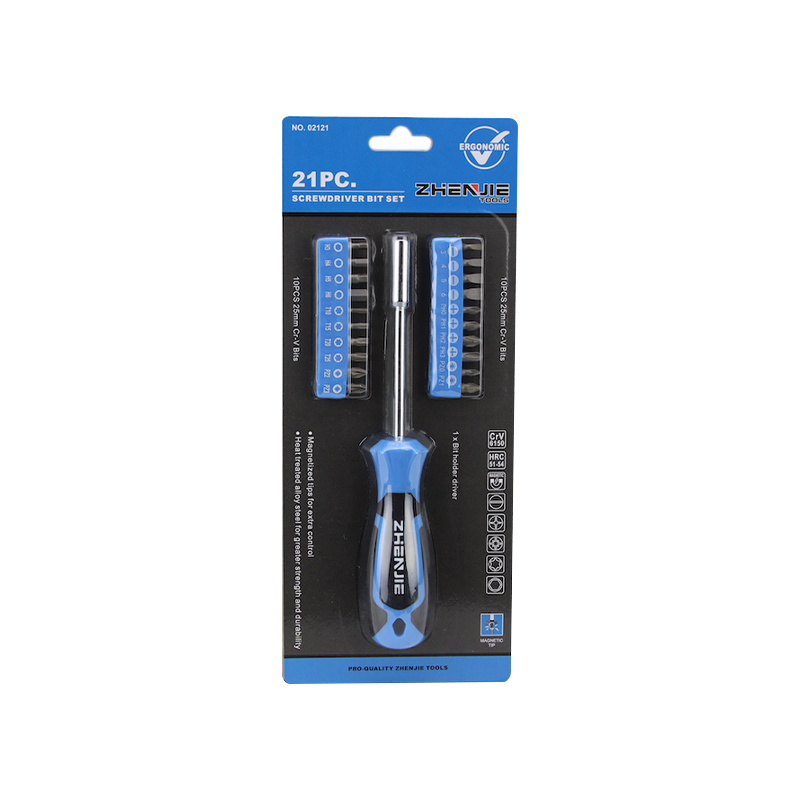
For technicians working on mixed equipment, a ratchet-style bit set is the most efficient configuration. A 21-piece ratchet set covering slotted, Phillips, Pozidriv, hex, and Torx drivers delivers the same workload as several dedicated tools.
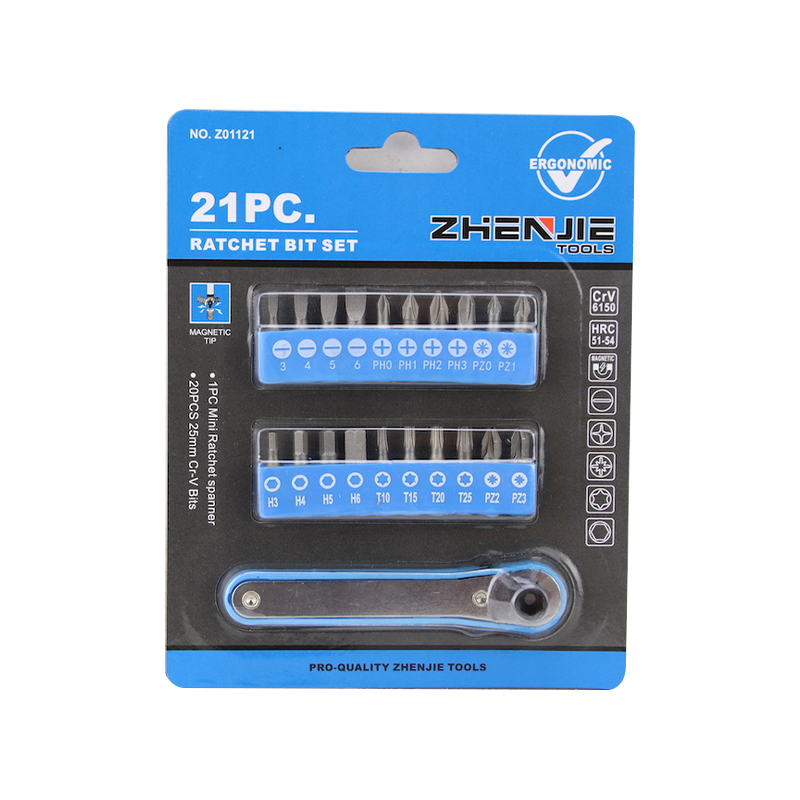 21-Piece Ratchet Bit Set for Multiple Drive TypesCovering slotted, Phillips, Pozidriv, hex, and Torx profiles, this ratchet set suits technicians handling mixed equipment, reducing the need for several dedicated tools. Its special steel and hardening treatment support repeated use.View Product →
Handle Ergonomics and Insulation: Safety Features That Matter
Handle construction is a safety component, not a cosmetic one. Double-injected soft handles keep the tool stable in the palm under high torque, and VDE-certified insulation protects users working near live circuits rated up to 1000 volts.
A screwdriver handle transfers force from the wrist to the blade. Hard, rounded polymer handles slip when torque rises, which increases the risk of cam-out and hand injury. Professional tool set handles use two-material construction: a rigid core bonded to a soft outer layer, with a textured surface that grips even with oily hands.
Electrician-grade sets with VDE insulation and ergonomic handles are the reference point for safety-focused buyers. A 7-piece VDE set covers the standard slotted and Phillips sizes used in panel work.
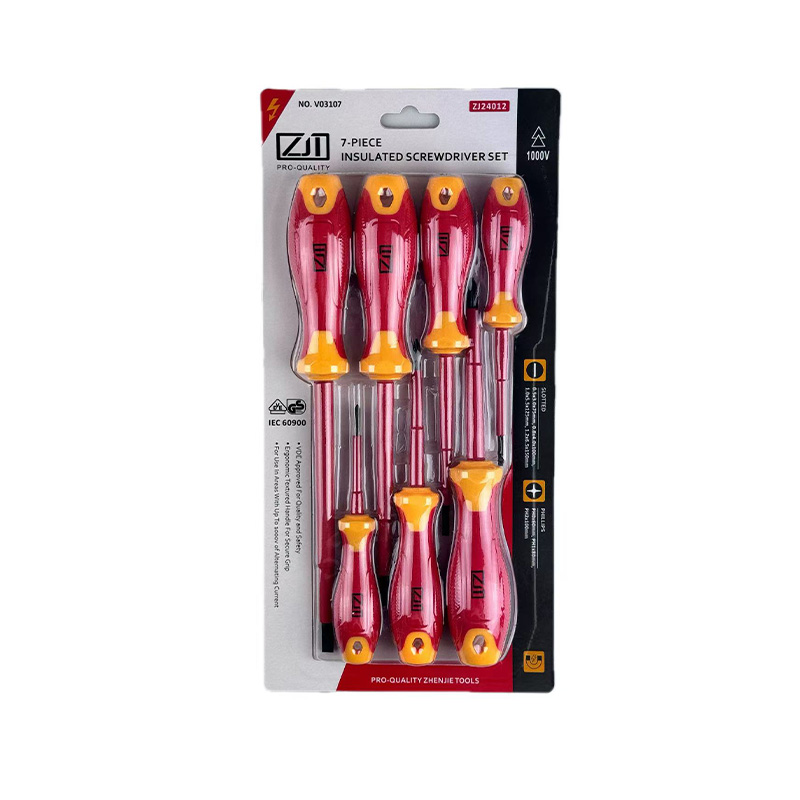 7-Piece VDE-Insulated Screwdriver Set for Electrical WorkInsulated for work near live circuits, this set includes standard slotted and Phillips sizes from SL0.5 to PH2, offering a safe and compact option for electricians and panel maintenance tasks.View Product →
Set Composition and Packaging: Signals of Manufacturing Discipline
Piece count is the weakest spec on the box. Composition, fastener size range, case strength, and retail packaging carry far more information about the quality of a professional tool set.
A short inspection sequence separates a deliberate design from a promotional assortment.
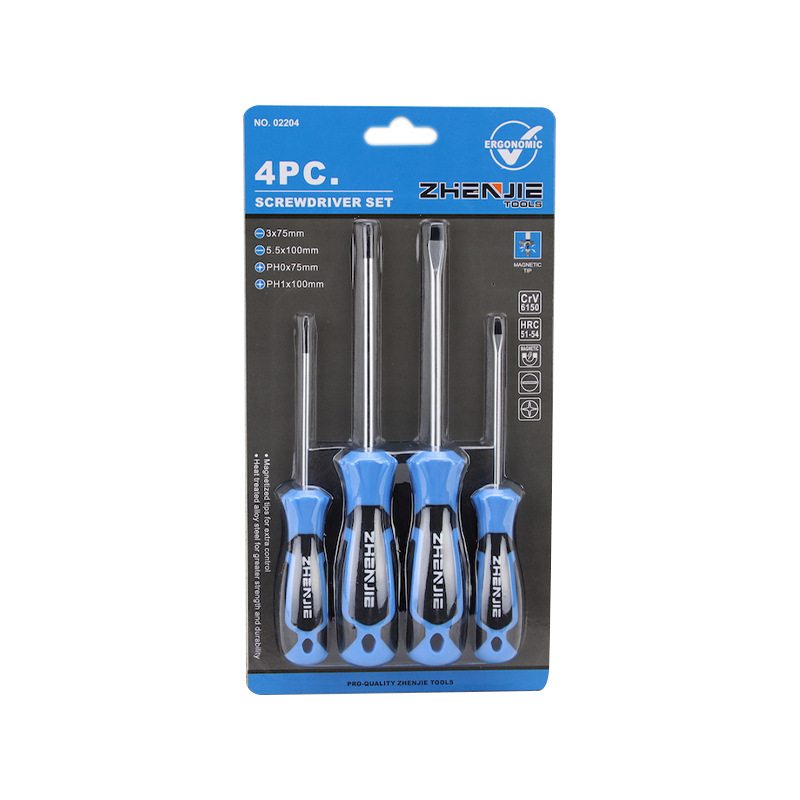
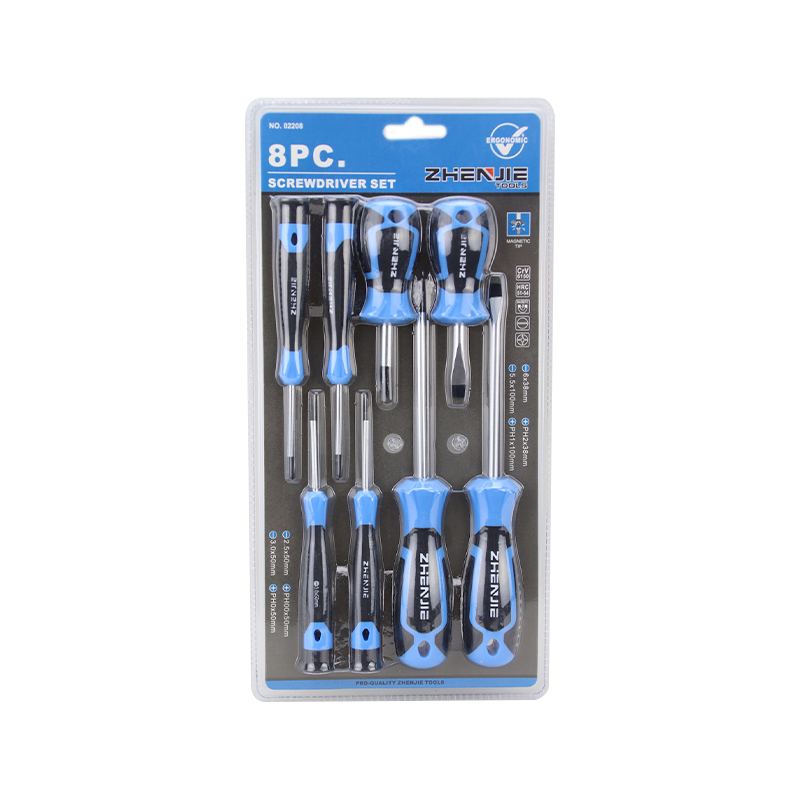
- Size range: does the set include small sizes such as PH0 and 3.0 mm slotted as well as large sizes such as PH3 and 6.0 mm slotted?
- Redundancy: are there more than two drivers of the same tip size? Duplicated sizes are a filler tactic, not a feature.
- Tip grinding: inspect the cutting geometry under bright light. Asymmetrical tips slip and damage fasteners.
- Magnetization: the tip should hold a screw at a 45-degree angle and keep that strength for months, not days.
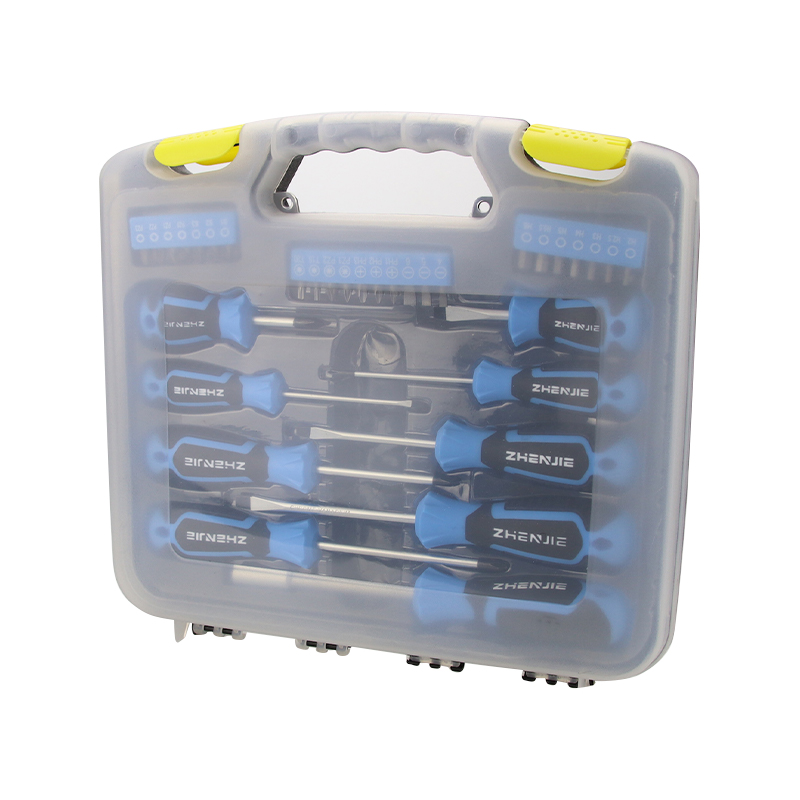
- Case integrity: a molded case with locked slots protects the set when the box falls from a shelf.
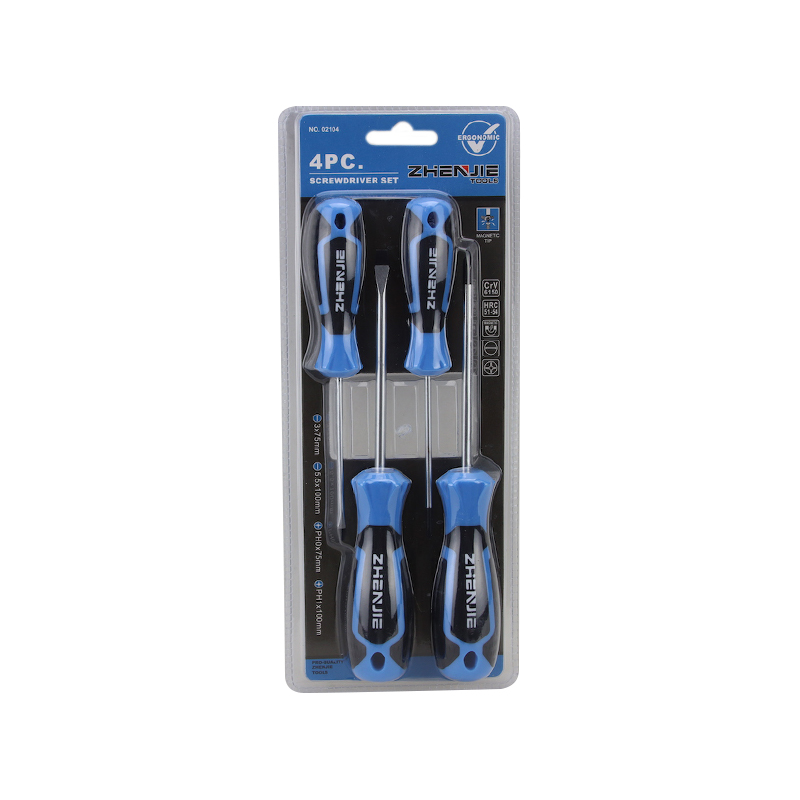
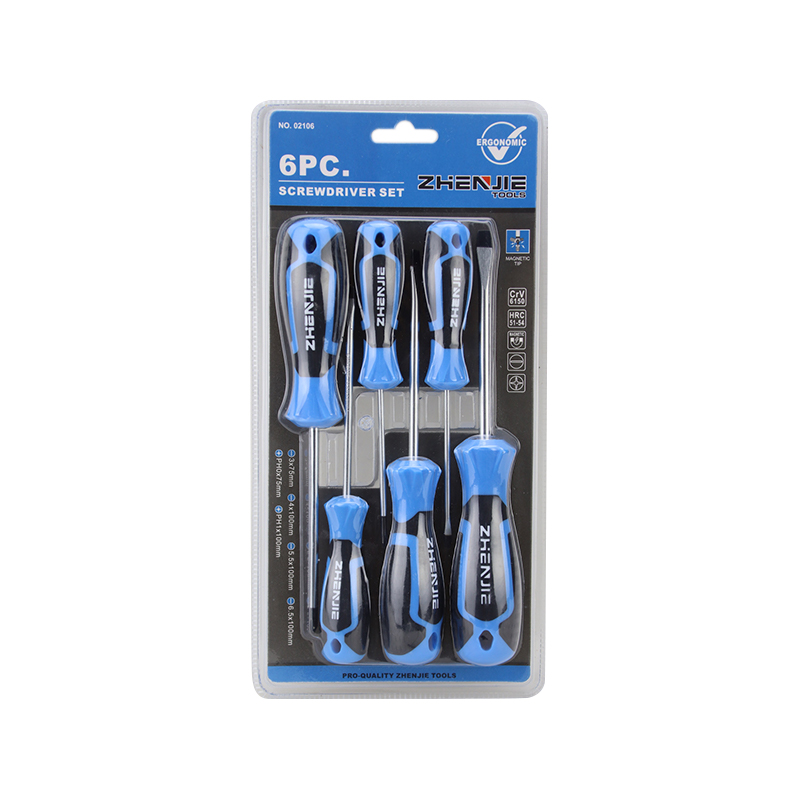
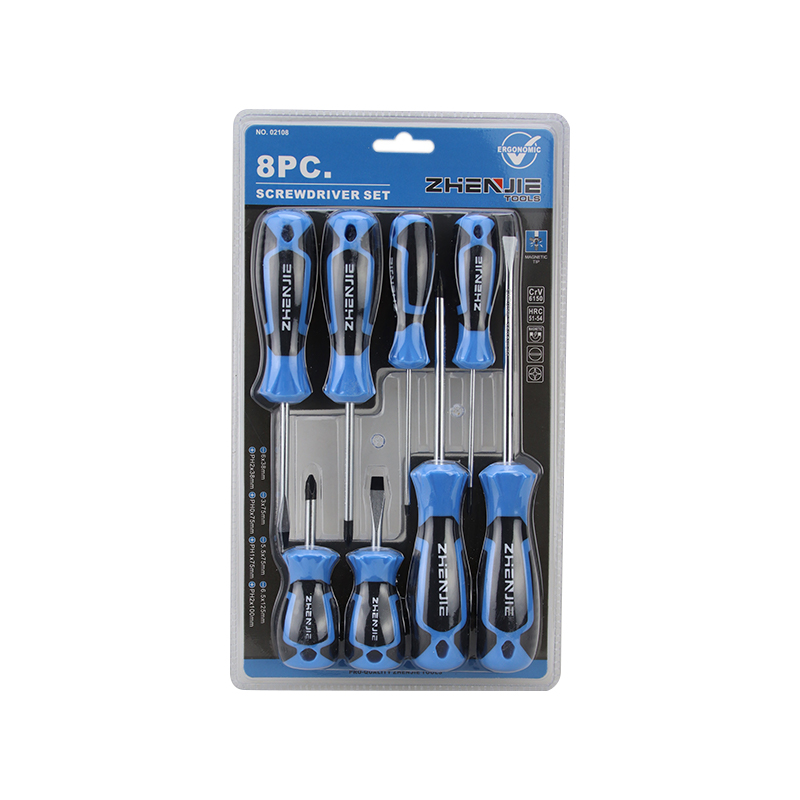
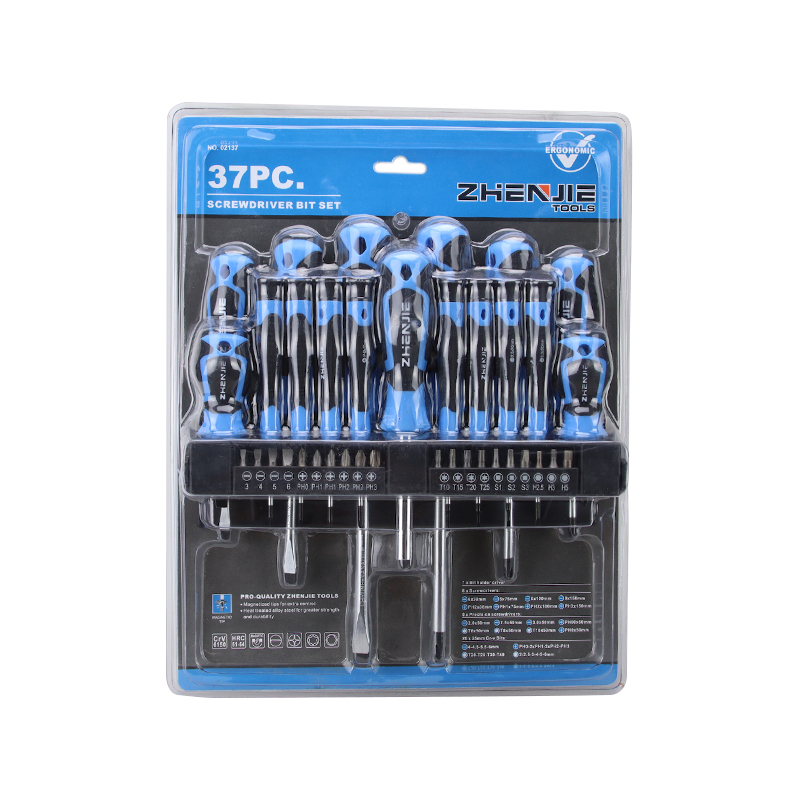
- Retail packaging: blister packs, display boxes, and shelf-ready cards indicate a manufacturer that understands retail channels.
Packaging quality is a reliable proxy for manufacturing discipline. A factory that invests in double-blister tooling and automated rotary packaging lines usually controls blade hardness and handle bonding to the same standard. Buyers who see poor print registration on a package should expect loose tolerances inside the box as well.
The single most useful buying check: more than two drivers of the same tip size is compensation with quantity, not quality.
For a deeper look at how sets are specified, quoted, and produced in bulk, read the complete OEM and wholesale guide for hardware tool sourcing.
Supplier Evaluation for Professional Tool Set Procurement
For procurement teams, the tool is half the purchase; the other half is the manufacturer's process evidence. Production area, automated lines, in-house testing, and export experience tell you whether a professional tool set will remain consistent case after case.
JIANDE ZHENJIE HARDWARE TOOLS CO., LTD., a Chinese tool manufacturer with more than 15 years of production experience, publishes a workshop area of 15,000 sqm and an annual output capacity above 65 million pieces. Numbers of this scale, backed by an in-house laboratory and CNC machining capability, distinguish factories from trading companies.
The verification list for a sourcing audit should include at least these five points:
- An in-house QC laboratory with hardness and impact test equipment.
- OEM and ODM capability: can the factory develop from drawings or from samples?
- MOQ flexibility and availability of stock items for fast pilot orders.
- Logistics position: factories close to major ports shorten lead time and cut freight cost.
- Documented export experience to your region, with reference customers in similar retail channels.
Procurement teams can request samples, test reports, and factory audit arrangements through the official inquiry channel.
Frequently Asked Questions
Which steel grade should a professional tool set use?
CRV chromium-vanadium steel at 48 to 52 HRC is the practical baseline for professional screwdriver sets. S2 tool steel is a step up for impact-rated bits, while ordinary carbon steel below 45 HRC should be avoided on load-bearing tips.
How many pieces should a professional tool set include?
Piece count matters less than composition. A set that covers slotted, Phillips, Pozidriv, Torx, and a locking bit holder in roughly 20 to 30 quality pieces outperforms a 100-piece set filled with duplicated sizes and weak steel.
Are VDE-insulated screwdrivers necessary outside electrical work?
Not for purely mechanical jobs, but if the same set stays where non-electricians might touch live parts, VDE 1000-volt-rated drivers add genuine margin. Certification matters only when the insulation is verified by an independent standard, not a printed label.
What should a bulk buyer verify before placing a large tool order?
Verify hardness test reports, tip grinding consistency, handle bonding under temperature cycling, and the manufacturer's in-house QC lab. Request a pre-production sample and review the retail packaging plan before committing to container volumes.