

 English
 русский
 Español
Why the Right Screwdriver Bit Matters More Than You Think
Using the wrong screwdriver bit doesn't just risk stripping a fastener—it can damage the workpiece, snap the bit, or make it impossible to remove the screw later. With hundreds of drive types in use across industries, understanding which bit matches which fastener is fundamental to any assembly, repair, or construction task. The most common types break down by drive geometry: how the bit engages the screw head and how torque is transferred.
Slotted and Phillips: The Two Legacy Standards
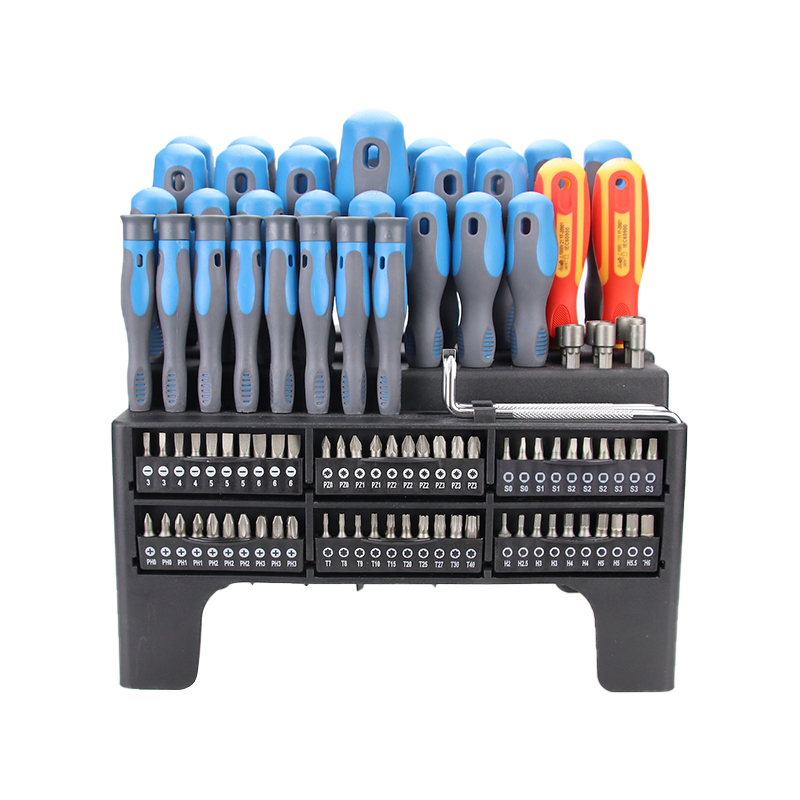
Slotted (flat-head) bits are the oldest drive type—a single blade that fits a straight slot across the screw head. They transfer torque inefficiently, cam out easily under power, and require precise alignment. Despite these limitations, slotted screws remain common in electrical work, vintage hardware, and applications where a flat-blade screwdriver is the only tool available. Bit sizes are designated by blade width and thickness (e.g., SL4, SL6).
Phillips bits (designated PH0 through PH4) were designed specifically to cam out—to slip before over-torquing a screw in early automotive assembly lines. That intentional cam-out makes them poorly suited to power tools, where the slipping strips both the bit and the fastener head rapidly. Phillips is still the dominant drive in consumer electronics, furniture hardware, and general construction screws in North America and Asia. PH2 is the most universally used size, covering the majority of wood screws, drywall screws, and machine screws encountered in everyday work.
Pozidriv, JIS, and the Phillips Look-Alikes That Aren't
Pozidriv (PZ) was developed to address Phillips' cam-out problem. It adds a second set of ribs at 45° to the main cross, giving the bit more contact area and dramatically reducing slipping under torque. Pozidriv screws are standard in European furniture, plumbing fittings, and construction hardware. Using a Phillips bit in a Pozidriv screw—or vice versa—will strip the recess quickly. Pozidriv bits are marked PZ1 through PZ4 and are visually distinguishable by the additional tick marks between the cross arms on the screw head.
JIS (Japanese Industrial Standard) screws look identical to Phillips but have a slightly different recess angle. Using a Phillips bit on JIS fasteners—common in Japanese motorcycles, cameras, and electronics—causes immediate cam-out. Dedicated JIS bits (marked with a dot on the screw head if the manufacturer follows convention) seat fully and transfer torque cleanly. Anyone working on Japanese-manufactured equipment should keep JIS bits in their kit.
Torx, Torx Plus, and Star Drive Variants
Torx (T-drive) bits have a 6-point star profile that distributes torque across six contact lobes rather than four corners. This geometry virtually eliminates cam-out, extends bit life significantly, and allows higher torque application without fastener damage. Torx is now standard in automotive assembly, electronics, appliances, and precision equipment. Sizes run from T1 (miniature electronics) through T100 (heavy structural applications); T10, T15, T20, T25, and T30 cover the vast majority of common applications.
Torx Plus (IP drive) uses a slightly different lobe geometry with more contact area per lobe, allowing even higher torque transfer at smaller sizes. It's used in aerospace, medical devices, and high-end automotive applications where fastener size is constrained but torque requirements are demanding.
Security Torx (Torx Tamper-Resistant, TR) has a center pin in the recess that prevents standard Torx bits from seating. Used on consumer electronics, public infrastructure, and equipment where unauthorized disassembly is a concern. Security Torx bits have a corresponding hole in the tip to accommodate the pin.
Hex, Robertson, and Square Drive Bits
Hex (Allen) bits drive fasteners with a hexagonal internal recess. They're used for set screws, machine bolts, furniture hardware (IKEA's flat-pack standard), and bicycle components. Hex bit sizes follow metric (1.5 mm–19 mm) and imperial (1/16"–3/4") standards; metric 4 mm, 5 mm, and 6 mm cover the majority of M5–M10 fasteners encountered in general mechanical work. Ball-end hex bits allow engagement at angles up to 25°, useful for confined spaces.
Robertson (square drive) bits are the dominant standard in Canadian construction and woodworking. The tapered square recess self-centers on the bit and resists cam-out effectively. Robertson screws are rated by color: yellow (R0), green (R1), red (R2), black (R3), and brown (R4)—with red (R2) being the most common, used on standard wood screws and decking fasteners. Robertson drives are gaining traction in the U.S. as contractors recognize their efficiency advantage over Phillips in power-driving applications.
Security and Tamper-Resistant Bit Types
A range of drive types are specifically designed to deter unauthorized removal. Beyond Security Torx, the most frequently encountered include:
- Tri-wing: Three asymmetric wings; found on Nintendo consoles, older Apple products, and airline seat electronics.
- Pentalobe: Five-lobe star drive; Apple's proprietary fastener used in iPhones, MacBooks, and AirPods since 2009. Requires dedicated P2, P5, or P6 pentalobe bits.
- Spanner (snake-eye): Two round pins engaging two holes in the screw head; common on elevator panels, restroom fixtures, and public hardware.
- One-way (clutch) drive: Accepts a standard flat blade for installation but spins freely when reversed. Used in high-security public fixtures and anti-theft hardware.
- Hex pin (security hex): Standard hex recess with a center pin; prevents ordinary Allen keys from engaging. Common in public playground and transit equipment.
Specialty Bits for Specific Industries
TORQ-SET is an offset cruciform drive used in aerospace and military fasteners; the four lobes are offset rather than perpendicular, requiring a dedicated bit and preventing use of standard Phillips or Pozidriv tools.
SupaDrive is a hybrid recess that accepts both Phillips and Pozidriv bits, designed to reduce inventory complexity on assembly lines where both fastener types are present. Widely used in European flat-pack furniture production.
Clutch (Type A and Type G) bits are used in automotive body panels and mobile home construction. The bow-tie or figure-eight recess drives easily and cams out at a set torque—historically useful before electronic torque control was practical.
Phillips/Square combo bits (also called R/PH or combo bits) engage both Robertson and Phillips recesses. They're a practical choice for contractors who work with mixed fastener stock and want to carry a single bit type for most wood and drywall screwing tasks.
| Bit Type | Cam-Out Resistance | Common Sizes | Typical Applications |
|---|---|---|---|
| Slotted | Very low | SL3–SL8 | Electrical, vintage hardware |
| Phillips | Low (by design) | PH0–PH4 | General construction, electronics |
| Pozidriv | Medium–high | PZ1–PZ4 | European furniture, plumbing |
| Torx | Very high | T6–T40 | Automotive, appliances, electronics |
| Hex (Allen) | High | 1.5 mm–10 mm / 1/16"–3/8" | Machinery, furniture, bicycles |
| Robertson | High | R0–R4 | Canadian construction, woodworking |
Bit Material and Coating: What Determines Durability
Most screwdriver bits are made from S2 modified steel—a chrome-silicon alloy that balances hardness (typically 58–62 HRC) with toughness. Harder bits resist wear longer but are more brittle and prone to snapping under shock loads; softer bits flex without breaking but wear faster at the tip. Premium bits from manufacturers like Wera, Wiha, and Dewalt use proprietary heat treatment processes and tip geometry to optimize this balance for impact driver use.
Coatings extend bit life and reduce friction in the recess. Black oxide provides mild corrosion resistance. Titanium nitride (TiN) coating adds surface hardness and reduces galling in the drive recess. Diamond-coated tips grip the fastener mechanically, effectively eliminating cam-out even in worn or damaged screw heads—particularly useful for stuck fasteners in automotive and plumbing work.
Torsion zone bits—standard in professional-grade sets—incorporate a deliberately softer, flexible mid-section that absorbs the shock impulse from impact drivers. This prevents tip breakage and extends service life by 3–10× compared to standard rigid bits when used in impact drivers running above 1,500 in-lbs of torque.