

 English
 русский
 Español
Measuring tapes have always held an irreplaceable position
Measure Tapes have always held an irreplaceable position in the field of measurement. Traditional mechanical tape measures and modern smart tape measures coexist, jointly promoting the refined development of industries such as engineering construction, interior design, and factory manufacturing. With the continuous advancement of material technology, sensing technology, and digitalization, this seemingly ordinary tool is undergoing profound innovation.
Structural Evolution of Measuring Tapes: From Metal Tapes to Multi-material Composites
Early material and marking methods
In early measurement tool systems, tape measures mostly used metal tapes, possessing good bending and tensile strength. The scale markings were etched onto the tape surface using processes such as painting and etching, meeting the high-frequency usage requirements in construction scenarios. With technological advancements, tape measures have continuously improved in terms of scale clarity, tape retraction capabilities, magnetic properties, and casing impact resistance, making them more durable in various construction environments.
Modern materials and structural improvements
Modern tape measures utilize composite materials to improve corrosion resistance and flexibility, thus maintaining clear markings even after long-term use. Some high-end products incorporate coating technology, which not only extends their lifespan but also improves readability in bright outdoor light. The internal spring mechanism of the tape measure has also been optimized, resulting in smoother tape retraction, reducing the risk of injury, and improving efficiency. The structural design of tape measures is evolving towards a more ergonomic direction, with continuous improvements in grip, braking systems, and belt clip designs.
The Core Position of Measuring Tapes in Engineering and Manufacturing Industries
Role in construction and site implementation
Measuring tapes play a fundamental role in building construction, directly impacting the accuracy of structural positioning, material processing, and prefabricated component assembly. Every dimension in design drawings needs to be accurately implemented on-site using measurement tools. The combination of tape measures and laser rangefinders makes engineering measurements more precise and reliable.
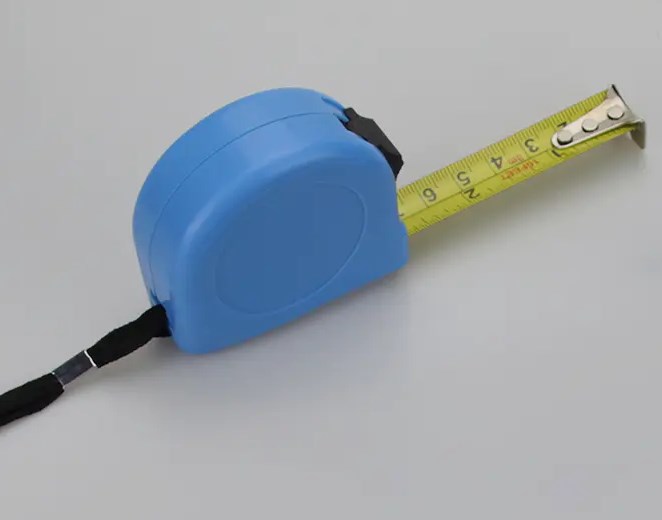
Importance in furniture and interior work
In furniture manufacturing and interior design, the accuracy of tape measures is crucial for controlling size planning and styling proportions. Whether it is woodworking prototyping, panel cutting, or soft furnishing arrangements, tape measure measurements are an important foundation for achieving a sense of spatial harmony.
Significance in processing and manufacturing
In the processing and manufacturing industry, tape measures are an important tool for controlling part size deviations. The stability, scale clarity, and durability of the tape measure affect production efficiency and product quality. A tape measure is not just a simple tool; it embodies the combined achievements of metrology, materials science, and ergonomics, and is an important component of quality systems in numerous industries.
Professional Considerations and Practical Points When Using a Tape Measure
Factors affecting measurement practice
In practical measurement, the method of using a tape measure affects the final measurement accuracy. Professional users typically focus on the tensile stability of the tape, the reading angle, the degree of bending under stress, and the errors caused by the movement of the end hook. Measurement methods need to be adapted to different scenarios, and tape measures used for extended periods require regular calibration of the scale and inspection of tape deformation.
Environmental and maintenance considerations
Temperature changes in the measurement environment can cause slight expansion or contraction of the tape material. Therefore, in precision measurement fields, it is necessary to combine other instruments or use controlled conditions in specific environments. Tape measure maintenance is equally important; keeping the tape dry, the casing intact, and the spring mechanism smooth can significantly extend its lifespan. In modern work environments, professional technicians often choose between mechanical and smart tape measures depending on their needs, improving overall measurement accuracy through the combination of tools.
Future Trends in the Tape Measure Industry: More Durable, Smarter, and More Precise
As a basic measurement tool, the tape measure will continue to develop in three directions. In terms of durability, upgrades in composite materials and protective coatings will enhance the tape's wear resistance, making it suitable for more extreme working environments. In terms of intelligence, tape measures will become more sophisticated in data recording, measurement calculations, wireless transmission, and software integration, becoming an essential tool for digital engineering management. In terms of precision, manufacturing processes will further improve scale accuracy, enabling tape measures to meet higher-level measurement requirements.
In the overall trend of engineering management moving towards digitalization and automation, the tape measure is no longer an independent hand tool, but a measurement node that can be integrated into a system. Future tape measures will be lighter, easier to use, and smarter, and both basic construction and high-end manufacturing will benefit from the continuous innovation of measurement technology.
FAQ
What factors mainly affect the accuracy of a tape measure?
The accuracy of a tape measure is mainly affected by the stability of the tape material, the quality of the scale manufacturing process, the usage angle, variations in tension, and the design of the end hook.
Do tape measures need regular calibration?
Tape measures used in professional engineering or manufacturing fields are recommended to be calibrated regularly to ensure that the tape is not deformed and the scale is accurate.
How can I extend the lifespan of my tape measure?
Avoiding humid environments, keeping the measuring tape clean, and avoiding forcefully bending it, along with paying attention to the spring's recoil force, will significantly extend its lifespan.