

 English
 русский
 Español
Quick answer: A good screwdriver set comes down to three things: bit steel quality (chrome vanadium or S2), a mechanism suited to the job (fixed, ratcheting, or precision), and bit variety that actually matches the fasteners you work with. Beyond that, professional and industrial sets differ mainly in build durability and bit-count depth, not in some fundamentally different technology.
What Makes a Good Screwdriver Set
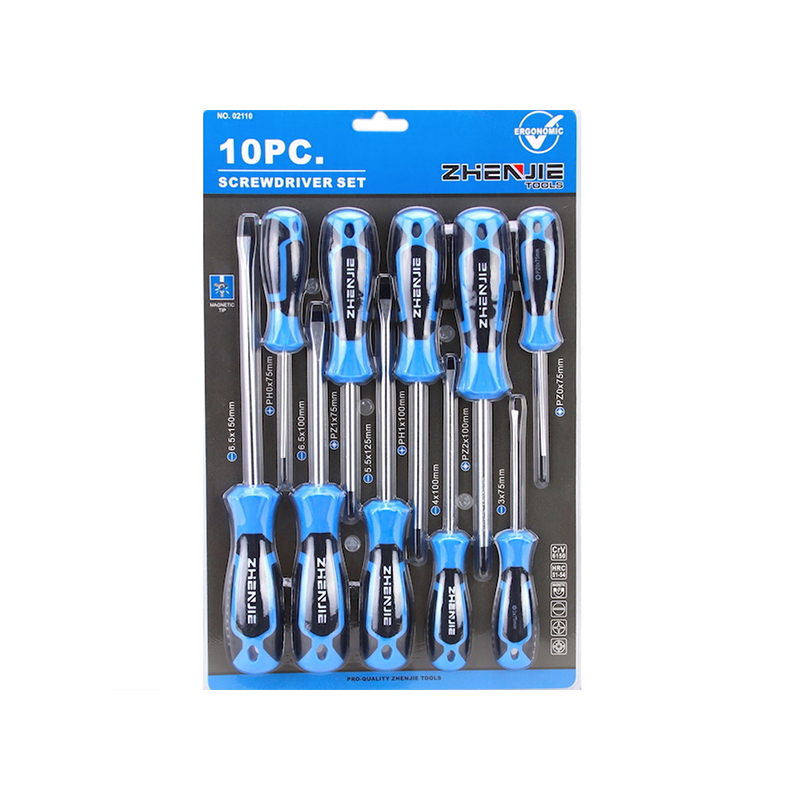
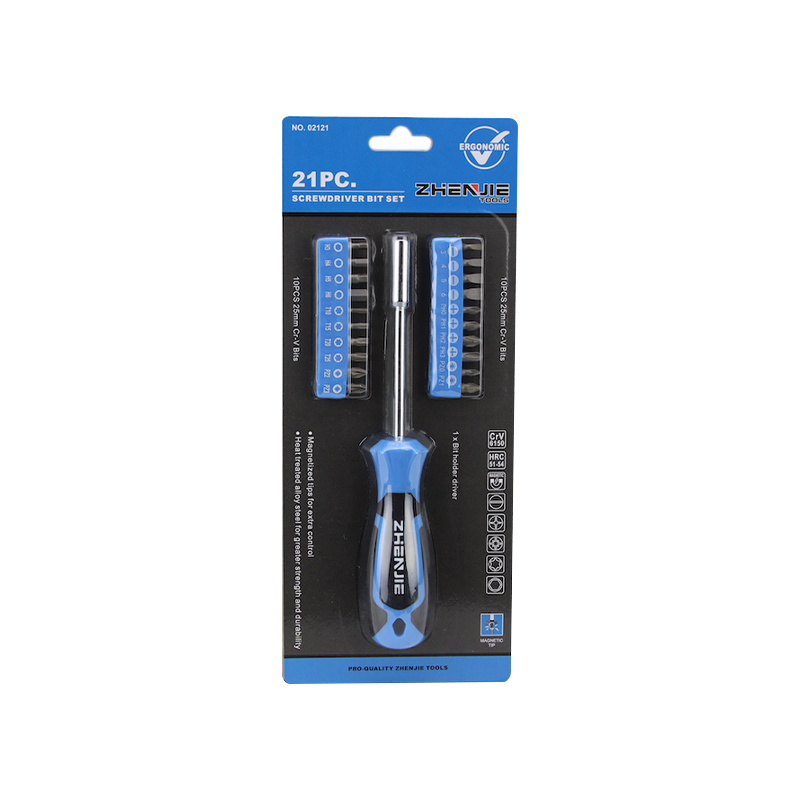
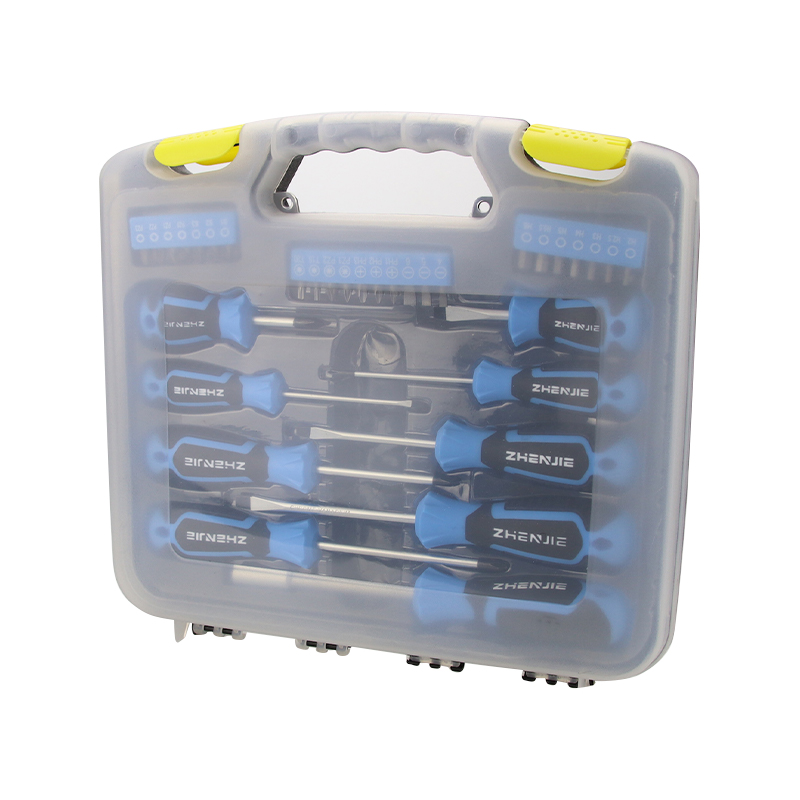
A screwdriver set is a collection of driving tools — either fixed-tip drivers or a handle paired with interchangeable bits — bundled together to cover a range of fastener types and sizes in one purchase. What separates a basic set from a professional screwdriver set isn't usually the number of pieces in the box; it's the steel quality of the bits, the precision of the tip machining, and how well the handle holds up to repeated torque over years of daily use.
An industrial screwdriver set takes this a step further, built specifically for repetitive, high-torque use on a production floor or in maintenance work rather than occasional household tasks. These sets are engineered around fatigue resistance — bits and shafts that can withstand thousands of drive cycles without rounding, cracking, or losing dimensional accuracy at the tip, since a tip that's even slightly worn starts to slip and cam out of the fastener head, which slows down repetitive work and risks damaging the fastener or surrounding material.
The practical difference shows up under sustained use rather than on a spec sheet. A budget set might perform identically to a professional-grade set for the first few dozen uses, but the gap widens once a tool sees daily use across months or years — tip hardness, shaft torsion strength, and handle grip durability are what determine whether a set is still fully functional after heavy use or has already started rounding out on common fastener sizes.
Types of Screwdriver Sets by Mechanism
Beyond bit type, the driving mechanism itself varies significantly by use case, and picking the wrong mechanism for the job is one of the more common mismatches buyers run into:
Ratcheting mechanisms deserve a specific note: the ratchet action reduces how many times a hand needs to reposition on the handle during repetitive driving, which meaningfully speeds up high-volume assembly work, but the mechanism itself adds a point of potential wear — cheaper ratcheting sets can develop play or slip under high torque that a solid, non-ratcheting driver wouldn't experience, so ratchet mechanism quality is worth checking specifically rather than assuming all ratcheting drivers perform the same.
Screwdriver Bit Types and Applications
Understanding screwdriver bit types and applications matters more than it might seem, since using the wrong bit profile — even one that appears to "sort of fit" — is one of the leading causes of stripped fastener heads:
Phillips — the most common cross-head profile, self-centering to a degree but prone to cam-out at high torque, which is actually an intentional design feature to limit over-tightening.
Flathead (slotted) — the simplest profile, still common on older hardware and some electrical terminal screws, but offers the least resistance to cam-out under torque.
Torx (star) — a six-point star profile that provides much higher torque transfer with minimal cam-out, widely used in automotive, electronics, and industrial assembly where higher clamping force is needed.
Hex (Allen) — a six-sided profile for hex socket fasteners, common in furniture assembly, machinery, and bicycle components.
Pozidriv — visually similar to Phillips but with additional contact points that reduce cam-out, common in European-manufactured products and often mistaken for standard Phillips despite not being fully interchangeable with it.
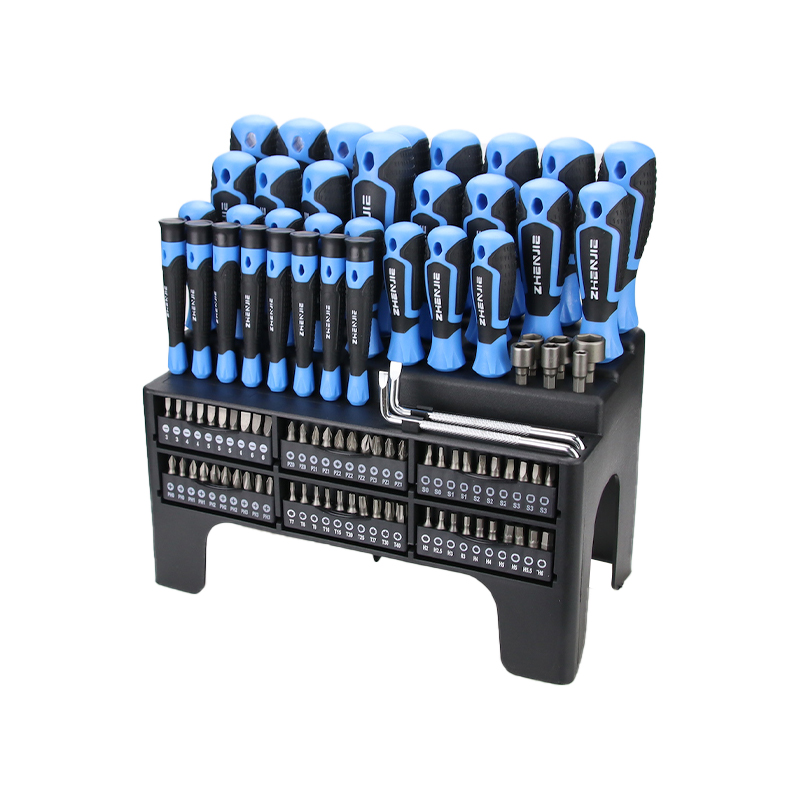
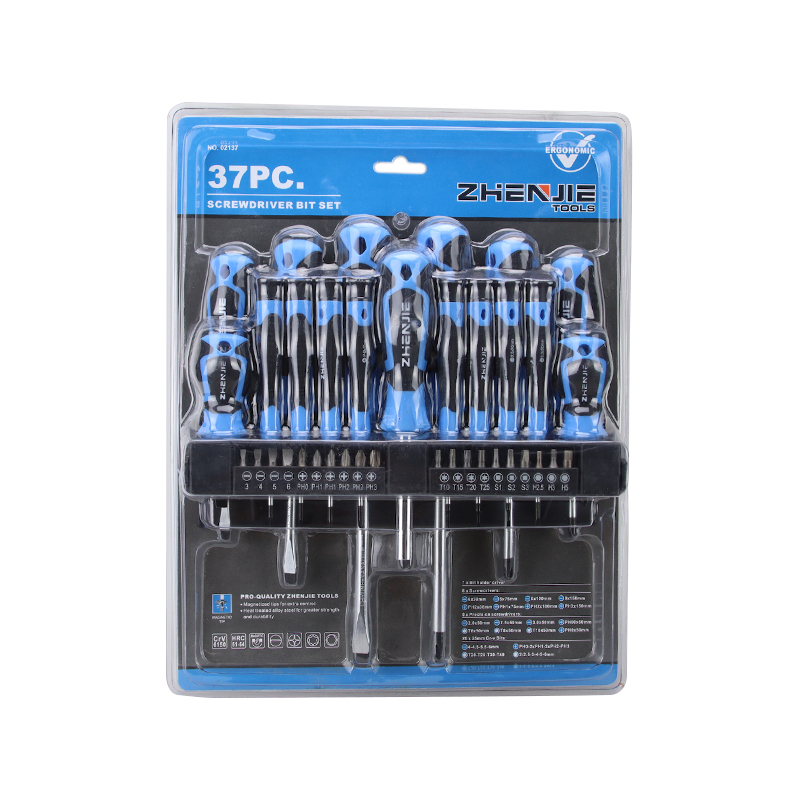
A comprehensive multi-bit set typically covers all of these profiles across multiple sizes, which is why bit variety is often the deciding factor buyers weigh most heavily — a set with premium steel but limited bit coverage can still leave a technician without the right tip for a given job.
Screwdriver Materials: Chrome Vanadium vs. S2 Steel
Bit and shaft material is the single biggest driver of how long a screwdriver holds its tip geometry under load. Chrome vanadium screwdriver set bits use a chromium-vanadium alloy steel prized for its toughness and resistance to bending or snapping under torque, making it a long-standing standard for driver shafts and general-purpose bits that need to handle both twisting force and occasional prying.
S2 steel screwdriver bits take a different approach — S2 tool steel is heat-treated to a higher hardness than typical chrome vanadium, which gives it superior wear resistance at the tip specifically. This matters because the tip is where cam-out and abrasive wear actually happen; a harder tip resists rounding over repeated high-torque cycles better than a softer one, even if overall toughness (resistance to snapping) is marginally lower than chrome vanadium.
In practice, many premium sets combine both: a chrome vanadium shaft for overall toughness and torque transfer, paired with S2 steel bit tips (or S2 bits inserted into a CRV driving shaft) to get hardness where it matters most without sacrificing the shaft's resistance to bending or breaking under load. This hybrid approach has become common enough in industrial-grade sets that it's worth asking specifically which steel is used where, rather than assuming a single steel grade covers the entire tool.
Screwdriver Manufacturing Process
The screwdriver materials and manufacturing process generally follows a sequence designed to lock in both dimensional accuracy at the tip and durability through the shaft:
- Steel bar stock cutting — raw alloy steel rod is cut to length for the shaft or bit blank.
- Forging or cold forming — the blank is shaped under high pressure, which also improves the steel's grain structure and overall strength compared to machining from stock alone.
- Tip machining — the drive profile (Phillips, Torx, hex, etc.) is precision-milled or ground into the tip to tight tolerances, since even small deviations affect how well the bit seats in a fastener head.
- Heat treatment — the shaped bit or shaft is heated and quenched to achieve the target hardness, then often tempered to relieve internal stress and improve toughness without sacrificing too much hardness.
- Surface finishing and coating — black oxide, nickel, or chrome plating is applied for corrosion resistance, and in some cases a friction-enhancing coating is added at the tip.
- Handle molding and assembly — for fixed drivers, an ergonomic handle is molded and bonded to the shaft; for bit-based sets, bits are sorted and packaged with the handle.
Heat treatment is the step that most directly determines final bit performance, and it's also the easiest step to under-invest in without it showing up until the tool is already in use — a bit that looks identical to a premium one on the shelf can still fail early if the heat treatment process wasn't controlled tightly enough to hit the target hardness consistently across a full production batch.
Industrial Hand Tools for Assembly Line Use
Industrial hand tools for assembly operate under a different usage pattern than tools bought for occasional home or workshop use — on a production line, a driver might be picked up and used hundreds of times in a single shift, which puts a very different kind of stress on the tool than infrequent, varied use does.
This changes what actually matters in a purchasing decision. Ergonomics become a bigger factor, since a handle shape that causes hand fatigue after a few uses becomes a real productivity and repetitive strain concern across an eight-hour shift. Consistency between individual tools in a batch also matters more in an assembly setting than it would for a single household set, since a facility running dozens or hundreds of the same tool needs each one to perform predictably, not just the best unit in a batch.
Torque control is another consideration specific to assembly line use — some industrial screwdriver sets are paired with or designed to interface with torque-limiting attachments to prevent over-tightening on sensitive assemblies, which isn't typically a feature found in general-purpose consumer sets since it addresses a production-specific quality control need rather than a general fastening task.
Choosing the Right Screwdriver Set for the Job
With this many variables — steel grade, mechanism, bit coverage, and use pattern — narrowing down a set mostly comes down to matching it against how it will actually be used rather than defaulting to the largest bit count available:
- Electronics or precision repair work — prioritize a precision set with fine tip tolerances and a comprehensive small-bit library over torque capacity.
- General maintenance and repair — a multi-bit set with both chrome vanadium shaft strength and a reasonably wide bit selection covers the broadest range of everyday tasks.
- High-volume assembly or production use — prioritize S2 steel tip hardness, ergonomic handle design, and consistency across the full tool batch over bit variety, since production tasks are usually repetitive rather than varied.
- Confined-space or overhead work — magnetic tips and a ratcheting mechanism both reduce the friction points that make awkward-position fastening slower and more error-prone.
The most common mistake buyers make isn't choosing a low-quality set — it's choosing a set optimized for the wrong use case, such as a precision electronics set pressed into general workshop duty where its fine tips wear out quickly under torque loads they weren't designed for, or an industrial set that's overkill and unnecessarily bulky for occasional light repair tasks.