

 English
 русский
 Español
Two sourcing specialists at a Swedish hardware chain request quotes for an identical 6-piece screwdriver configuration: one from a regional distributor, the other directly from a manufacturing plant in Jiande, Zhejiang. The factory quote lands 49 percent lower, and field testing on both samples shows matching torque output and tip hardness. That repeatable gap is the practical definition of a factory outlet screwdriver set. It is the same tool, the same steel, and the same quality gate, without the layers between the production line and your purchase order.
Retail shelving, trade shows, and e-commerce listings rarely explain where a screwdriver set actually comes from. This article compares factory outlet screwdriver sets against retail sets across material specification, price structure, packaging logic, and procurement terms, so you can decide which sourcing path fits your operation.
What Defines a Factory Outlet Screwdriver Set vs Retail Sets
A factory outlet screwdriver set is manufactured, inspected, and shipped by the company that owns the tooling, so the price excludes wholesale and retail margins that typically add 35 to 55 percent by the time a set reaches a store shelf.
In the hardware industry, "factory outlet" does not mean seconds or rejected units. Manufacturers such as JianDe ZhenJie Hardware Tools Co., Ltd., which exports to more than 30 countries from its 15,000-square-meter plant, run the same production lines for supermarket chains and for direct wholesale buyers. The outlet channel reuses the exact SKUs, materials, and packaging formats that the factory already validated for retail distribution. What changes is the commercial layer, not the physical tool.
The manufacturer sells directly to the buyer in the same configuration and packaging it already supplies to retail chains, removing distributor margin (10 to 20 percent), wholesaler margin (8 to 15 percent), and retail markup (25 to 40 percent).
Steel Grade and Heat Treatment: Factory vs Retail Screwdriver Sets
Factory-direct sets consistently use CRV (chrome-vanadium) steel with bit hardness in the HRC 48 to 53 range, while many retail-only sets substitute lower-cost carbon steel that rounds off faster at the tip.
CRV is the material shorthand found across most factory outlet screwdriver set listings: 6150 chrome-vanadium steel delivers the right balance of toughness and edge retention for daily fastening work. Carbon steel is cheaper but loses tip geometry sooner, especially in Phillips and Torx drives where the flank angle does the gripping. A factory outlet screwdriver set receives the same quench-and-temper cycle as the sets shipped to supermarkets, then gets its tip magnetized for bit retention.
When a retail set is labeled only "hardened steel" without a grade, the brand is telling you less about the material. The factory-direct alternative states its grade in the product name because that is the spec a buyer's quality department will verify.
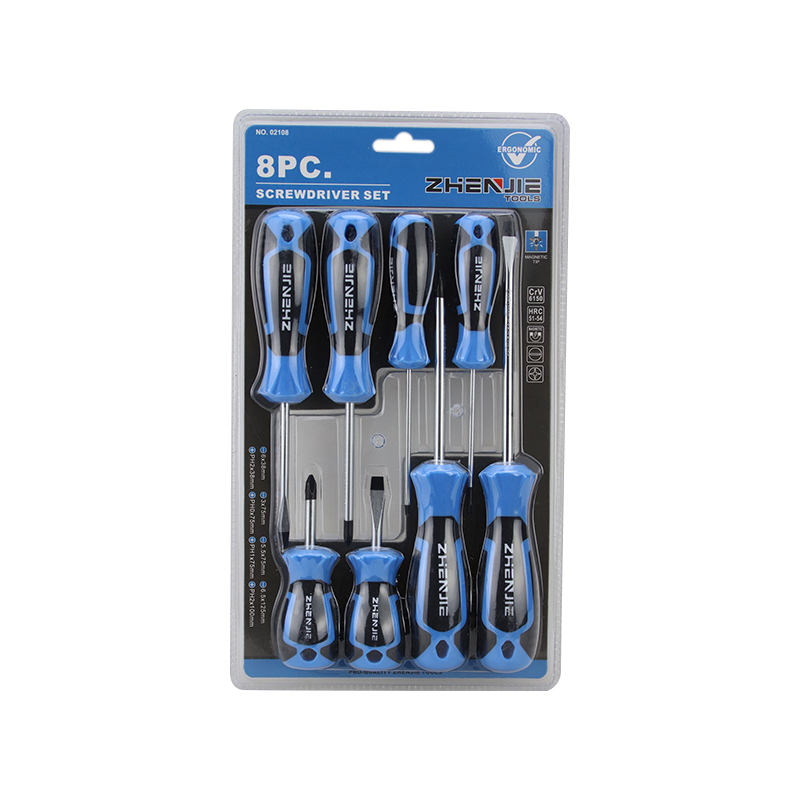
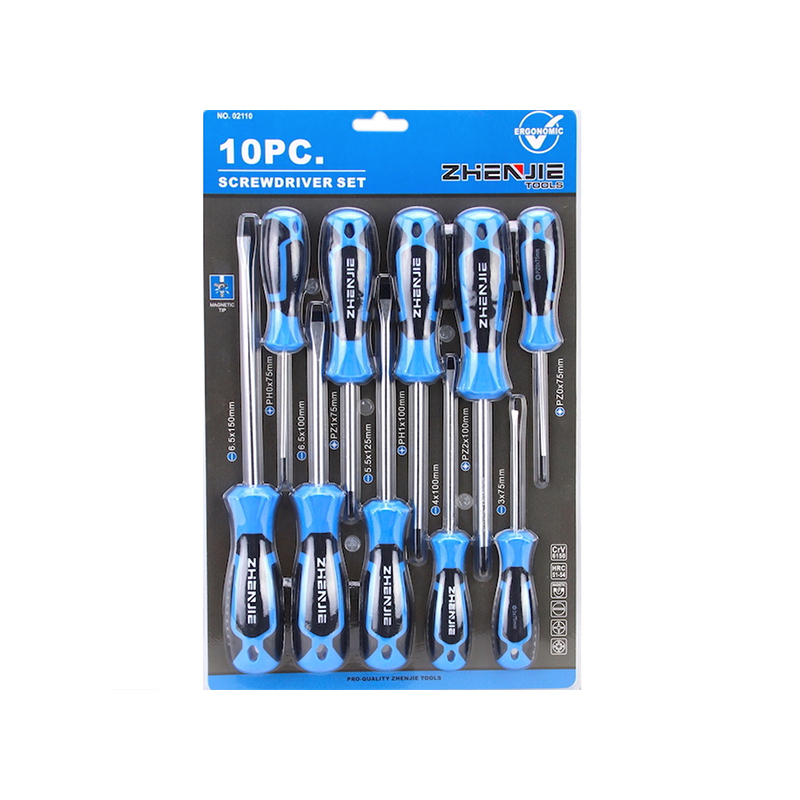
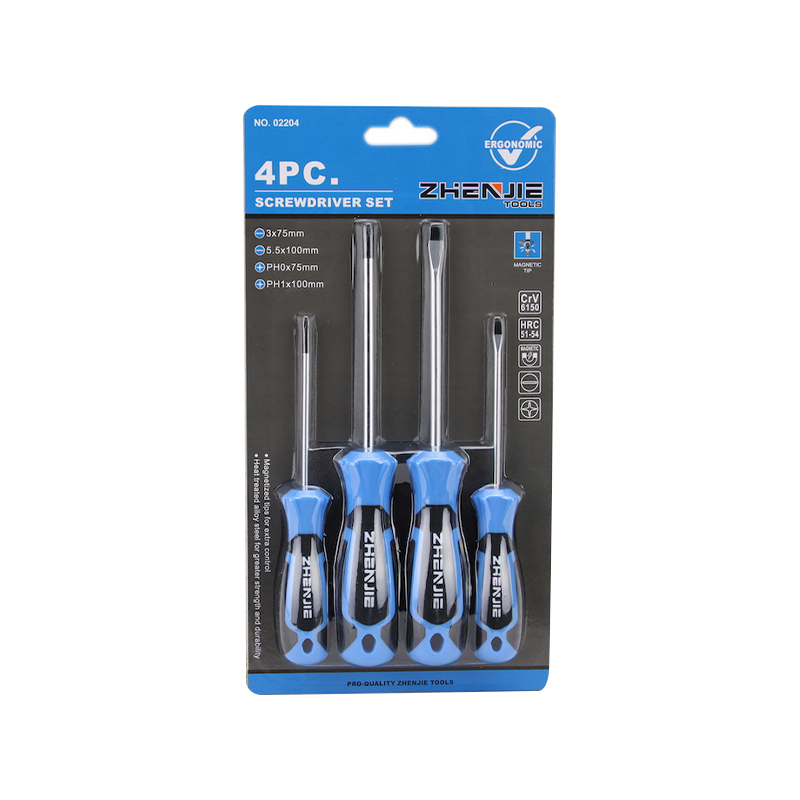
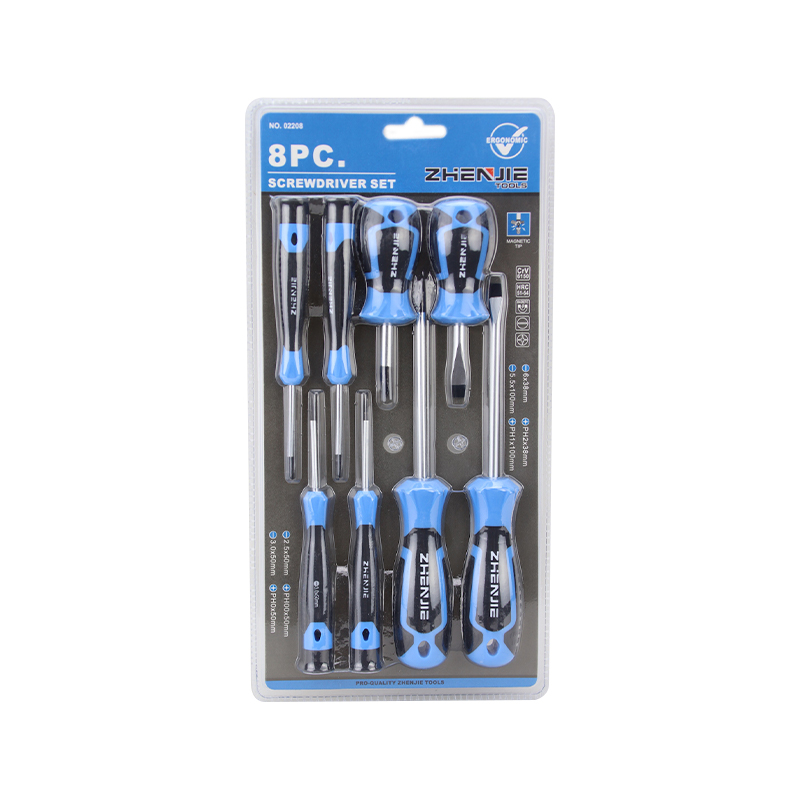
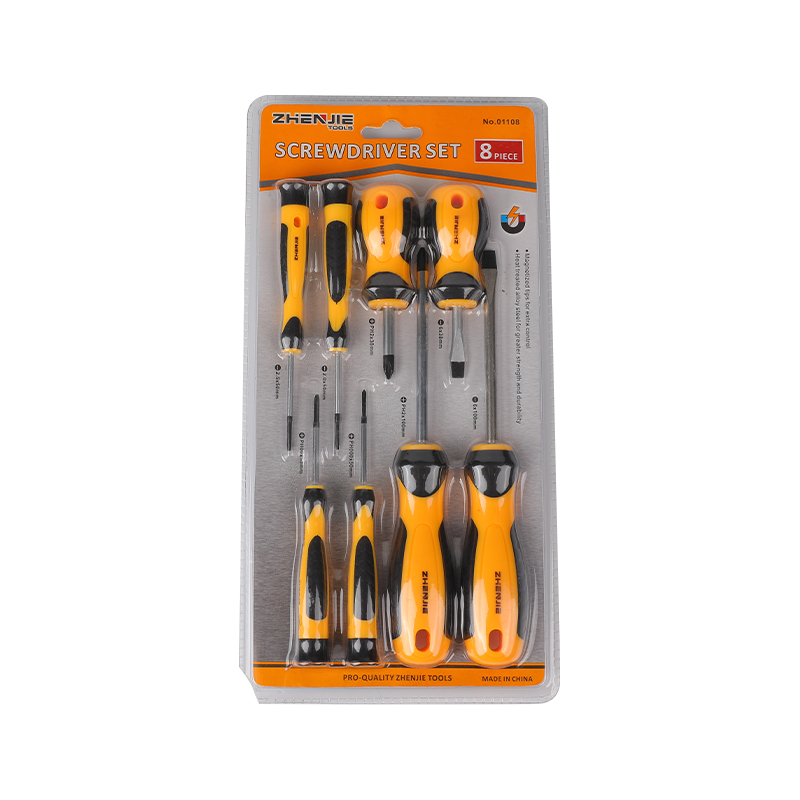 8-Piece Chrome Vanadium Slotted and Phillips Screwdriver SetThis factory-direct set names its CRV steel grade for verification. The double-injected soft handles and hardened, tempered blades suit buyers checking material specs.View Product →
Price Structure: Where a Factory Outlet Screwdriver Set Gets Cheaper
A factory outlet screwdriver set costs less because it removes three margin layers, not because it uses thinner steel or weaker handles.
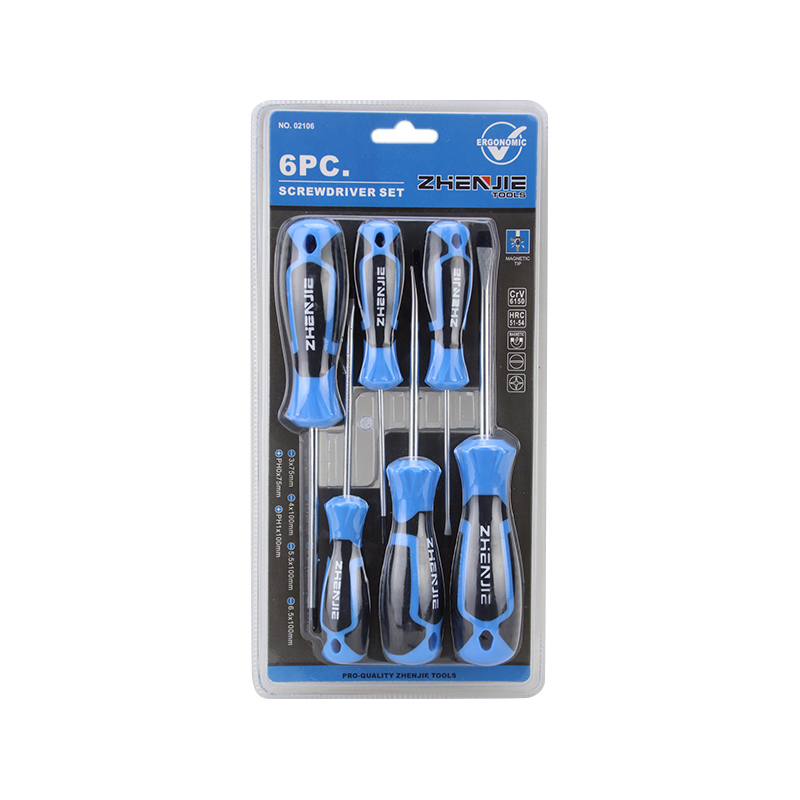
Take a 6-piece CRV set with a retail shelf price of $15.90. Its manufacturing cost, including steel, handle polymer, packaging, labor, and factory overhead, comes to roughly $5.20. The factory sells it directly at $7.80, a healthy margin on volume. A distributor moves it at $10.50, and the retailer applies its own markup. Every layer adds cost without adding a single feature to the screwdriver.
This is why the factory outlet screwdriver set comparison often looks surprising to buyers: identical torque results at roughly half the price. The savings come from a shorter supply chain, not a weaker product.
Packaging and SKU Logic: Retail Sets vs Factory Configurations
Retail sets are packaged for shelf appeal with display boxes and carded blister packs; a factory outlet screwdriver set ships in the same retail-ready format but can also be re-bundled into larger SKUs that stores would never stock.
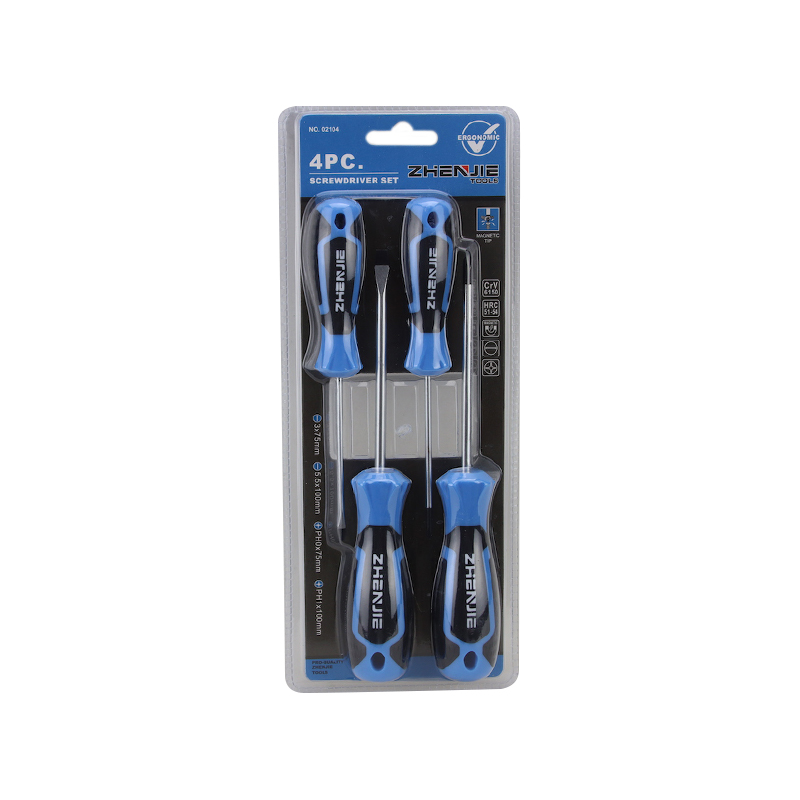
Retail screwdriver sets on a store hook use double blister packaging with a printed card to maximize point-of-sale impact. Factory outlet sets from the same supplier use identical double blister or BMC card-closure packaging, because the factory prepares that packaging on its own automated rotary packaging line. Factory-direct buyers can also request plastic shelf packaging, PS tray color boxes, or plain cartons for a different channel.
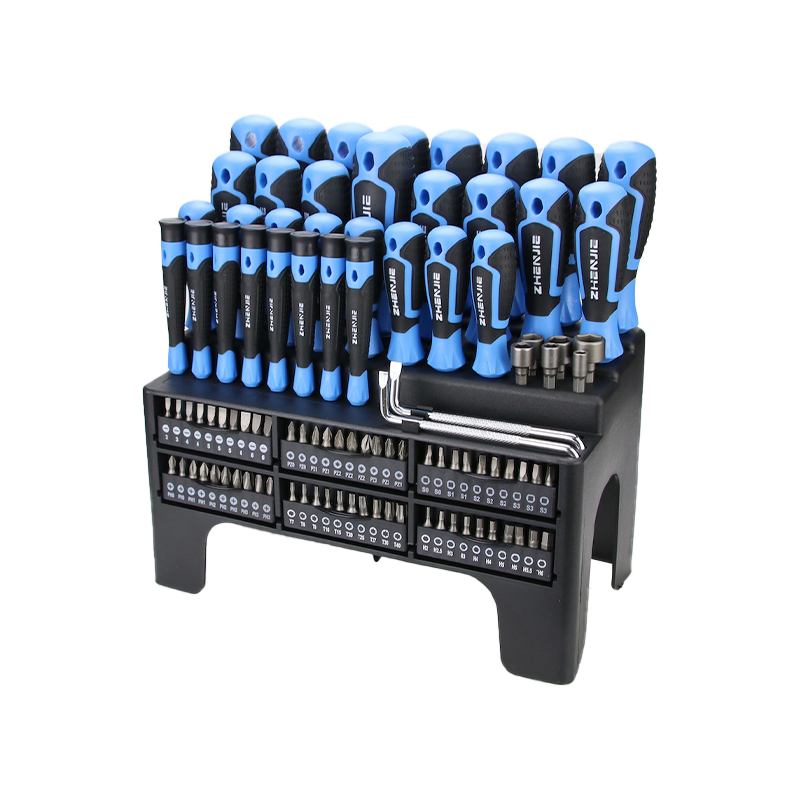
SKU range matters for procurement planning. A factory outlet product line scales from 2-piece sets for promotional giveaways to 132-piece plastic-shelf kits for hardware aisle resale. Buying factory-direct lets you choose the SKU density that fits your price point instead of accepting whatever a distributor decided to stock.
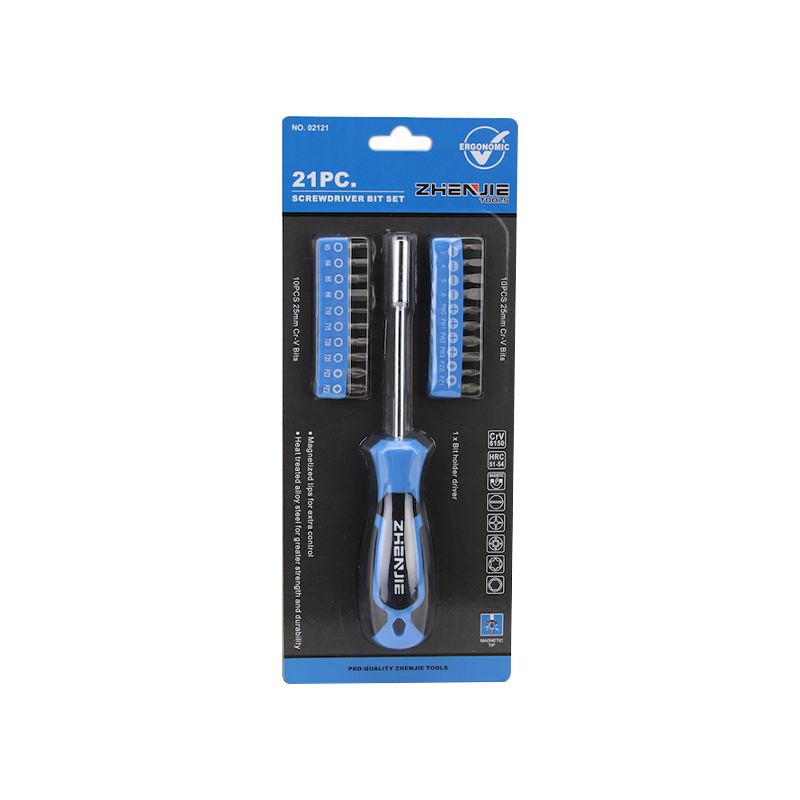
 21-Piece Chrome Vanadium Screwdriver Bit Set with HolderThis professional bit set includes 20 Cr-V bits in Phillips, Pozidriv, flat, hex, and star profiles plus a durable holder. Its portable case suits procurement planning.View Product →
Procurement Terms: MOQ, Customization, and Lead Time
Ordering a factory outlet screwdriver set changes your supplier relationship: you negotiate minimum order quantities, you can spec handle color and bit configuration, and you plan around container lead times instead of retail availability.
This is the fundamental procurement difference. At retail, you take what is on the shelf. Factory-direct, you control four variables: piece count in the set, handle material and color, bit profile selection, and packaging format. A manufacturer with an in-house design team can develop tools from your drawing or sample. The OEM and ODM path is standard for hardware producers exporting to more than 30 countries, and shipments route through Ningbo or Shanghai ports within short trucking distance.
The trade-off is minimum order quantity. A supermarket buying 10,000 sets per SKU pays a different unit price than a small wholesaler taking 500. Reputable suppliers state the MOQ per line and maintain a stock program for fast-moving SKUs, which shortens reorder lead time from weeks to days.
| Factor | Retail screwdriver set | Factory outlet screwdriver set |
| Unit price | Fixed marked price | Negotiated by volume |
| Assortment control | Limited to displayed stock | MOQ-based SKU configuration |
| Customization | None | OEM and ODM design service |
| Lead time | Immediate | Production schedule plus stock line |
| Packaging options | Point-of-sale package only | Blister, shelf pack, BMC, color box |
The full sourcing workflow, from inquiry to container loading, is covered in our OEM and wholesale screwdriver set manufacturing guide.
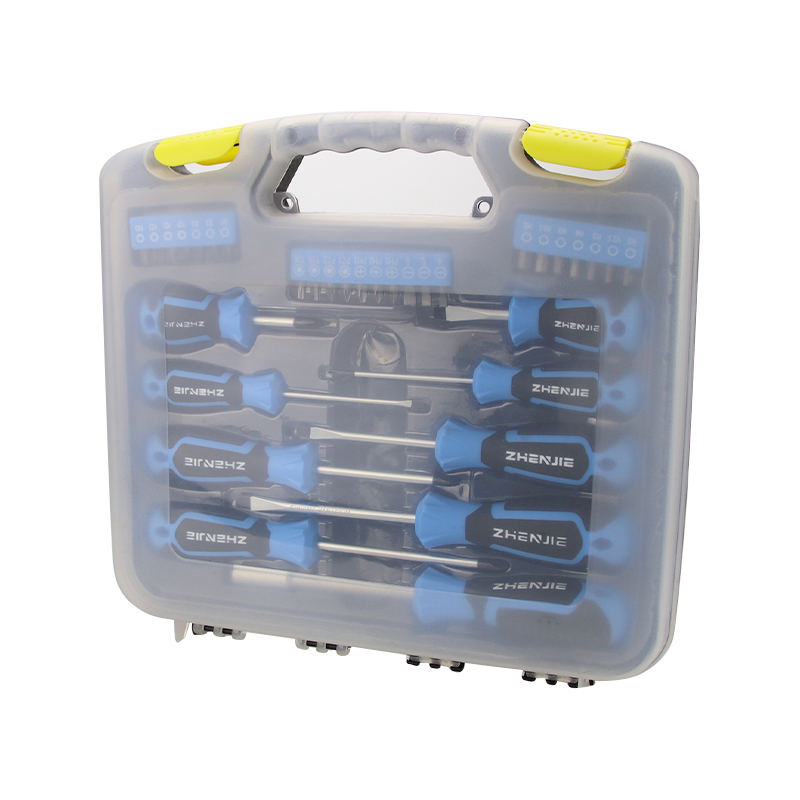
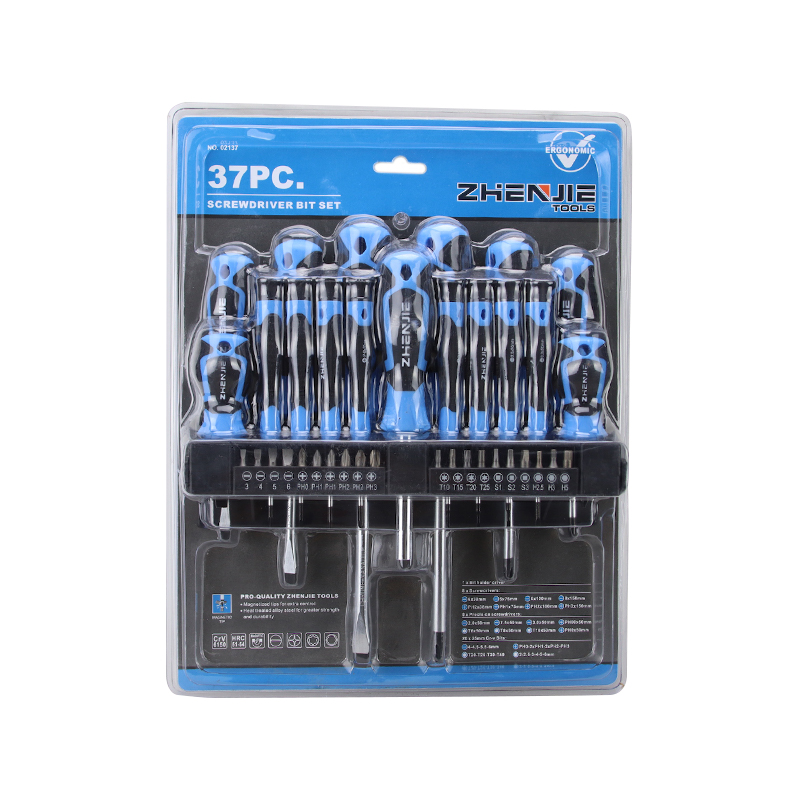
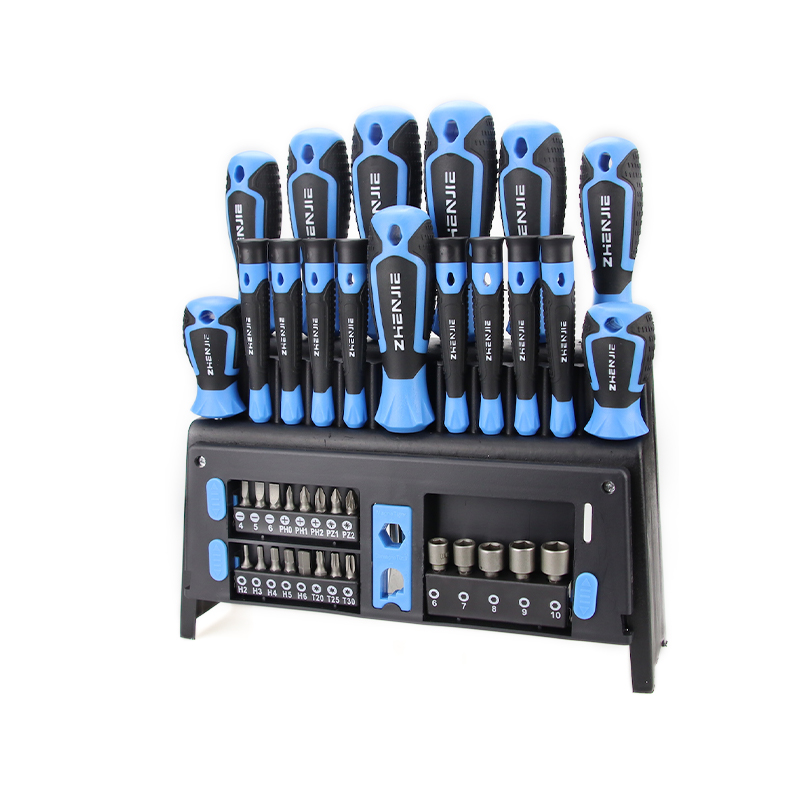
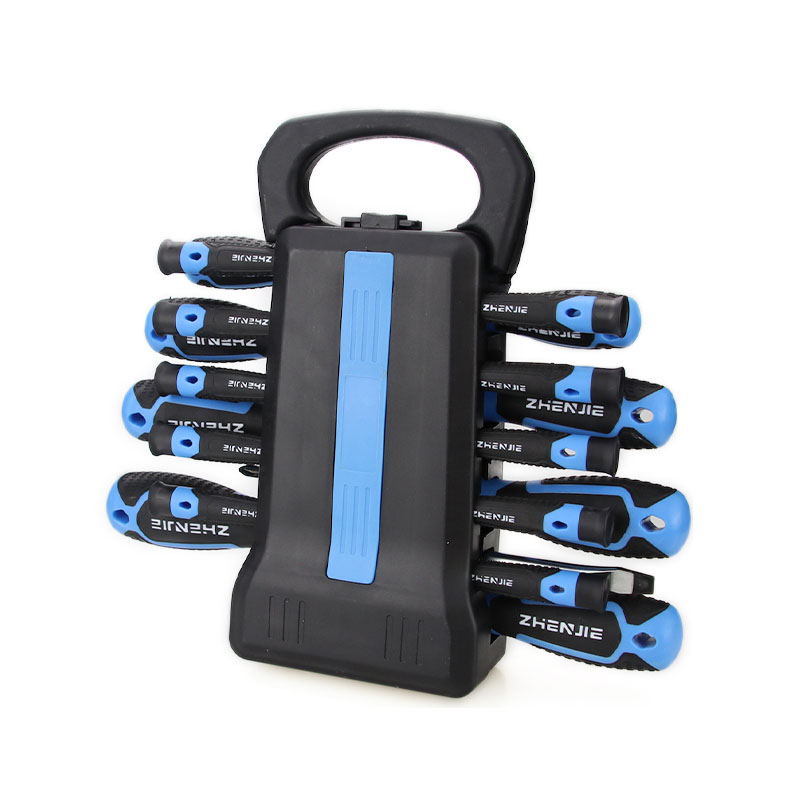
 21-Piece Double-Injected Soft Handle Screwdriver SetPart of a scalable factory-direct lineup, this 21-piece set supports sourcing verification. The double-injected soft handles fit larger wholesale and OEM orders.View Product →
How to Verify a Factory Outlet Screwdriver Set Supplier
Verification comes down to four checks: production line ownership, material certification, destructive sample testing, and packaging consistency.
- Confirm the factory is the producer, not a trading intermediary. Ask for the workshop address, production area, and export records. A plant with over 65 million pieces of annual capacity leaves a clear audit trail.
- Request the CRV grade and hardness report. A factory with its own testing laboratory can provide chemical composition and HRC data for each batch.
- Run a destructive sample test: torque a Phillips #2 bit to failure, check tip geometry under magnification, and compare wear against a retail reference set.
- Inspect packaging consistency. A genuine factory outlet screwdriver set leaves the line with the same blister, label, and printing registration as the retail order.
If a supplier cannot show you the production line and the material certification, it is not a factory outlet. It is a trader with the label.
For a closer look at the price and service advantages that a direct manufacturing relationship creates, read our analysis of the advantages of factory outlet screwdriver sets.
Frequently Asked Questions
Is a factory outlet screwdriver set lower quality than retail sets?
No. Factory outlet sets are produced on the same lines and with the same CRV steel, heat treatment, and inspection criteria as retail sets. The price difference comes from removing distribution margins, not from downgrading materials.
What is the typical MOQ for a factory outlet screwdriver set?
MOQs depend on the SKU. Stock sets can be ordered in smaller quantities for fast reorder, while custom OEM configurations usually require container-based minimums. Ask the supplier for the MOQ table per product line.
Can I customize a factory outlet screwdriver set?
Yes. Manufacturers offer OEM and ODM: you can change handle color, handle polymer, bit types, piece count, and packaging. Provide a drawing or sample, and the design team will develop the set for mass production.
How do I verify the CRV steel in a factory outlet screwdriver set?
Request the material certificate and hardness report, then perform a destructive test on a random sample. CRV bits in the HRC 48 to 53 range resist tip rounding well beyond a typical carbon steel bit.